Image
Reviewed
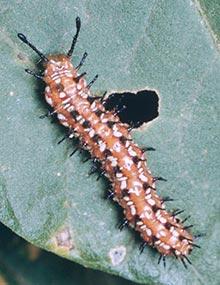
Variegated fritillary caterpillars (Euptoieta claudia) are present from June to October. They produce multiple generations per year.
Reviewed
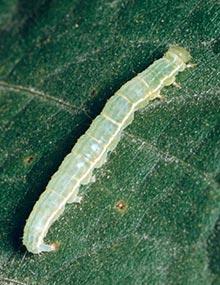
Green cloverworm caterpillars (Hypena scabra) are present from summer to fall. They produce three generations per year.
Reviewed
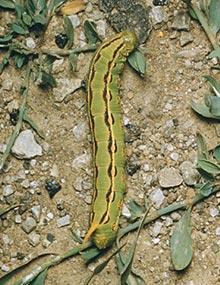
Whitelined sphinx caterpillars (Hyles lineata) are present from spring to early fall. They produce one to two generations per year.
Reviewed
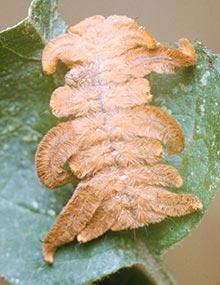
Hag moths caterpillars (Phobetron pithecium) are present in summer and fall. They produce one generation per year.
Reviewed
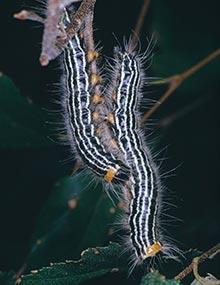
Yellownecked caterpillars (Datana ministra) are present from July to September. They produce one generation per year.
Reviewed
Feeding hay to cattle is expensive, mostly due to waste. Learn good management practices to minimize the losses that occur due to poor storage methods, improper feeding methods, or both.
Reviewed
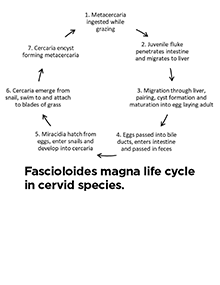
Cattle operations should evaluate their risk for is Fascioloides magna, also known as the deer fluke or the giant liver fluke. Learn about its distribution in Missouri, its life cycle, treatment and more in this guide.
Reviewed
Learn how pelvic measurements can help estimate calf birth weight and reduce calving difficulty in beef cattle.

Reviewed
Explore four decision-making techniques to help community groups identify and prioritize projects effectively.
Reviewed
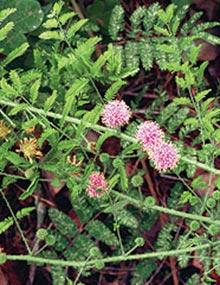
Sensitive brier has prostrate stems and seedpods covered with hooked barbs. Doubly compound, featherlike leaves close rapidly when touched or disturbed. Flower clusters are a fuchsia ball dotted with contrasting yellow stamens.
Reviewed
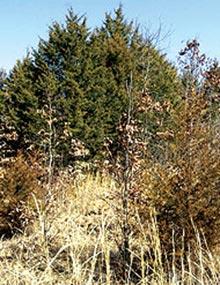
Eastern red cedar is a small to medium-sized tree up to 50 feet tall. It is an aromatic evergreen with a dense pyramid-shaped to cylindrical crown.
Reviewed
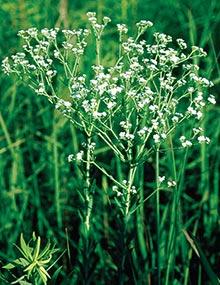
Flowering spurge may reach 3 feet tall on richer soils. Inflorescences are multibranched, with multiple flower heads per branch. Flowers have five white petals with a yellow center and average about one-third inch across.
Reviewed
This publication explores the significance of effective communication in professional settings, detailing its processes and various definitions.
Reviewed
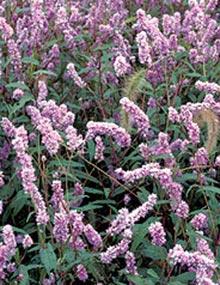
Annual smartweeds has abundant, swollen nodes where the leaf meets the stem. Leaves are simple, alternate and parallel-veined; most are lanceolate. Flower clusters are white or pink, and at maturity the plant yields large numbers of seeds.
Reviewed
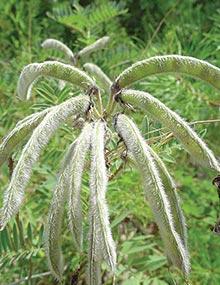
Goat’s rue, a member of the bean family, is readily identified by its striking flower, which consists of a cream-colored upper petal above two bright pink lower petals. Leaves are alternate, compound and usually hairy, with a pointed, hairlike tip.

Reviewed
Before writing a column, think about purpose, audience, content and structure. Visit our website today to learn more about writing columns.
Reviewed
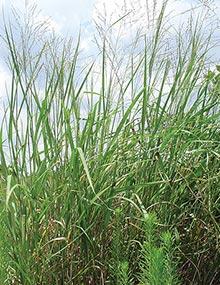
Switch grass exhibits an upright, bunchy growth form. The leaves twist in a corkscrew-like pattern from the base to the tip of the blade.
Reviewed
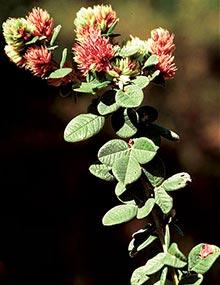
Hairy lespedeza leaflets occur in threes. This perennial plant earns its name from its stem and oblong leaflets, both of which are covered with hairs.
Reviewed
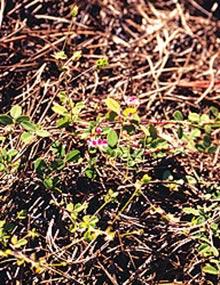
Trailing lespedezas are small, native lespedezas with trailing stems that can readily form thick mats over bare areas if left undisturbed. The small flowers range from purple to white and can produce a large quantity of seeds.

Reviewed
Illinois bundleflower can be identified in summer by the doubly compound, fernlike leaves and white spherical flower heads. By fall, the stems become tough and woody, and the seedpods are distinctive, bearing a ball-shaped cluster of pods, each containing several flat, brown seeds.
Reviewed
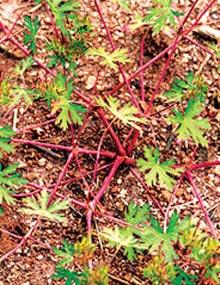
Leaves of Geranium species are deeply cleft and palmately lobed. Seeds are located within the sharply pointed “crane’s bill” formed by the tubelike style of the flower.
Reviewed
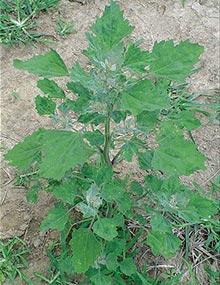
Lambsquarters is rather nondescript and typically grows 2-6 feet tall. Leaves are triangular or kite-shaped, and their surfaces often have a powdery white appearance.
Reviewed
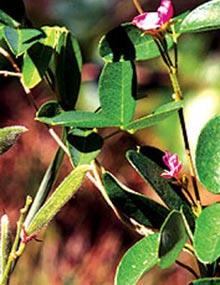
Milkpea is a herbaceous legume with a hairy surface on the top of its trilobed leaf. Stems are also hairy. Seedpods are about 2-1/2 inches long.
Reviewed
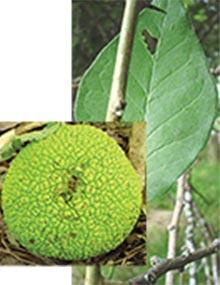
Osage orange grows as a medium-sized tree up to 50 feet tall. It has yellow-green fleshy fruits with a knobby surface that resembles a brain. Its alternate, simple leaves taper to a long, pointed tip.
Reviewed
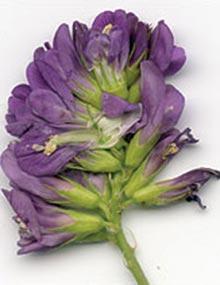
Alfalfa leaves are divided into three leaflets, with the middle leaflet on a distinct stalk. Leaflets are serrated along the outer third to half and are somewhat elongated. Flowers are usually purple, sometimes bluish, rarely white. Fruits are usually curved or twisted.