Image
Revised
Use this enterprise budget to estimate costs and returns when raising meat goats in Missouri in a 50-doe, spring kidding herd.
Revised
Use this enterprise budget to estimate costs and returns for raising sheep in Missouri in a 50-ewe, spring-lambing flock and marketing lambs at 75 to 90 pounds.
New
Find out how Missouri's three primary cooperative statutes differ in purpose, membership, control, capital structure, and operating flexibility.
Revised
Use this enterprise budget to estimate the on-farm costs and returns from growing bell peppers in a high tunnel in Missouri.
Revised
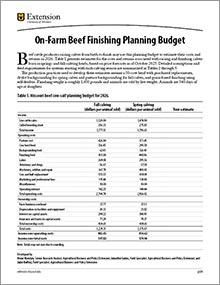
Estimate costs and returns for beef cattle finishing in Missouri with planning data to support informed farm management decisions.
Revised
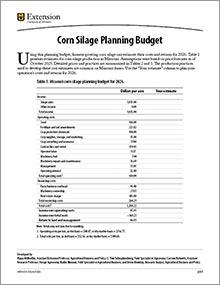
Use this crop enterprise budget as a guide to estimate your production costs and revenues when growing corn silage on Missouri farms.
Revised
Learn about Theileria orientalis (Ikeda genotype), a protozoal organism that primarily effects cattle and is relatively new in the U.S. This guide covers transmission, disease stages, diagnosis, treatment, and prevention and control.
Revised
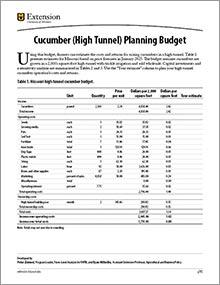
Use this enterprise budget to estimate the on-farm costs and returns from growing cucumbers in a high tunnel in Missouri.
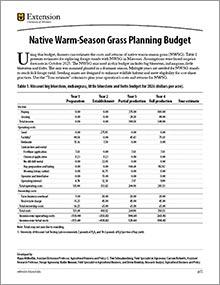
Revised
Use this enterprise budget to plan costs and returns for establishing and managing native warm-season grass forages for hay and pasture on Missouri farms.
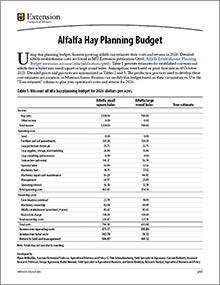
Revised
Use this enterprise budget to plan how to produce, finance and market alfalfa sold as small square or large round hay bales in Missouri. It links to the Missouri Forage Budget Generator spreadsheet.
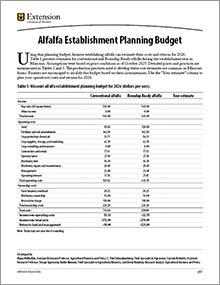
Revised
Use this enterprise budget as a guide to estimate your production costs and returns when planting and establishing alfalfa as a forage crop in Missouri.
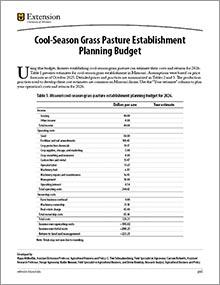
Revised
Use this enterprise budget to plan how to finance, establish and graze cool-season pastures on Missouri farms.
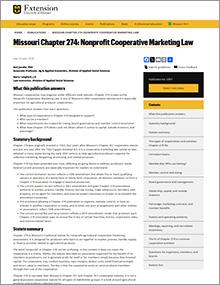
New
Chapter 274 is one of Missouri’s older cooperative statutes and is important for agricultural producer cooperatives.
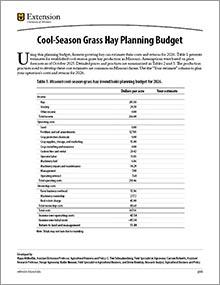
Revised
Use this enterprise budget to plan how to produce, finance, graze, and market fescue-clover hay on Missouri farms.
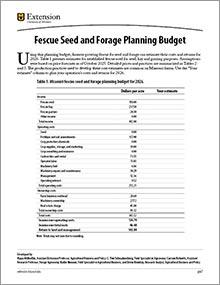
Revised
Use this budget to plan how to produce, finance, graze, and market fescue on Missouri farms.
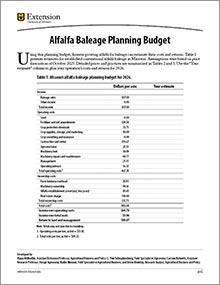
Revised
Use this enterprise budget as a guide to estimate your production costs and returns when producing alfalfa baleage as a forage crop on Missouri farms.
Revised
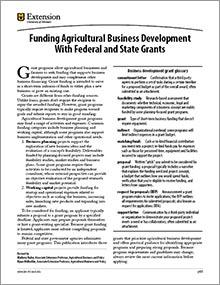
Learn about current federal and Missouri grant programs for agricultural businesses and farmers seeking funding to support business development.
New
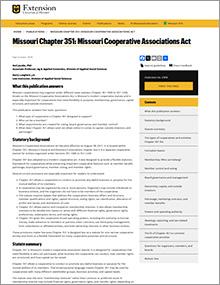
Chapter 351 is especially important for cooperatives that need flexibility in purpose, membership, governance, capital structure, and outside investment.
Revised
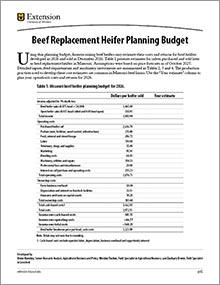
Use this budget to estimate costs and returns for buying beef heifer calves and selling them as bred replacement heifers in Missouri.
Revised
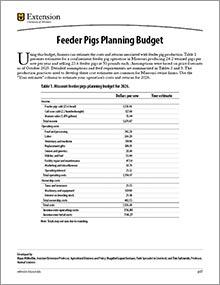
Use this enterprise budget to estimate costs and returns for a Missouri swine operation raising feeder pigs.
Revised
Use this budget to estimate costs and returns for a Missouri beef cow-calf operation (50 cows, purchased replacements) with fall or spring calving.
Revised
Use this swine enterprise budget to estimate costs and returns for a Missouri farrow to finish operation.
Revised
Use this budget to estimate costs and returns for backgrounding steer calves in Missouri, including detailed assumptions and feed requirements.
Revised
Use this budget to estimate costs and returns for Missouri yearling beef steers bought in November and sold the following May.
Revised
Use this swine enterprise budget to estimate costs and returns for a Missouri hog finishing farm.