A Roadmap to Safe and Compliant Food Production for Very Small Food Processors
This resource is intended for educational purposes for very small-scale food processors only and is not a substitute for regulatory review, process authority evaluation, legal advice or food safety plan development.
Product name
Garlic-infused oil
Product description
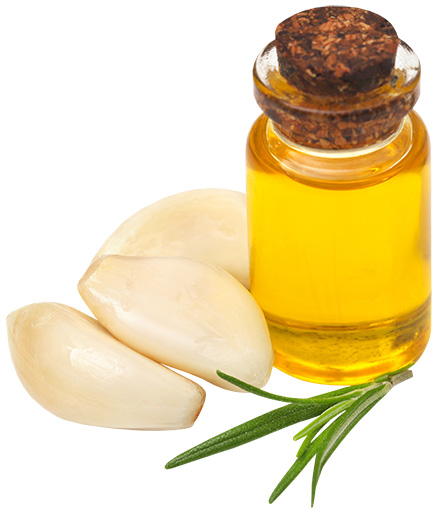
Garlic-infused oil is a popular and traditional culinary ingredient made by combining fresh or roasted garlic cloves with oil to impart flavor and aroma. It is widely used to enhance the sensory qualities of a variety of foods and dishes. While relatively simple to prepare, garlic-infused oil can pose significant food safety risks if not properly processed, handled, stored and labeled.
Primary food safety hazard that requires special attention
When garlic cloves are immersed in oil, the oil creates a low-oxygen (anaerobic) environment that may support the growth of harmful microorganisms, including Clostridium botulinum, and the production of botulinum toxin if the product is not properly acidified, processed and/or maintained under refrigeration. Botulinum toxin is among the most potent biological toxins known and can cause severe illness, paralysis or death even when present in extremely small amounts.
Method of preparation
There are two primary methods for preparing garlic-infused oil: using nonacidified garlic cloves or using garlic that has been acidified prior to infusion.
Garlic-infused oil (nonacidified)
Garlic-infused oil can be prepared by immersing fresh or roasted garlic cloves in oil to impart flavor and aroma. However, this method presents a higher food safety risk because the low-oxygen environment created by the oil may support the growth of Clostridium botulinum and the production of botulinum toxin. To reduce this risk, nonacidified garlic-infused oil should be refrigerated immediately after preparation and used within four days. Alternatively, it may be frozen and stored until ready for use. Any garlic-infused oil left at room temperature for more than two hours should be discarded.
Acidified garlic-infused oil
Acidifying garlic before infusion significantly reduces the risk of Clostridium botulinum growth and toxin production by lowering the pH of the garlic to a safe level. One commonly recommended method is to soak fresh garlic cloves in a 3% citric acid solution for 24 hours, ensuring the garlic reaches a pH of 4.2 or lower before being added to the oil. Proper acidification, combined with current good manufacturing practices (cGMPs), is essential for ensuring the safety, quality and shelf stability of garlic-infused oils.
Regulatory classification
- Acidified food (if the product is acidified with citric acid or vinegar)
- Refrigerated processed food (nonacidified)
Primary regulatory agencies
- U.S. Food and Drug Administration (FDA)
- Missouri Department of Health and Senior Services (DHSS)
- Local health department or public health authority
Is this product allowed under Missouri cottage food law?
No. Garlic-infused oils are not allowed under Missouri cottage food law because they present significant food safety risks and typically require scheduled process review and validation by a qualified process authority; appropriate food safety controls; and production in regulated facilities to ensure the product is safe for consumers.
Training considerations
- Better Process Control School (BPCS) — Acidified Foods
- Process validation by a process authority
- Hazard analysis critical control points (HACCP)
BPCS training is required for individuals producing acidified foods, low-acid canned foods, or products packaged using reduced-oxygen packaging methods. Process validation is required to verify that the formulation and manufacturing process effectively control the risk of pathogenic microorganisms and ensure product safety.
Facility requirements
- Licensed commercial kitchen required
This product must be produced in a licensed and inspected commercial kitchen using an approved food safety plan and validated process.
Process validation requirements
- Process authority review
- Scheduled process filing (acidified garlic-infused oil)
- HACCP plan
- pH testing
- Water activity testing
Even if the garlic is acidified before being added to the oil, the acidification procedure and final formulation must still be validated by a qualified process authority.
Ingredient and supplier considerations
- Approved ingredient suppliers recommended
Changing suppliers, ingredient ratios, or processing methods may require reevaluation of the food safety plan and validated process.
Labeling considerations
- Name of the product
- Date manufactured
- Infusion type (fresh or acidified)
- Ingredient statement
- Allergen declaration
- Net quantity (the net weight or volume in both U.S. customary and metric units)
- Business name and address
- Refrigeration statement
- Lot coding (recommended)
- Nutrition facts label*
*Your business can be exempt from adding a nutrition facts label if you sell a maximum of $50,000 of food to consumers a year or if your total overall sales are under $500,000 a year.
Common producer misunderstandings
- Following an online recipe does not make a product legally salable.
- Cottage food exemptions do not apply to all homemade foods.
- Changing ingredients or suppliers can invalidate a food safety plan.
- Shelf-stable foods often require process validation and specialized training.
Suggested next steps
- Discuss the requirements for this food product with your local public health agency to ensure compliance at the local level.
- Identify an inspected commercial kitchen or facility to develop the product.
- Complete required trainings.
- Develop a standardized recipe and process, and write it as a food safety plan backed by valid testing methods and outside testing.
- Contact a process authority for process review.
- Confirm labeling compliance before sales.
- Keep the records current.
Food safety tips for preparing and storing garlic-infused oils
- Use only fresh garlic cloves and good quality oil; discard any ingredients that show signs of spoilage or physical damage.
- Always follow validated recipes and preparation procedures.
- For acidified garlic-infused oils, remove the garlic solids once the desired flavor has been achieved to help maintain product safety and quality.
- Protect infused oils from exposure to light, oxygen and excessive heat, which can accelerate quality deterioration.
- Store infused oils in dark-colored glass bottles and/ or food-grade stainless-steel containers whenever possible.
- Discard any garlic-infused oil that has been left at room temperature for more than two hours.
- Clearly label containers with the preparation date and recommended use-by date to help ensure the product is consumed within the appropriate storage period.
Additional resources
Acidified and Low-Acid Canned Foods Guidance, FDA
Establishment Registration and Process Filing for Acidified and Low-Acid Canned Foods, FDA
Food Processing and Safety Lab, MU Extension
How to Safely Make Infused Oils, Penn State Extension
Manufactured food regulations and requirements, Missouri Department of Health and Senior Services
Rule for Preventive Controls for Human Food, FDA Food Safety Modernization Act
This work is supported by the U.S. Department of Agriculture’s (USDA) Agricultural Marketing Service through the Resilient Food Systems Infrastructure Program grant to the Missouri Department of Agriculture. Its contents are solely the responsibility of the authors and do not necessarily represent the official views of the USDA.
Image credit: Swapan - stock.adobe.com