Part of the series ‘Biological control in Missouri: Right tool, right place, right conditions.’
-
Image
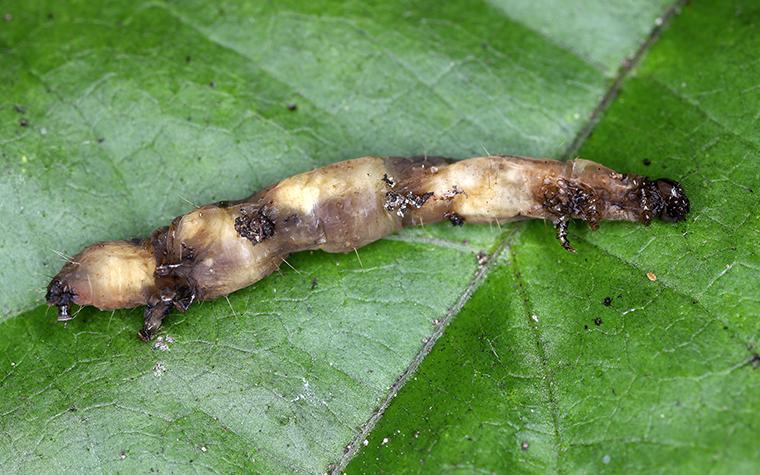 Dead moth caterpillar after infestation by bacteria Bacillus thuringiensis, applied in the form of a biological plant protection product. Adobe stock phot.
KANSAS CITY, Mo. – Bacillus thuringiensis (Bt) is a naturally occurring soil bacterium that gardeners use because it goes after certain pesky insects—mainly caterpillars—without bothering the good guys, says University of Missouri Extension horticulturist Tamra Reall.
Different Bt products target different insects, says Reall. Bt kurstaki is great for pest caterpillars in the vegetable garden, while Bt israelensis is the go-to for mosquito and fungus gnat larvae.
It is important to choose the correct product for the right pest, says Reall. It’s not a “one spray fixes everything” kind of product. It only works on the pests it’s designed for.
First, the insect must eat the Bt to be effective. This means it works best on young, actively feeding larvae. If the caterpillars are already big and mature, Bt is unlikely to be effective.
Mother Nature also gets a say in how Bt works. The ultraviolet light from sunshine breaks Bt down quickly, so you may need to reapply. And good coverage matters: Make sure every leaf, especially the underside, is peppered with a tiny sprinkle so the pests get a proper taste.
Misapplication, including incorrect timing or product selection, is a common reason for poor results. Accurate pest identification and early intervention improve outcomes.
Tips for success
Don’t apply Bt randomly or as a broad-spectrum pesticide.
Don’t apply to full-grown caterpillars or insects it’s not meant for.
Do apply when caterpillars are small and actively feeding.
Do identify the pest before selecting the correct Bt strain.
Do ensure good coverage of all plant surfaces.
Do reapply after heavy rainfall or when sunlight has degraded the spray.