Part of the series ‘Biological control in Missouri: Right tool, right place, right conditions.’
-
Image
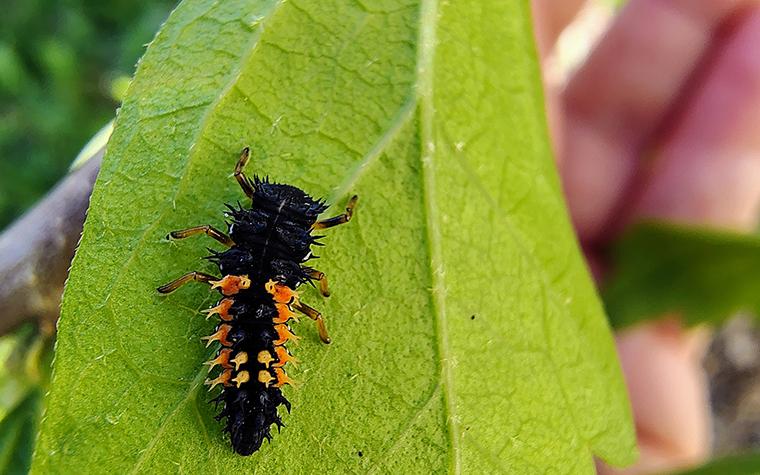 Lady beetle larva. Lady beetles, or ladybugs, are among the most recognized beneficial insects in gardens and landscapes. Their larvae are sometimes mistaken for pests, but they can consume large numbers of aphids during development. Photo by Tamra Reall.
 -
Image
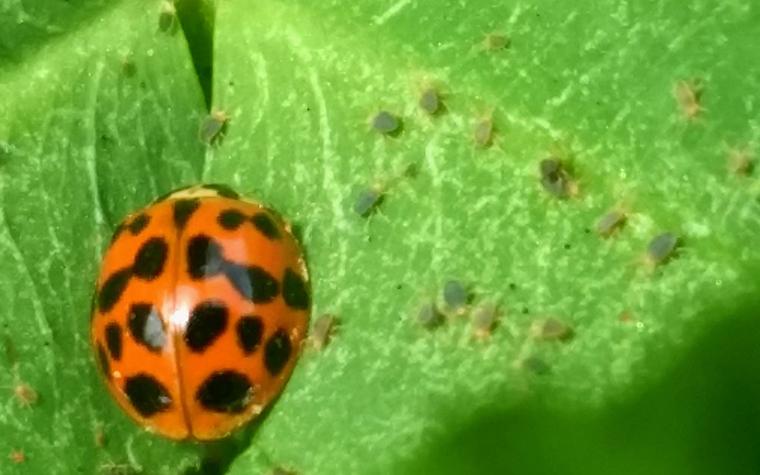 Lady beetle with clover mites. Lady beetles feed on other insects such as clover mites to provide important biological control in gardens and landscapes. Photo by Tamra Reall.
KANSAS CITY, Mo. – Lady beetles, aka ladybugs, are among the most recognized beneficial insects in gardens and landscapes. The adults and larvae feed on aphids and other soft-bodied insects, making them important natural enemies of common pests, says Tamra Reall, University of Missouri Extension horticulturist.
The larval stage is especially important. Lady beetle larvae – which are elongated and are often dark with orange markings -- are sometimes mistaken for pests. “In reality, they are active predators that can consume large numbers of aphids during development,” says Reall. “In many cases, larvae contribute more to aphid control than adults.”
Lady beetles are commonly sold for release as a biological control. While they are valuable predators, simply releasing them without the right conditions rarely leads to meaningful control, she says.
Most commercially available lady beetles are collected from wild populations while overwintering, often in western states. Once released, their natural instinct is to disperse in search of food and breeding sites rather than remain where they are placed. Without suitable habitat, including pollen sources and shelter, populations are unlikely to establish or persist.
Environmental conditions and landscape diversity play a key role, says Reall. Gardens with a variety of flowering plants can support beneficial insects by providing nectar and pollen. Minimizing the use of broad-spectrum insecticides also helps protect both adult and larval stages, she says.
Supporting naturally occurring populations of lady beetles and other predators leads to more consistent and sustained pest suppression.
“Biological control works best when we use the right tool, in the right place, under the right conditions,” says Reall.
Reall’s tips for success
- Don’t buy and release adult lady beetles with hopes that they will stay.
- Don’t expect immediate aphid control after release.
- Plant small-flowered species like dill, alyssum or yarrow to provide nectar and pollen.
- Allow low levels of aphids early in the season to build predator populations.
- Avoid broad-spectrum insecticides that kill both larvae and adult beneficial insects.
- Recognize and protect lady beetle larvae, which often consume more aphids than adults.
Photos
Lady beetle larva. Lady beetles, or ladybugs, are among the most recognized beneficial insects in gardens and landscapes. The adults and larvae often feed on aphids and other soft-bodied insects. Photo by Tamra Reall.
.jpg)
Lady beetle with clover mites. Lady beetles feed on other insects such as clover mites to provide important biological control in gardens and landscapes. Photo by Tamra Reall.
.jpg)