Image
Reviewed
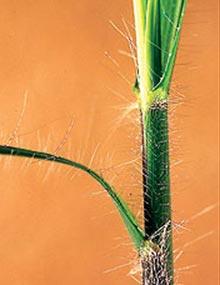
Sideoats grama has fine leaves and widely spaced fine hairs along the leaf edge, especially near the collar. Most sideoats plants are 18-24 inches tall at maturity. It has a unique, oatlike seed that droops slightly off one side of the stalk.

Reviewed
Common elderberry is a shrub that grows to 8 feet tall and forms dense colonies from root sprouts. The tops are multibranched, bearing opposite, pinnately compound leaves 4 to 12 inches long. Lance-shaped leaflets are 2 to 6 inches long, 1 to 2 inches wide and sharply toothed.

Reviewed
Learn how to craft engaging feature stories by focusing on imaginative leads, concise sentences, and active verbs to captivate your readers.
Reviewed
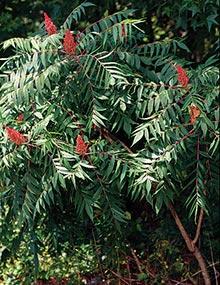
Winged, smooth and staghorn sumac have single stems and a broad reaching canopy of pinnately compound leaves. Fragrant sumac has three leaves resembling poison ivy but with more serrated margins. The leaves of all species often turn a brilliant red in autumn.
Reviewed
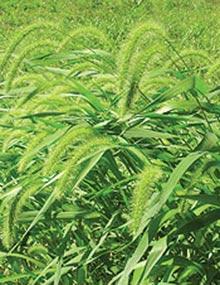
Most of the foxtails found in the Midwest are native to Europe and Asia. They are annual plants generally considered to be weeds. The seed head has the bushy form of a fox's tail. Height at maturity varies by species, but is generally 1-3 feet.
Reviewed
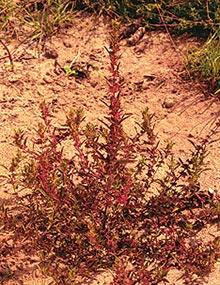
Three-seeded mercury is characterized by longitudinally folded, lobed, leaflike bracts that persist throughout the growing season. The seeds are small, egg-shaped and dark brown to light gray or tan.
Reviewed
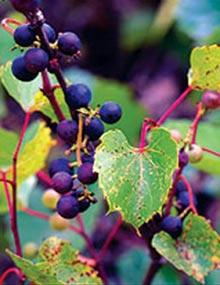
Wild grapes are vines capable of climbing to 75 feet or more by means of tendrils. Leaves are alternate, simple and heart-shaped (Vitis) to triangular (Ampelopsis). Flowers bloom from mid to late spring, and globe-shaped fruits are borne in drooping clusters from late summer through fall.
Reviewed
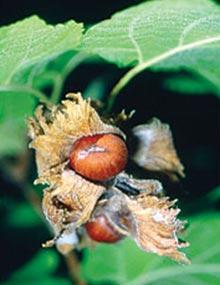
Hazelnut is a thicket-forming, spreading shrub that can vary in height from 3 to 10 feet. Its leaves are egg-shaped to oval, doubly serrated with five to eight veins on each side of the central vein. Fruits occur in clusters of two to six.
Reviewed
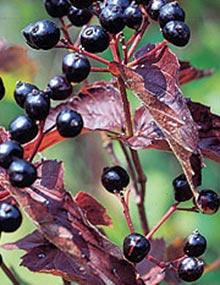
Viburnum grows as shrubs or small trees with branching crowns. Flowers are borne in dense, flat-topped panicles that produce many red to bluish black, berrylike fruits in fall. The leaves are opposite and turn brilliant shades of deep rose-purple to rose-red or bright red in fall.
Reviewed
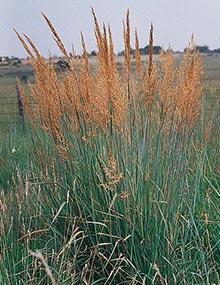
Indian grass is a tall, warm-season nativethat averages 4 to 6 feet in height at maturity. Stems are stiff, and leaves are long and narrow. A characteristic of the plant is the notched ligule, suggesting the rear sight of a rifle.
Reviewed
Acknowledgments
The authors gratefully acknowledge the following individuals and groups for their constructive review of this publication: Steve Clubine, Elsa Gallagher, Emily Horner, Lee Hughes, Aaron Jeffries, Matt Seek, Tim Smith, Bill White, and members of the Missouri Quail and Grassland Bird Technical Committee.
Reviewed
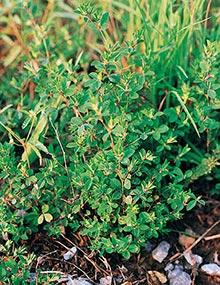
Annual lespedeza and Korean lespedeza exhibit many similarities in growth form, occurring as semierect herbaceous plants with three-lobed leaves and reddish-purple to white flowers. Lower leaves are spreading while upper leaves stand erect.
Reviewed
Infants are most at risk from nitrate-contaminated water, which can lead to serious health issues.
Revised
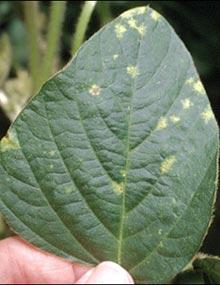
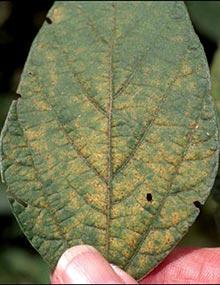
Pale yellow spots on young soybean leaves may signal downy mildew, favored by humid weather and temperatures between 68–72°F.
Reviewed
Discover effective strategies for managing dairy manure to optimize nutrient recovery and enhance crop productivity through proper manure handling.
Revised
Soybean rust causes lesions on leaves, spreads via windborne spores, and thrives in humid conditions between 46–82°F. It can rapidly defoliate plants.

Reviewed
Land application of biosolids recycles nutrients, reduces pollution, and follows safety practices to protect soil, crops, and water.
Reviewed
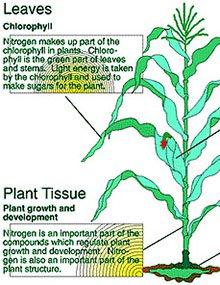
Nitrogen plays an important part in many essential functions. Visit our website to learn about Nitrogen in the Plant.
Revised
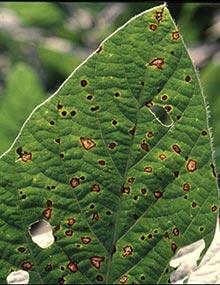
Frogeye leaf spot causes small, circular lesions on soybean leaves. It thrives in warm, humid conditions and survives in infected residue and seed.
Revised
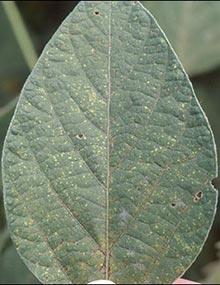
These photos show the disease stages of soybean rust, which can be difficult to identify, especially in the early stages.
Reviewed
Biosolids are domestic wastewater sludge that meet standards for beneficial use as fertilizer. Visit our site to learn the Benefits and Risks of Biosolids.
Reviewed
Nitrification converts ammonium to nitrate, which can leach into groundwater, posing health risks, especially for infants.
Reviewed
Nitrogen is essential for plant growth, but excessive nitrate from fertilizers can contaminate groundwater, posing health risks, especially to infants.
Revised
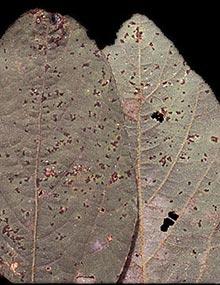
Identify and manage bacterial pustule in soybeans with guidance on symptoms, weather conditions, and disease development to protect your crops.
Revised
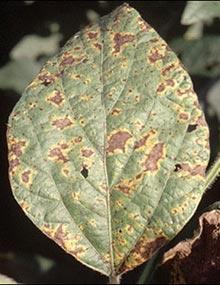
Identify and manage Septoria brown spot in soybeans with insights on symptoms, weather impact, and control strategies. Learn how to protect your crop.