Get your Gardeners’ Welcome Packet to accompany this publication
The Gardeners’ Welcome Packet is a set of documents that can be edited and revised by garden organizers. It is available in Microsoft Word and PDF formats. The packet is intended to be a tool for organizing your garden, introducing new gardeners to the policies, procedures and people that keep the garden running smoothly, and keeping returning gardeners updated and involved. It is also intended to help gardeners find a clear and easy way to play an active role in the garden’s management and upkeep. Although these written materials will not take the place of face-to-face communication with gardeners, they can provide a framework for improving communication and increasing involvement at your garden.
The Gardeners’ Welcome Packet includes the following contents:
- Welcome to community gardening
- Community garden success and security
- Community garden job descriptions
- Roster and map
- Contact list and calendar
- Frequently asked questions
- Gardener guidelines
- Gardener application
- Planting, harvesting, composting, pests, disease and more
Gardeners’ Welcome Packet
What is a community garden?
Introduction
A community garden serves different purposes for different people. For some, a community garden is a place to grow food, flowers and herbs in the company of friends and neighbors. For others, it’s a place to reconnect with nature or get physical exercise. Some use community gardens because they lack adequate space at their house or apartment to have a garden. Others take part in community gardening to build or revitalize a sense of community among neighbors.
Community gardens also take different shapes and forms. From a 50-by-50-foot church garden that supplies a local food pantry with fresh produce to a vacant city lot divided into plots and gardened by neighbors, community gardens reflect the needs and the desires of people directly involved in their management and upkeep. Because of these myriad differences, there are countless ways to organize and manage a community garden.
Regardless of why people choose to take part in a community garden or how a garden is organized, the activity of gardening with others can be both rewarding and challenging. Our hope is that this guide will help you manage the challenges that come your way and experience the rewards of community gardening. This guide is intended to be a resource for gardeners, garden organizers, extension staff and other agency professionals who want to start a new community garden, enhance an existing garden or assist community members with starting and managing their own community garden.
Characteristics of neighborhood community gardens
This guide provides a framework for organizing and managing different types of community gardens with a primary focus on neighborhood community gardens, which typically share the following characteristics.
First, neighborhood community gardens are typically located on land that is divided into different plots for individual and family use. The land may be borrowed, rented or owned by the gardeners, and gardeners generally prepare, plant, maintain and harvest from their own plots. Gardeners and their family, friends and neighbors usually consume produce from the gardens rather than selling it. Gardeners often share tools, water and compost, along with seeds and plants.
Second, neighborhood community gardens are often organized and managed by the gardeners themselves, have one or more identified leaders responsible for managing the day-to-day activities of the garden and have some type of a garden committee to share in the work. Because community gardens come with wide-ranging responsibilities — such as making plot assignments and keeping the grass mowed as well as resolving conflicts and enforcing the rules — they tend to run more smoothly when one or more people are in charge and the gardeners themselves take an active role keeping the garden in shape.
Finally, in addition to occupying vacant neighborhood lots, neighborhood community gardens are sometimes found at churches, social service agencies and other nonprofit organizations, including food pantries and food banks. These gardens may involve both neighbors from the surrounding area and the members or clients of a particular agency or institution. They sometimes incorporate educational, job-training and entrepreneurial programming.
Other types of community gardens
In addition to the typical neighborhood community garden where plots are subdivided and cared for by individuals or families, community gardens exist in a variety of other forms to serve a number of functions. The following examples represent different types of community gardens that are distinguished in part by their purpose and participants.
- Youth/school gardens expose young people to gardening and nature, give them the opportunity to do some of their own gardening, and educate them in a variety of subject areas. These gardens are typically associated with a formal or semiformal program that incorporates classroom lessons with hands-on gardening activities. Gardens may be located on school grounds, at a community center, in neighborhoods or on other parcels of land.
- Entrepreneurial/job training market gardens are typically established by nonprofit organizations or other agencies to teach business or job skills to youth or other groups. They grow and sell the produce they raise. Proceeds from the sale of garden products are used to pay the participants for their work. Programs typically rely on outside sources of funding to offset costs.
- Communal gardens are typically organized and gardened by a group of people who share in the work and rewards. Plots are not subdivided for individual or family use. Produce is distributed among group members. Sometimes produce is donated to a local food pantry.
- Food pantry gardens may be established at a food pantry, food bank or other location. Produce is grown by volunteers, food pantry clients, or both and is donated to the food pantry.
- Therapy gardens provide horticultural therapy to hospital patients and others. Often, a trained horticulture therapist leads programs and classes. Gardens may be located at hospitals, senior centers, prisons or other places.
- Demonstration gardens show different types of gardening methods, plant varieties, composting techniques and more. Demonstration gardens located at working community gardens are often open to the general public for display and classes. They may be managed and maintained by garden members or group such as the Extension Master Gardeners, community members who receive training in home horticulture and then serve as volunteers to educate the public about gardening. Visit the MU Extension Master Gardener program website for more information.
Rural community gardens are found across the country. Although they share similarities with their urban counterparts, they may also take different forms and serve different functions given the unique characteristics of rural places. On average, neighborhood gardens may be less popular in rural places. However, gardens that incorporate one or more of the styles listed above, and possibly include opportunities for people to have their own plots, may be more feasible.
Other gardens are distinguished more by their location and less by their purpose. These gardens may combine elements of a neighborhood community garden with other community garden models. Examples include public agency gardens, community center gardens, senior gardens, church gardens, apartment complex or public housing gardens and prison gardens.
*The list of examples was adapted in part from From Neglected Parcels to Community Gardens: A Handbook (PDF), Wasatch Community Gardens.
See the history of community gardening
Challenges
 A discussion of starting and managing a community garden would be incomplete without a discussion of the challenges encountered by gardeners and garden organizers. Common challenges faced by most community garden groups are listed below.
- Management. Community gardens are management intensive. They require patience, time and the capacity to work with and organize people and projects. It is also helpful to have systems to enforce rules and resolve conflicts.
- Maintenance. Community gardens are maintenance intensive. Grass will need to be mowed, equipment will need to be repaired, and plant debris will need to be composted, among other tasks. Regular workdays, committed volunteers and good communication about what needs to be done make garden maintenance easier.
- Participation. From year to year, gardeners and garden leaders come and go from community gardens for a variety of reasons. Building a sense of community and consistency at gardens help ensure smooth transitions.
- Theft and vandalism. Theft and vandalism are issues for some community gardens. "Security and personal safety" on Page 17 offers tips for addressing these concerns.
- Gardening skills. Sharing gardening resources, hosting workshops, or pairing experienced gardeners with new gardeners are just a few ways to build skills and enhance gardening success. Positive gardening experiences can help increase the likelihood that people will return from year to year.
- Leadership skills. Giving people the change to lead projects or various tasks helps build local leaders. In time, people may feel confident enough to take on greater responsibilities at the garden.
- Services and supplies. Think about who you know and how you can find creative ways to arrange for plowing and tilling, if needed, and the bulk delivery of compost and mulch to ensure gardeners have what they need to be successful.
- Water. Most gardens need some way to irrigate fruits and vegetables during the summer. Consider creative ways to get water to your site, including installing a hydrant, collecting rainwater, or buying water from a neighbor.
- Site permanency. Most community gardens are located on borrowed land. Such arrangements may limit the amount of infrastructure that can be added to a particular site. However, developing a longer-term lease with the landowner can provide more options and stability.
See the benefits of community gardening
Starting a community garden
Before getting into the practical details of starting a community garden, it’s helpful to lay a foundation for the work at hand.
From the outset, it is important to understand that community gardening is about more than growing food, flowers and herbs. It’s also about interpersonal relationships, group dynamics, planning and organizing, group decision-making and the associated rewards and challenges that come with working with people. In short, community gardening is as much about "community" as it is "gardening".
If community is so important to community gardening, then how do we orient ourselves to the task of starting or enhancing a community garden?
The authors of the Growing Communities Curriculum (Abi-Nader et al., 2001) offer a set of suggestions developed by community gardening experts from across the country. These suggestions, written in the form of "core beliefs," can be used to guide the development of your community garden and provide a strong foundation for growth.
Taken as a whole, these core beliefs emphasize the importance of being inclusive, making room for diverse ideas and using local assets when starting a community garden. They also demonstrate the importance of using a bottom-up or grassroots approach when developing a garden. As the authors have learned over the years, most successful community gardens are initiated, established and managed by the gardeners themselves. When gardeners have the opportunity to take ownership in a project, they are more likely to invest their time and effort in making the garden a success.
Additionally, keeping these suggestions in mind may help you overcome some of the challenges that arise when moving forward with a community garden project. For example, the people involved in your project will likely come from different backgrounds and have different ways of relating to each other and the project. They will bring their unique personalities, perceptions, knowledge, skills and experience to a group situation. They will have different ideas about how to accomplish a project. Some group members may learn faster than others. Some will be more pessimistic. Others will be more optimistic. Regardless of these differences, the group should be committed to remaining open and patient with all group members and creating the time and space to facilitate dialogue about the best way to accomplish the tasks at hand.
Five core beliefs of working in groups
- Core Belief No. 1: "There are many ways to start and manage a community garden." Although this may be a given, it helps to remember that community gardens can serve many purposes and take many forms.
- Core Belied No. 2: "In order for a garden to be sustainable as a true community resource, it must grow from local conditions and reflect the strengths, needs and desires of the local community." Assistance from people or organizations outside of the community can be helpful. However, those who will be using the garden should make most of the decisions about how the garden is developed and managed.
- Core Belief No. 3: "Diverse participation and leadership, at all phases of garden operation, enrich and strengthen a community garden." Gardens can be stronger when they are developed and led by people from different backgrounds.
- Core Belief No. 4: "Each community member has something to contribute." Useful skills and good suggestions are often overlooked because of how people communicate. People should be given a chance to make their own unique contributions to the garden.
- Core Belief No. 5: "Gardens are communities in themselves, as well as part of a larger community." This is a reminder to involve and be aware of the larger community when making decisions.
From idea to action — 10 steps to success
The Growing Communities Curriculum (Abi-Nader et al., 2001) notes that community gardens generally start in one of the following two ways. Scenario one: One person or a small group of people has the idea to start a community garden. Scenario two: An outside group or local agency has the idea and land available to start a community garden.
Whether you are involved in a volunteer group or part of a local agency, the basic steps for moving from an idea to planting the first seed are the same. The following 10 steps can serve as your guide. (If your group is interested in involving local agencies, or if you are part of a local agency interested in starting a garden, see “Page 16” for more information.)
Step 1. Talk with friends, neighbors and local organizations about your idea.
As you talk to people about starting a community garden, collect names and numbers of those who are interested. If people voice opposition or concern, take note and be sure to address these concerns in future meetings. As a general rule, aim to find at least 10 interested individuals or families who want to be a part of the garden before moving to the next step.
Step 2. Hold a meeting with anyone interested in the garden.
The purpose of this meeting is to determine the feasibility of starting a garden, brainstorm ideas and address some basic questions. This meeting can be informal or formal, but at the very least, one person should be responsible for taking notes and sending them to the group after the meeting. Publicize the meeting to individuals, groups and relevant organizations using phone calls, personal visits, emails, or flyers posted around your community.
Questions to address at an initial meeting
- What type of community garden does the group want to create? Will space be divided and gardened by individuals and families, will it be gardened collectively by the group, or a combination of both? Or will it take some other form?
- What is the purpose of the garden?
- Who will the garden serve?
- Is land available for a garden?
- What are some of the resources needed for a garden? Can gardeners provide their own resources or will the group need to locate and provide some of them?
- How much gardening experience does the group have?
- Are there individuals or organizations willing to provide materials and expertise?
- Will there be a fee charged to gardeners to cover expenses? If so, will there be a sliding scale?
- How much time (hours per week) can group members commit to the project?
- How will other people and organizations know about the group and the garden?
- Who is willing to serve on a garden leadership team?
- What is the best way for the group to stay in touch?
- Should the group proceed with finding and evaluating land for a garden?
- When should the next meeting take place?
Step 3. Find and evaluate potential garden sites.
 Get on your bike. Go out on foot. Tour the neighborhood with friends and family, and talk to your neighbors. Be sure to consider churches, nonprofit agencies and businesses as potential partners. These groups may own land and have an interest in being a part of your garden.
Questions to evaluate potential garden sites
- If growing fruits and vegetables is important to the group, does the site get at least six hours of direct sunlight per day during the spring, summer and fall?
- Does the site have access to water?
- How big is the site? Is it large enough to accommodate the number of interested gardeners you've identified and additional gardeners who may want a garden plot?
- Is the site relatively flat?
- How close is the garden to the people who plan to use it? Ideally, gardeners should be able to walk or drive a short distance to the garden.
- Is the site visible? A visible site will be safer and attract more neighborhood support.
- Is the site fenced?
- Can a truck gain access to the lot?
- How was the site used in the past? Do you suspect that the soil may be contaminated? Some urban soils may be poor and contain large amounts of rubble. These sites may require raised beds and fresh soil.
- Can you sample the soil to check its quality and obtain a soil test for nutrients and heavy metals before entering into any agreement with a landowner? (See "soil testing" sidebar.)
- What is the present use of the land? Does it currently attract loitering, dumping or other activities? Do people use the land for recreation? Consider the present uses and the feasibility of altering the function of the site.
- Can you determine who owns the lot? Often, if you know the address of the potential site, you can go to the county tax assessor's office or website to find the property owner.
Step 4. Identify local resources needed for starting a garden.
Gardens can require a fair amount of tools, equipment, supplies, infrastructure, knowledge and other forms of support. Gardeners themselves can provide some resources. For other resources, it makes sense for the group to seek out and acquire materials in bulk or solicit donations and support from other groups.
See questions to identify local resources needed
- Does the group have access to tools and other gardening equipment?
- Will the garden need to be plowed or tilled or can the soil be turned by hand? Is no-till gardening an option?
- Is compost and mulch available?
- Will the group provide seeds and transplants?
- Will the group need a shed for storing tools?
- Will the site need to be fenced?
- Will the site need to be cleaned? How will trash, branches, etc., be removed?
- Will trees need to be trimmed?
- Will the site need to be mowed and trimmed on a regular basis?
- Will the garden and group need to carry liability insurance?
- Are there existing community gardens in your area that you can learn from?
- Are Extension Master Gardeners or others available to share their gardening expertise?
- Are community organizers available to help facilitate the group's process?
- Are local government departments, nonprofit agencies or businesses willing to sponsor the garden, make donations or lend other types of support?
Step 5. Hold a second meeting.
The purpose of the second meeting is to discuss the notes from the previous meeting and hear reports from the people who volunteered to find and evaluate possible locations for a garden (Step 3) and identify local resources for starting a garden (Step 4). If the group completed the exercise "Purpose, values, vision and action planning" on Page 10, you may wish to revisit that document to learn if people are still in agreement and to gain input from new group members.
 If your group feels like the primary issues have been adequately addressed and enough people are committed to the project, you may be ready to evaluate and select one or more sites to pursue for your garden.
You may also be ready to select your garden’s leadership team. At the very least, you will need to have one or more garden co-leaders and two to three additional people to handle important tasks that may include drafting and negotiating the lease agreement (Step 6), leading the planning and preparation of the site (Step 7 and Step 9), and drafting gardener guidelines and the gardener application (Step 8).
Step 6. Draft a lease agreement.
It is in everyone's best interest to have a written agreement that outlines your group's and the landlord's obligations and responsibilities and includes a "hold harmless" clause that states that the landlord is not responsible if a gardener is injured on the property. Try to negotiate a lease that enables your group to use the land for at least three years. See the “Sample Permission for Land Use” on Page 23 for an example.
See the sample permission for land use
Step 7. Develop a site plan.
The plan for your garden can be as simple or elaborate as you choose. Consider including the following elements in your plan:
- The boundary of the lot
- The location and size of garden beds
- Any trees, shrubs or existing vegetation that will be kept
- Driveways, pathways and open spaces
- Compost bins
- A shed
- The location of the water source
- Common or shared garden areas such as perennial or herb beds, a row planted for donation purposes, a picnic table with chairs, or grassy areas
- Garden sign
- Garden name
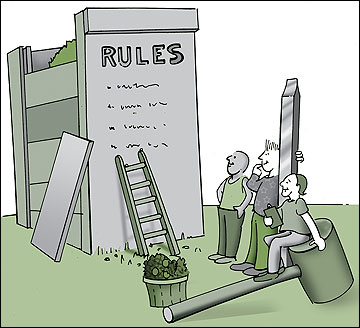 Step 8. Establish gardener guidelines and draft a gardener application.
Just as there are many types of community gardens, there are many types of gardener guidelines and gardener applications. Having clear guidelines for gardeners to follow and an application to collect their contact information will aid in your efforts to keep order among and stay in touch with gardeners.
For starters, let's look at some common issues gardener guidelines address.
- Application or membership fee. Is there a fee to garden? How much is the fee? Is there a sliding scale? When is the fee due?
- Plot maintenance. Is there an expectation that plots will be maintained to a certain standard? What happens if a plot is not maintained? Who decides?
- Garden maintenance. Are gardeners expected to volunteer for certain tasks?
- Planting restrictions. Are there restrictions on which types of plants can be grown?
- End of the season. Do plots need to be cleaned by a certain date at the end of the season?
- Composting. Which materials may and may not be composted?
- Materials and tools. Are shared materials and tools available for gardeners to use? How should these items be handled and stored?
- Pesticides. Which pesticides are allowed?
- Other people's plots. How should gardeners treat and respect others' gardens?
- Water. Can the water be left on unattended?
- Pets and children.
- Alcohol and drugs.
- Unwanted activities. How should theft, vandalism and other unwanted activities be handled and reported?
- Violation of garden rules. What happens if a rule is violated?
See the "Sample Gardener Guidelines" for an example
As for gardener applications, most gardens collect the following information:
- Name, address, phone number and email address
- Number and location of plot(s) assigned
- Total plot fee paid
- Sign up for a garden task
- Photo permission
- Phone and email list permission
- Agreement to follow all of the garden rules
- Hold-harmless clause
- Signature and date
See the "Gardener Application" for an example
During the planning stage, it may be wise to treat these initial documents as drafts that will be revised by the gardening group after the first season. In addition, after your first season, it is strongly recommend that you create a relatively comprehensive set of written documents that explain how your garden operates and how gardeners can be involved. To aid your efforts in this process, download the Gardeners' Welcome Packet included in this toolkit.
Step 9. Prepare and develop the site.
Once you've held a few meetings, gained commitments from a number of people, selected a location, identified and assembled the resources, drafted and signed the lease, established the garden rules and made the plans, it's time do the physical work of preparing and developing your community garden.
There are many ways to go about preparing and developing the garden, and much will depend on the condition of your site. Groups may schedule regular workdays to take care of the initial tilling, trimming and building projects. It is helpful if one or more people can lead various projects and coordinate equipment, supplies and volunteers.
Step 10. Celebrate your success.
 Don't forget to take a step back and recognize your accomplishments. Hold a garden party and invite neighbors, local businesses and organizations. Show off the work you've done, and talk to people about your plans for the future. Sharing your success and plans is a great way to gain community support for your garden.
Additional information for local agencies interested in starting a community garden, or groups interested in involving an outside organization
As noted previously, community gardens are generally started by individuals, small groups of neighbors, or an outside group or local agency. In the latter case, the process of starting a garden is very similar to the process outlined previously, with a few added twists.
First, an outside group or agency needs to be clear about its reasons for wanting to start a community garden. Just as a small group of neighbors should be clear about its purpose and vision for a gardening project, an outside group or local agency should take the time to define its own purpose and vision for the project.
Second, an outside group or agency needs to be clear about its role in the garden's establishment and management. What exactly does the group or agency expect to contribute to the project? Money, staff time, equipment, land, training, other resources? For how long?
Finally, it is very important that the outside group or local agency involve clients and potential gardeners from the beginning. All too often, outside groups or agencies develop well intentioned plans without engaging the people who will be affected by them.
Role of an outside facilitator or community organization
In some cases, a volunteer gardening group will enlist the help of a facilitator or community organization that is not a part of the immediate group. Trained facilitators and organizers, such as university extension staff or other agency professionals, can assist groups as they work through the process of starting a community garden.
From the start, the garden group and the outside facilitator should be clear about their respective roles. The facilitator's job is to help move the group along and assist with the group process. It is not the facilitator's job to do the actual work of starting and managing the garden. According to Jack Hale, executive director of Knox Parks Educations in Hartford, Connecticut, facilitators and organizations should use the following guidelines (Growing Communities Curriculum, Page 58) when engaging with garden groups:
- Facilitators or organizations should only work with groups that have at least 10 committed gardeners. Expect half of these people to drop out before the project is completed.
- The gardening group should accomplish at least one task — locating potential garden sites, finding out who owns a particular site, checking for water, etc. — before the first meeting.
- At the first meeting, everyone should be assigned a job to complete before the second meeting.
In Missouri, to locate the MU Extension Center in your area, select your county name on the University of Missouri Extension "Counties" webpage.
Additional things to consider while getting started
Growing a garden
Your local extension center can provide an array of resources concerning horticulture, composting, food safety and food preservation. To search for an extension center in your area, go to the Extension Foundation’s “Find Extension in Your State” webpage.
Creating a garden roster and map
As interest in your community garden begins to grow, it is essential to keep good records of interested gardeners, existing gardeners and plot assignments. Garden leaders will need to collect the names, addresses, phone numbers and email addresses of individuals. They will also need to create a map of the garden, keep track of plot assignments and develop a system for contacting gardeners. All of this can be done with paper and pencil or you can use electronic documents or spreadsheets.
Enhancing opportunities for success
New and returning gardeners may need support and encouragement to keep up with their garden plot for the entire season. Garden leaders can encourage gardeners to take the following steps to enhance their chances of success:
- Visit the garden two to three times a week during the growing season to keep from being overwhelmed by weeds, pests and disease.
- Attend scheduled meetings and workdays and volunteer for a committee to meet other gardeners and contribute to the garden.
- Meet with other gardeners to share challenges, successes and gardening tips.
- Study, attend classes or participate in an extension Master Gardener program to learn more about gardening.
Security and personal safety
Theft and vandalism can occur at community gardens. Theft may focus on equipment and supplies or food. Whether food taken from a garden is considered theft will depend on the mission of the garden and outlook of the gardeners. The following tips are intended to help minimize unwanted activities and keep gardeners safe while working at the garden.
- Know your neighbors. Learn the names and a little about your nongardening neighbors. Share some extra produce. Take the time to visit with them about how the garden works if they're not familiar with it.
- Store equipment and supplies in a locked shed. Doing so will help deter theft and keep supplies out of the weather.
- Have clear signage. Communicate the purpose of the garden and provide contact information for people to learn more and get involved.
- Harvest produce regularly. For gardens where produce is intended to be harvested by gardeners (vs. by the public), be sure to harvest crops when they are ripe and ready. Create a system for gardeners to let others know if they plan to be out of town for more than a few days and need help harvesting.
- Grow more than you need.
- Put a border or fence around your garden or individual plots. Even a simple barrier can be a deterrent.
- Use common sense. Although your garden may be well lit by street lights, consider gardening only during daylight hours. Garden in pairs or keep a cellphone nearby, if doing so makes you feel more comfortable.
- Report theft, vandalism and unusual activities. The more people you have looking out for the garden and talking about what's going on, the more success you'll have at being safe and curbing unwanted activities.
Leadership
Leadership at a community garden is a vital part of its ultimate success. Although garden leaders may typically wear many different hats, their primary role is to help other gardeners find meaningful ways to be involved in the garden. All too often, garden leaders take on the responsibility of coordinating meetings and workdays, making plot assignments and drafting and enforcing rules when they could be enlisting the help of other garden members to do those and other tasks. Regardless, learning to be a leader takes time. It also requires the willingness and ability to lead by example. According to The Citizen's Handbook, by Charles Dobson of the Vancouver Citizen's Committee, effective leaders are able to do the following:
- Lead by example
- Delegate work
- Appreciate the contributions of others, regardless how large or small the contribution
- Welcome and encourage criticism
- Help people believe in themselves
- Articulate and keep sight of the higher purpose
- Avoid doing all of the work.
More specifically, effective community garden leaders are able to maintain frequent and regular contact and communication with gardeners and enlist the help of other gardeners with the following tasks:
- Forming a team or scheduling regular workdays to complete garden projects and maintain common areas
- Hosting community gatherings to involve neighbors and gardeners
- Planning winter or off-season activities or meetings
- Drafting and enforcing garden rules
- Seeking out funding sources
- Developing a garden budget
- Making sure that both gardeners and interested neighbors know how to become involved
Making the garden accessible to all
Community gardens tend to attract a wide variety of people, including those with physical or other challenges. Therefore, it is helpful to think of ways to make your garden accessible to all gardeners. Building accessible raised beds for those who use wheelchairs or have trouble bending over is one way to make a garden more accessible. For more information, see MU Extension publication G6985, Raised-Bed Gardening. Another great publication on this topic is Accessible Raised Beds (PDF), by the Community Action Coalition for South Central Wisconsin.
Donating food
Food banks, pantries and community kitchens generally welcome donations of fresh produce from community gardeners. However, it is important to check with them before making a delivery to determine their hours of operation and their capacity to handle fresh fruits and vegetables. Search online for "food bank" or "food pantry" in your area to make a connection.
Funding
 Often, little money is needed to start a community garden. However, it is helpful to think about potential expenses and create a simple budget (see "Sample Community Garden Budget" for an example. to have an idea of the amount of money or materials needed for your project. Often, gardeners can sustain the garden themselves. They can either provide their own equipment and supplies or they can pool their money to purchase items as a group. In other cases, gardeners may seek donations of money or materials from community members or local organizations or businesses. Partnering organizations can sometimes cover the cost of water, insurance and other supplies. Grant opportunities also exist. For excellent coverage of the topic of fundraising, see the National Council of Nonprofit's "Fundraising" webpage.
Liability insurance for community gardens
In recent years, community gardens have come under increasing pressure to carry liability insurance. Although liability insurance can be expensive for individual gardens, larger organizations can often obtain policies for community gardens at a reasonable price or add them to an existing policy. For more information, check with a local insurance agent or reach out to the American Community Gardening Association.
Starting a community gardening organization
Once your garden is up and running, you may be interested in exploring the possibility of starting an organization to support community gardening in your area if one doesn't already exist. The feasibility of creating an organization will depend on how much demand exists for community gardens in your area and whether the resources can be pulled together to start a new organization. An alternative would be for an existing nonprofit to incorporate community gardens into its work.
Policy and advocacy
Whether you want to try to reduce roadblocks for community gardens or incentivize their establishment, it may be necessary to create or amend policies at the local level. Consult with community gardening organizations or reach out to the American Community Gardening Association for advice.
Also, Community Development Through Gardening: State and Local Policies Transforming Urban Open Space (PDF), a scholarly article by Jane E. Schukoske, contains research about the value of community gardens, legal issues faced by gardens and an evaluation and summary of state and local ordinances concerning community gardens.
 Evaluation
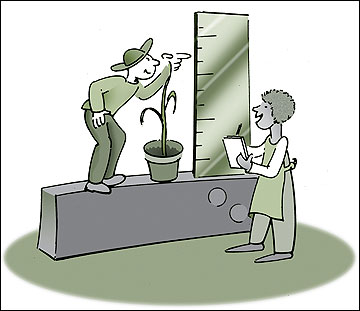
At some point, you may wish to evaluate your garden's progress, either for your own benefit or to apply for a grant. Consider creating a short survey for gardeners to complete. You may also want to meet with gardeners in person to ask questions and have a conservation about how things are going. Regardless of the method, the information you gather can help address areas of concern and enhance the garden's management.