Common Canning Myths
 Myth: You can safely water-bath can anything.
Truth: Low-acid foods, such as meat, vegetables and beans, must be pressure-canned to reach temperatures high enough to kill botulism spores. Water-bath canning is safe only for high-acid foods, such as fruits, tomatoes (with added acid), jams, jellies and pickles.
Myth: You can reuse lids if they look fine.
Truth: Standard lids should not be reused. The sealing compound is designed for one-time use. Reusing lids increases the risk of seal failure and food spoilage.
Myth: If the jar seals, it’s safe.
Truth: A sealed lid means a vacuum formed, not that the food was processed safely. The heat required to seal a lid is far lower than the heat required to kill harmful bacteria.
Myth: My great-grandmother’s canning recipe is safe — it’s been used for generations.
Truth: Many older canning methods and recipes are now considered unsafe. Research-tested recipes ensure proper acidity, density and processing times to keep food safe.
Myth: If it looks and smells OK, it is safe to eat.
Truth: Harmful bacteria can be present in a canned item without showing any signs of smell or visual spoilage.
For questions or tested recipes, contact your local Extension office or visit the National Center for Home Food Preservation website.
Preserving the Cherry Harvest
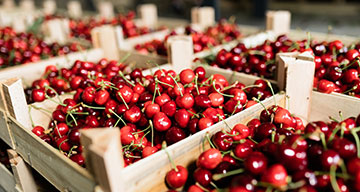 Are you anticipating a bumper crop of cherries this year? If so, consider canning them to enjoy their flavor long after harvest season ends. Canning is a safe, practical way to preserve in-season produce and extend its shelf life.
Whether you’re working with sweet cherries such as Bing, Lambert, Lapins and Rainier or tart varieties such as Montmorency and North Star, both can be safely preserved using a water-bath canner. Because cherries are naturally high in acid, they are well-suited for this method of home canning.
Begin by selecting fresh, firm, fully ripe cherries. Wash thoroughly, remove stems and pit if desired. If leaving the cherries unpitted, prick the skin with a clean needle to prevent splitting during processing. Splitting causes juice to escape, which can affect quality. After pricking or pitting, place cherries in cold water with ascorbic acid to prevent stem-end discoloration.
Knowing the variety of cherries and their intended use will help you select the best canning liquid. Options include water, apple juice, white grape juice or sugar syrup, each affecting flavor, color and texture. For example, cherries packed in light or medium syrup are ideal for muffins and quick breads, while those in heavier syrup are better suited for pies and other desserts.
There are five standard syrup concentrations for fruit canning: very light (10%), light (20%), medium (30%), heavy (40%) and very heavy (50%). As sugar concentration increases, fruit becomes sweeter and firmer; however, overly dense syrup may cause fruit to float. In contrast, using only water can result in a dull appearance and milder flavor because natural sugars leach from the fruit during processing.
For best quality, use medium syrup for sweet cherries and heavy syrup for tart cherries. Regardless of the liquid used, always follow a research-tested recipe and pour boiling liquid over the fruit to ensure safety and prevent jar breakage from thermal shock.
View Source: National Center for Home Food Preservation.