What is water-extractable organic carbon (WEOC)?
Soil organic matter (SOM) plays a critical role in maintaining soil fertility, supporting microbial activity, improving soil structure, and sustaining crop productivity. However, total soil organic carbon (SOC) often changes slowly, making it difficult to detect short-term responses to soil management practices. Water-extractable organic carbon (WEOC) represents a small, dynamic fraction of SOC that can be extracted using a standardized water-based laboratory procedure. This carbon originates from plant roots, crop residues, microorganisms, and decomposing organic matter. Although WEOC constitutes only a small proportion of total SOC, it is associated with microbial activity, organic matter decomposition, and nutrient cycling (Kalbitz et al., 2000; Chantigny, 2003). Consequently, WEOC can provide complementary information for monitoring changes in soil carbon dynamics and biological functioning.
Soil WEOC is often described as “labile,” “active,” or “readily available” carbon because some of the extracted carbon can be used relatively quickly by soil microorganisms. However, WEOC is more accurately described as a water-extractable carbon pool because not all of the carbon extracted with water is immediately available to microbes. In addition, the amount measured depends on sample preparation, soil-to-water ratio, extraction temperature and time, filtration, and analytical method (Chantigny, 2003; Liptzin et al., 2022). Therefore, WEOC results can be compared only when similar sampling and laboratory procedures are used.
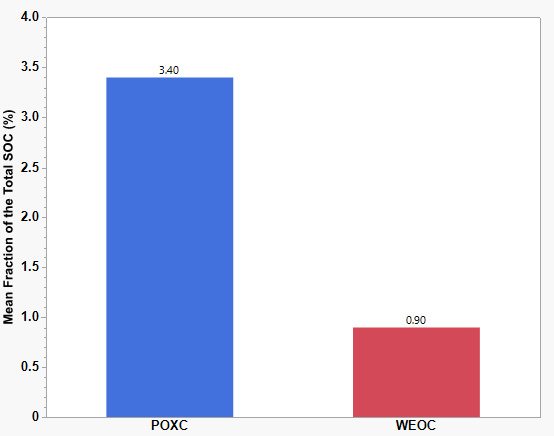
Soil WEOC makes up a relatively small portion of the total carbon stored in soil. Across a large network of long-term agricultural experiments, WEOC averaged approximately 0.9% of total SOC compared with approximately 3.4% for permanganate-oxidizable carbon (POXC) (Liptzin et al., 2022; Figure 1). Thus, WEOC represents a much smaller carbon pool than either POXC or total SOC.
What is extracted in a WEOC test?
A WEOC test does not extract one specific type of carbon compound. Instead, the water extract contains a mixture of soluble organic compounds originating from living roots, root exudates, microorganisms, crop residues, and decomposed soil organic matter. Litter and humus are also important sources of dissolved organic matter in soil (Kalbitz et al., 2000). These compounds differ in their chemical characteristics and how easily microorganisms can use them. Water-extractable organic matter may contain hydrophilic compounds that interact readily with water as well as more complex transphilic and hydrophobic compounds. The relative amounts of these components can change with soil depth, management, and environmental conditions (Hassouna et al., 2007). This is one reason WEOC should not be considered a direct measurement of a single “active” or “microbially available” carbon pool.
Research has demonstrated that when and where a soil sample is collected can affect WEOC. In a continuous-corn silage study in Illinois, Grebliunas et al. (2016) identified humic-like and fulvic-like compounds as important components of WEOC. While the cover-crop treatment did not produce a significant overall difference compared with continuous corn or a bare-soil control during the relatively short study period, WEOC concentrations varied with soil depth and sampling date. These results demonstrate that WEOC can vary over time and within the soil profile, and that management effects may not always appear immediately. Consistent sampling depth and timing were especially important when WEOC was used to monitor changes in soil health.
The term “water-extractable carbon” is used for several laboratory methods, and results from different methods are not necessarily comparable. Cold-water extraction at or near room temperature primarily removes carbon compounds that readily dissolve in water under relatively mild conditions. Hot-water extraction, commonly conducted at about 80°C (176°F), releases additional organic compounds that are not extracted as readily at room temperature. Consequently, hot-water extraction generally measures a larger and chemically different carbon pool than cold-water extraction (Zhao et al., 2013; Ćirić et al., 2016).
The amount of carbon released by the hot-water extraction was strongly related to several measures of soil biological functioning, including microbial biomass C, microbial N, mineralizable N, and extractable carbohydrates (Ghani et al., 2003; Figure 2). These relationships demonstrate that hot-water extractable carbon can provide useful information about biologically important soil carbon. The University of Missouri Soil Health Assessment Center’s cold-water WEOC procedure, described below in this publication, uses 4 g of soil and 40 mL of deionized water (1:10 soil-to-water ratio), followed by a 10-minute extraction. Because extraction temperature, duration, and other laboratory conditions differ substantially from the hot-water method, values obtained by the two procedures should not be compared directly or interpreted using the same ranges or thresholds. Table 1 summarizes important differences among selected water-extractable carbon methods reported in the literature.
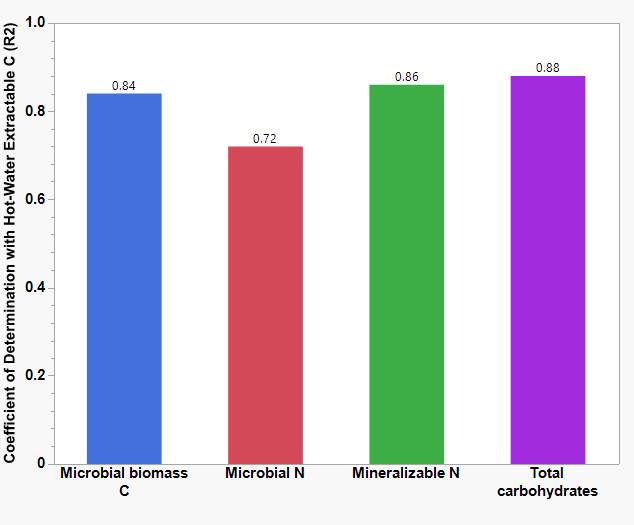
Table 1. Comparison of selected water-extractable carbon methods used in peer-reviewed studies.
| Method | Sample preparation | Extractant/ratio | Extraction conditions | Measurement | Primary source |
|---|---|---|---|---|---|
| Haney cold-water WEOC | Air-dried; dried overnight at 50°C; <2 mm sieve | 4 g soil + 40 mL DI water (1:10) | Shake 10 min; centrifuge 3,500 rpm 5 min; filter | Organic C analyzer | Haney et al. (2012) |
| CaCl2-extractable WEOC | Dried at 105°C; <1 mm sieve | 5 g soil + 50 mL 0.01 M CaCl2 | Shake 15 min; centrifuge 4,000 rpm 10 min; filter; acidify | UV-visible optical method | Grebliunas et al. (2016) |
| Sequential hot-water C | The method commonly uses 3 g of soil | 30 mL of water at room temperature, then fresh 30 mL of water | Cold extraction about 30 min; then 80°C for ~16 h; centrifuge; filter | Organic C analyzer | Ghani et al. (2003) |
| Cold vs. hot WEOM comparison | Study-specific preparation | Water at about 20-22°C vs. 80°C | Sequential extraction | Spectroscopic and C analyses | Zhao et al. (2013); Ćirić et al. (2016) |
Why does a small carbon pool matter?
Think of total SOC as the soil's long-term carbon reserve, while WEOC represents a small, more rapidly changing portion of that reserve. Soil microorganisms can use some WEOC compounds as an energy source to decompose organic materials and cycle nutrients (Tao & Lin, 2000). Soil WEOC can also be converted into microbial biomass and other organic compounds, released as carbon dioxide (CO2) through microbial respiration, retained on soil mineral surfaces, or transported through the soil with water.
Because WEOC is closely connected with recent root activity, crop residues, and microbial processes, it can respond relatively quickly to changes in soil management. For example, new root growth, residue decomposition, manure or other organic inputs, and cover crops may change WEOC before the change is large enough to be detected in total SOC (Chantigny, 2003; Haney et al., 2012; Liptzin et al., 2022). This sensitivity is one reason WEOC can be useful as a soil-health monitoring indicator. However, a higher WEOC value does not automatically mean healthier soil. WEOC can temporarily increase following residue incorporation, cover-crop termination, or rewetting of dry soil because these events release soluble carbon. Soil texture also affects WEOC because clay minerals can retain dissolved organic compounds. Therefore, WEOC should be interpreted in the context of sampling depth and timing, soil texture, recent organic inputs, weather conditions, and management history, rather than as a stand-alone rating of soil health.
How is WEOC related to soil biological activity?
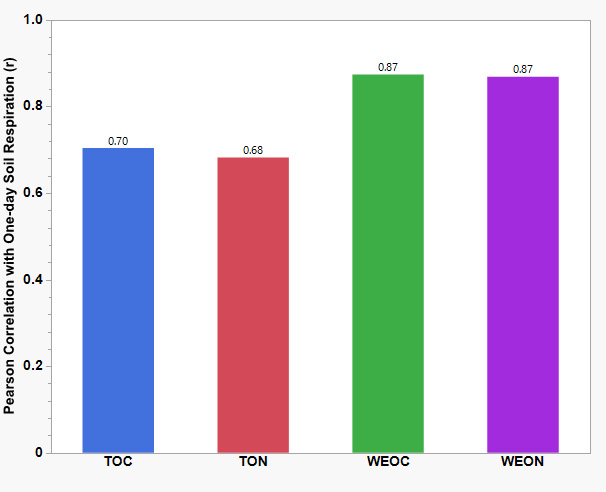
One of the main reasons for measuring WEOC is its relationship with soil microbial activity. Microorganisms require carbon as an energy source, and soils with higher water-extractable carbon often, though not always, show greater biological activity. Haney et al. (2012) demonstrated this relationship using 50 soils analyzed with a cold-water extraction procedure. One-day CO₂ release following soil rewetting, an indicator of short-term microbial respiration, was more strongly correlated with WEOC (r = 0.87) and water-extractable organic nitrogen (WEON; r = 0.87) than with total organic carbon (r = 0.70) or total organic nitrogen (r = 0.68) (Figure 3). These relationships suggest that water-extractable C and N pools are more closely associated with short-term microbial activity than the much larger pools of total soil C and N.
Results from a much larger set of long-term agricultural experiments provide additional evidence that WEOC was connected with biological soil processes. Liptzin et al. (2022) found positive relationships between WEOC and several other soil-health indicators, including SOC, POXC, 24- and 96-hour potential carbon mineralization, and β (beta)-glucosidase activity (Table 2). Among these indicators, WEOC had the strongest relationship with β-glucosidase (r = 0.71), an enzyme involved in breaking down cellulose and cycling carbon in soil.
These relationships are important, but they also show why WEOC should not be interpreted by itself. WEOC, POXC, soil respiration, β-glucosidase, and total SOC are related because they are connected to soil carbon cycling, but each measures a different part or process of the soil carbon system. For example, WEOC measures a water-extractable carbon pool, whereas soil respiration measures microbial activity, and SOC represents the much larger total organic carbon pool. Using these indicators together can provide a more complete picture of how soil is functioning.
Table 2. Selected published relationships between WEOC and other soil-health indicators.
| Soil indicator | Compared with | Relationship* | Study |
|---|---|---|---|
| 1-day CO2-C | WEOC | r = 0.87 | Haney et al. (2012) |
| SOC | WEOC | r = 0.60-0.76 | Chen et al., 2023; Haney et al., 2012; Liptzin et al., 2022; Rizinjirabake et al., 2019 |
| POXC | WEOC | r = 0.55 | Liptzin et al. (2022) |
| 24-h potential C mineralization | WEOC | r = 0.54 | Liptzin et al. (2022) |
| 96-h potential C mineralization | WEOC | r = 0.60 | Liptzin et al. (2022) |
| Beta-glucosidase | WEOC | r = 0.71 | Liptzin et al. (2022) |
| 28-day net N mineralization | WEOC | r = 0.62 | Castro Bustamante & Hartz (2016) |
| WEON | WEOC | r = 0.92 | Haney et al. (2012) |
| Total N | WEOC | r = 0.42-0.53 | Chen et al., 2023; Rizinjirabake et al., 2019 |
| Total organic N | WEOC | r = 0.73 | Haney et al., 2012 |
| Total P | WEOC | r = 0.50 | Chen et al., 2023 |
| Cation exchange capacity | WEOC | r = 0.50 | Rizinjirabake et al., 2019 |
| Microbial biomass C | WEOC | R2 = 0.94 | Nagano et al. (2025) |
| * Relationships are reported as Pearson correlation coefficients (r), except where otherwise indicated. The Nagano et al. (2025) value is a coefficient of determination (R2). Statistical significance, sample sizes, and analytical methods vary among studies; readers should consult the original publications. All correlations are study-specific and not directly transferable across soils, extraction methods, or management systems. | |||
WEOC, nutrient cycling, and nutrient transport
Water-extractable organic carbon is closely connected with nutrient cycling because soil microorganisms use soluble organic compounds as sources of carbon and energy. As microorganisms decompose and transform organic matter, nutrients such as nitrogen (N), phosphorus (P), and sulfur (S) can be released, immobilized in microbial biomass, or converted into other forms. Dissolved organic compounds can also interact with soil minerals, bind with metals, compete for sorption sites, and help transport organic forms of nutrients through the soil profile with water (Kalbitz et al., 2000; Chantigny, 2003). However, dissolved C, N, and P do not necessarily behave the same way in soil which makes their movement and availability difficult to predict under field conditions.
For crop management, WEOC should be considered an indicator of the water-extractable carbon pool potentially associated with microbial activity and nutrient cycling, rather than a direct measurement of microbial carbon availability or plant-available nutrients. For example, Castro Bustamante and Hartz (2016) found a positive relationship between WEOC and 28-day net N mineralization (r = 0.62; Table 2). This means soils with greater WEOC tended to have greater potential to mineralize N, but WEOC alone did not adequately predict how much N was available to a crop. Consequently, WEOC should complement rather than replace established soil tests and crop-specific nutrient recommendations.
The relationship between water-extractable carbon and nitrogen has also been evaluated as a possible indicator of N cycling. Haney et al. (2012) proposed using the WEOC-to-WEON ratio to assess the potential for N immobilization. However, analysis of a much larger network of North American long-term experiments found that the WEOC:WEON ratio was only weakly related to carbon mineralization (r < 0.1; Liptzin et al., 2022). Therefore, a single WEOC:WEON ratio should not be used as a universal threshold for predicting N availability or immobilization across different soils and management systems.
Less is known about the relationship between WEOC and phosphorus cycling. Soluble organic carbon can influence P movement and microbial P cycling, but there is currently no established WEOC threshold for predicting soil-test P, phosphatase activity, microbial biomass P, or crop P uptake. Additional research is needed to determine whether WEOC can improve our understanding of P cycling and P availability in Missouri agricultural soils.
Laboratory measurement of WEOC at the MU Soil Health Assessment Center (SHAC)
The University of Missouri (MU) Soil Health Assessment Center (SHAC) measures WEOC using a cold-water extraction procedure based on Haney et al. (2012). The measurement uses a known amount of dried and sieved soil that is mixed with deionized water to extract water-soluble carbon compounds. The soil is then separated from the water by centrifugation and filtration, and the organic carbon concentration in the clear extract is measured with a liquid total organic carbon analyzer. Because WEOC is a method-defined measurement, it is essential to follow the same extraction and analytical procedure for every sample. Changes in drying temperature, soil-to-water ratio, extraction time, filtration, or analytical method can affect the measured WEOC concentration.
Step-by-step laboratory procedure
- Dry the soil samples overnight at 50°C. Use the same drying procedure for all samples because drying conditions can affect the amount and composition of water-extractable carbon (Liptzin et al., 2022).
- Prepare the sample by gently grinding the dried soil as needed, passing it through a 2-mm sieve, and thoroughly mixing the sieved soil to obtain a representative sample.
- Weigh approximately 4 g of dried soil into a clean extraction tube and record the actual soil weight.
- Add water. Add 40 mL of deionized water. This provides a 1:10 soil-to-water ratio (1 g soil per 10 mL water).
- Extract the WEOC. Cap the tube securely and shake the soil-water mixture for 10 minutes on a mechanical shaker.
- Separate the soil and water. Centrifuge the suspension at approximately 3,500 rpm for 5 minutes using the laboratory's validated centrifuge procedure.
- Filter the extract. Carefully remove the tube without disturbing the settled soil. Decant the liquid portion, or supernatant, through Whatman Grade 2V filter paper or a laboratory-approved equivalent.
- Collect the filtrate. Transfer the filtered extract into a clean vial suitable for analysis.
- Measure organic carbon. Determine the organic carbon concentration in the extract using a validated liquid total organic carbon analyzer. The analytical procedure should distinguish organic carbon from inorganic carbon forms such as carbonate and bicarbonate.
- Run a procedural blank. Process deionized water without soil through the same shaking, centrifugation, filtration, and analytical steps. The blank accounts for any carbon introduced by the water, containers, filter paper, or laboratory handling.
- Calculate WEOC. Subtract the blank concentration from the sample concentration, account for any dilution, and calculate WEOC on a dry-soil basis:

Where, Cs = carbon concentration of the soil extract, mg C L-1; Cb = procedural blank concentration, mg C L-1; V = extraction-water volume, L; DF = dilution factor; and M = dry soil mass, kg.
For example, if the analyzer reports 24.8 mg C L-1 for the soil extract and 0.8 mg C L-1 for the procedural blank with 0.040 L extraction water, a 0.0040 kg soil mass, and no additional dilution, calculate WEOC as: WEOC = [(24.8 - 0.8) × 0.040 × 1] / 0.0040 = 240 mg C kg-1 soil. In the Haney test, WEOC commonly ranges from 100 to 300 mg C kg-1 soil, although values may occur outside this range.
Quality control is important for reliable WEOC results
Because WEOC measures a relatively small and dynamic carbon pool, careful laboratory quality control is necessary. Small differences in sample preparation or analysis can affect the result. Important quality-control practices include procedural blanks, calibration and check standards, analytical duplicates, dilution records, contamination and carryover controls, and consistent methods. Results produced by different WEOC methods should not automatically be considered equivalent.
Soil sampling and handling for reliable WEOC results
Good laboratory analysis cannot compensate for inconsistent field sampling. Sampling depth, time of year, soil moisture history, and recent management can all influence WEOC, so consistent sampling is especially important when the goal is to monitor changes over time. For example, Grebliunas et al. (2016) found significantly greater WEOC in the surface 0–2 inches compared to the 2–8 inch soil layer. Seasonal differences can also occur. Sherbine et al. (2023) reported substantial seasonal and year-to-year variation in components of the Haney Soil Health Test, with biological measurements generally greatest in spring. Therefore, a change in WEOC from one sampling event to another may reflect sampling conditions rather than a true management effect.
For reliable comparisons, keep sampling depth consistent, collect a representative composite sample (Parvej et al., 2026), sample at a similar time each year, record management decisions, use the same laboratory method, and document sampling carefully.
How can management affect WEOC?
Management practices affect WEOC by altering how much carbon enters the soil, where it is stored, and how quickly it is decomposed or protected. Living roots release soluble carbon compounds, crop residues provide decomposable organic material, and manure and compost add organic carbon directly. Tillage and residue management can influence how rapidly these materials decompose and how much carbon remains near the soil surface.
Across long-term agricultural experiments evaluated by Liptzin et al. (2022), soil carbon indicators generally responded positively to practices such as organic nutrient additions, reduced tillage, residue retention, and cover crops. Across the carbon indicators included in that study, positive management responses ranged from 12–33% for organic nutrient additions, 5–27% for decreased tillage, 10–33% for residue retention, and 11–42% for cover crops. These percentages describe responses across several carbon indicators and should not be interpreted as expected increases in WEOC specifically.
Soil WEOC can also respond rapidly to recent management, which makes interpretation more complicated. For example, Grebliunas et al. (2016) did not find a significant overall difference in WEOC among cover-crop, continuous-corn, and bare-soil treatments during their relatively short study. However, WEOC increased following cover-crop termination and varied substantially with sampling depth and time. Similarly, Chantigny (2003) showed that dissolved and water-extractable organic matter fluctuated over short periods because of vegetation, residue decomposition, soil moisture, and other environmental factors. Therefore, a single WEOC measurement should not be used to evaluate a management practice. Repeated measurements collected at the same depth and approximately the same time of year provide a much stronger basis for evaluating management effects. Long-term trends should be interpreted alongside SOC, soil respiration, or other biological indicators, soil fertility measurements, and management records. Table 3 summarizes how common management practices influenced WEOC and related soil carbon indicators.
Table 3. Management factors that can influence WEOC and related carbon indicators.
| Management factor | Expected WEOC mechanism | Evidence-based interpretation | Sources |
|---|---|---|---|
| Cover crops / continuous living roots | Often increases soluble C inputs through roots and residues. Responses may be seasonal or delayed. | Long-term C-indicator responses were generally positive. A short Illinois study found no overall treatment effect but a post-termination increase over time. | Liptzin et al. (2022); Grebliunas et al. (2016) |
| Reduced tillage | Favors retention of C near the surface and may increase C indicators over time. | Positive response across long-term sites, but magnitude depended on site conditions, including water inputs | Liptzin et al. (2022) |
| Residue retention | Maintains fresh substrate entering the soil C cycle. | Generally positive response of C indicators in long-term paired treatments | Liptzin et al. (2022) |
| Manure / compost or other organic nutrients | Adds soluble and decomposable organic compounds as well as nutrients. | Generally positive response of C indicators; short-term magnitude depends on material and timing | Liptzin et al. (2022); Chantigny (2003) |
| Greater cash-crop count or rotation diversity alone | Changes residue quality and rooting, but does not guarantee a WEOC increase. | No consistent positive response across the large long-term synthesis. | Liptzin et al. (2022) |
| Intensive disturbance / low residue return | Reduces long-term C inputs and protection, but a disturbance can also create a temporary soluble-C pulse. | Interpret with recent tillage/residue history rather than assuming every short-term increase is an improvement. | Chantigny (2003); Liptzin et al. (2022) |
Interpreting a WEOC test result
Water-extractable organic carbon is commonly reported as mg C kg-1 dry soil, which is numerically equivalent to parts per million (ppm) on a mass basis. Unlike routine soil fertility tests, there is currently no broadly validated WEOC critical level or sufficiency range for crop production. Therefore, WEOC should not be interpreted as a simple “low,” “medium,” or “high” fertility rating. The most useful way to interpret WEOC is to monitor changes in the same field over time (Table 4). For example, a producer adopting cover crops, reduced tillage, or greater residue retention can establish a baseline WEOC value and then repeat the test over several years. For these comparisons to be meaningful, samples should be collected at the same depth, at approximately the same time of year, and analyzed using the same sample preparation and laboratory method.
Table 4. Trend-based interpretation guide for WEOC results. Source: Interpretive synthesis from Chantigny (2003), Haney et al. (2012), Grebliunas et al. (2016), Liptzin et al. (2022), and Sherbine et al. (2023).
| Observed pattern | What it may mean | Recommended interpretation step |
|---|---|---|
| WEOC increases gradually over repeated and consistently timed samples. | May indicate increasing soluble carbon inputs and/or a larger biologically connected C pool | Confirm with SOC, respiration, or other biological indicators; document roots, residue, and organic inputs. |
| WEOC spikes after cover-crop termination, manure, residue incorporation, or rewetting | May represent a short-lived pulse of soluble C rather than a durable change | Resample at the standard monitoring time before assigning a long-term soil-health interpretation |
| WEOC decreases from the previous year | Could reflect lower C input, stronger sorption, weather/ season, or true decline | Check sampling date, depth, moisture history, residue management, and laboratory method before concluding degradation |
| Two fields have different WEOC values | Differences may arise from management, texture, climate, depth, or method | Compare fields with similar soil and sampling context. Preferably use within-field trends. |
| WEOC is high, but the yield is poor | WEOC is not a nutrient sufficiency or yield test | Evaluate pH, plant-available nutrients, compaction, drainage/water stress, pests, disease, and crop management. |
| Results come from different laboratories or methods | Apparent difference may be methodological | Do not trend results directly unless methods are demonstrated to be equivalent. |
Published research using the Haney Soil Health Tool (Haney et al., 2018) provides a useful context for the range of WEOC values that may occur with that particular method. However, these values are method-specific and should not currently be converted into universal soil-health or fertility categories. A relatively high WEOC value does not necessarily mean that a soil has adequate nutrients, a favorable pH, good structure, or sufficient drainage. Likewise, a relatively low WEOC value does not necessarily indicate poor management. Soil texture, sampling depth, season, recent residue inputs, soil moisture history, and laboratory method can all influence the result. For these reasons, the most informative question is usually not “Is my WEOC value good or bad?” but rather “How is WEOC changing over time under my management?”
Important factors to consider when interpreting WEOC results
- WEOC is a method-defined measurement. It does not represent one chemically distinct carbon pool. Soil-to-water ratio, extraction temperature and duration, sample drying, filtration, and analytical method can all influence the measured value (Chantigny, 2003; Liptzin et al., 2022).
- Sample preparation matters. Drying makes samples easier to standardize and analyze, but drying can also change the amount and composition of carbon subsequently extracted with water. Samples being compared should be prepared using the same procedure (Liptzin et al., 2022).
- Soil texture matters. Soils differ in their ability to retain and stabilize organic compounds. In the North America Project, clay content was positively associated with WEOC at the site level, while temperature was negatively associated with WEOC in the full model. Inherent site characteristics explained a meaningful portion of WEOC variation (adjusted R2 = 0.35; Liptzin et al., 2022). Consequently, WEOC values from soils with substantially different textures or environments should be compared cautiously.
- Sampling depth and season matter. WEOC is often concentrated near the soil surface, where roots and crop residues supply fresh carbon. It can also change during the growing season and among years (Grebliunas et al., 2016; Sherbine et al., 2023). Consistent sampling depth and timing are essential for monitoring trends.
- WEOC is not a fertilizer recommendation. WEOC provides information about a water-extractable carbon pool associated with biological nutrient cycling, but it does not directly measure plant-available N, P, K, S, or micronutrients. Routine soil fertility testing and crop-specific nutrient recommendations are still needed.
- WEOC does not represent all carbon used by microorganisms. In the North America Project, carbon mineralized during 24- and 96-hour incubations averaged approximately 48% and 106%, respectively, of the amount measured as WEOC (Liptzin et al., 2022). This indicates that microbial respiration draws from carbon pools beyond the carbon recovered by the WEOC extraction.
- Results from different WEOC methods may not be comparable. Studies and laboratories may use deionized water, calcium chloride (CaCl2), hot water, different soil-to-solution ratios, different extraction times, or different analytical techniques. A numerical difference between two tests may therefore reflect the laboratory method rather than a true difference in soil condition.
How does WEOC complement other soil-health indicators?
No single soil test provides a complete picture of soil health. This is particularly true for carbon because soil contains carbon pools that differ greatly in size, stability, and biological activity. Soil WEOC measures a relatively small, water-extractable portion of the soil carbon pool. In comparison, SOC measures the much larger total organic carbon pool, while POXC measures a chemically oxidizable fraction of SOC. Soil respiration measures microbial activity by determining the amount of CO2 released under standardized conditions. Each indicator, therefore, provides different but complementary information.
Long-term agricultural research shows that these indicators are often related, but they do not respond identically to soil texture, climate, management, or laboratory conditions (Liptzin et al., 2022). For example, total SOC is useful for evaluating long-term carbon status but generally changes slowly. WEOC can respond more rapidly to recent root and residue inputs, while soil respiration provides a more direct measure of microbial activity. For a more complete assessment, WEOC should be interpreted alongside other soil health measurements rather than by itself. A useful approach is to combine WEOC with at least one measure of the total carbon pool, such as SOC or SOM; one measure of biological activity, such as soil respiration; and appropriate chemical and physical soil indicators, such as pH, nutrient levels, aggregate stability, or compaction. Table 5 compares WEOC with several complementary soil-health indicators and explains what each measurement contributes to soil-health interpretation.
Table 5. How WEOC complements other soil-health carbon and nitrogen indicators. Source: Synthesized from Haney et al. (2012), Ghani et al. (2003), and Liptzin et al. (2022).
| Indicator | What it measures | Primary strength | Key limitation | Best use with WEOC |
|---|---|---|---|---|
| Soil organic carbon (SOC) | Total organic C in soil | Long-term C stock and general soil condition | Changes slowly; can mask early management response | Pair with WEOC to distinguish the total pool from soluble fraction |
| WEOC | Water-extractable organic C under a specified method | Sensitive soluble C pool connected to roots, residues, and microbes | Strongly method-, texture-, season-, and drying-dependent; not all is immediately bioavailable | Use for consistent within-field tracking |
| POXC | C oxidized by dilute permanganate | Management-sensitive chemically oxidizable fraction | Operational fraction; not identical to microbial availability | Complements WEOC and SOC |
| 24-h potential C mineralization / CO2 flush | CO2 produced by microbes after standardized wetting / incubation | Direct biological activity response | Affected by incubation conditions and microbial state | Useful biological companion to WEOC |
| WEON | Water-extractable organic N | Soluble organic N pool measured alongside WEOC | C:N interpretation is not universally calibrated | Useful context for C-N coupling; avoid universal threshold assumptions |
| Hot-water extractable C | C released by prolonged warm/hot water extraction | Larger heat-released labile/ biochemical pool in many protocols | Not directly comparable to cold-water WEOC | Use only with its own method-specific interpretation |
Practical recommendations for Missouri farmers and crop advisers
For Missouri producers who want to use WEOC to monitor soil health, the following practices will make the results more meaningful:
- Establish a baseline. Sample before or near the beginning of a management change, such as adopting cover crops, reducing tillage, adding manure or compost, or changing residue management.
- Track trends rather than relying on one measurement. Repeated measurements provide more useful information than a single WEOC value.
- Sample consistently. Use the same sampling depth and approximately the same sampling time each year.
- Keep good management records. Record crop rotation, cover crops, tillage, residue removal or retention, manure and compost applications, sampling dates, and major weather or soil-moisture events.
- Use the same laboratory and analytical method. When possible, use the same laboratory, such as the MU Soil Health Assessment Center, and the same WEOC extraction procedure each year.
- Interpret WEOC with other measurements. Consider SOC or SOM, soil respiration, POXC or another active-carbon indicator, routine soil fertility tests, and physical measurements such as aggregate stability or compaction.
- Investigate unexpected changes before drawing conclusions. A sudden increase or decrease in WEOC may result from sampling depth, season, recent residue or organic inputs, soil moisture, or a change in laboratory method rather than a long-term change in soil health.
- Compare similar soils. For research, conservation programs, or field benchmarking, compare soils with similar texture and climatic conditions and clearly identify the laboratory method used.
Summary and key takeaways
Water-extractable organic carbon represents a small but dynamic portion of the soil organic carbon pool. It originates from roots, crop residues, microorganisms, and decomposing organic matter, and is closely linked to microbial activity and nutrient cycling. Because this carbon pool can respond to recent management more quickly than total SOC, WEOC can be a useful indicator for monitoring changes in soil biological functioning (Haney et al., 2012; Liptzin et al., 2022). However, WEOC should not be viewed as a stand-alone measure of soil health. A higher value is not automatically better, and a lower value is not automatically worse. WEOC is not a direct measure of all biologically available carbon, crop nutrient availability, or yield potential. Its value can be influenced by soil texture, sampling depth, season, recent management, sample preparation, and laboratory procedure. Cold-water- and hot-water-extractable carbon measurements represent different method-defined carbon pools and should not be interpreted on the same scale.
For Missouri farmers and crop advisers, the most defensible use of WEOC is to establish a baseline value and monitor the same field over time using consistent sampling and laboratory procedures. Combining WEOC with SOC or SOM, soil respiration, other soil-health indicators, routine fertility tests, and management records provides a much more complete picture of how a soil is functioning and responding to management.
Additional research in Missouri is needed to characterize WEOC across different soil textures and management systems, determine normal seasonal variability in corn-soybean and cover-crop systems, evaluate relationships with microbial biomass and soil enzyme activity, and determine whether WEOC can improve predictions of N and P cycling beyond currently established soil-health and fertility indicators.
References
Castro Bustamante, S. J., & Hartz, T. K. (2016). Carbon mineralization and water-extractable organic carbon and nitrogen as predictors of soil health and nitrogen mineralization potential. Communications in Soil Science and Plant Analysis, 47(sup1), 46-53.
Chantigny, M. H. (2003). Dissolved and water-extractable organic matter in soils: A review on the influence of land use and management practices. Geoderma, 113(3-4), 357-380.
Chen, H. M., Shi, F. X., Xu, J. W., Liu, X. P., & Mao, R. (2023). Tree mycorrhizal type controls over soil water-extractable organic matter quantity and biodegradation in a subtropical forest of southern China. Forest Ecology and Management, 535, 120900.
Ćirić, V., Belić, M., Nešić, L., Šeremešić, S., Pejić, B., Bezdan, A., & Manojlović, M. (2016). The sensitivity of water extractable soil organic carbon fractions to land use in three soil types. Archives of Agronomy and Soil Science, 62(12), 1654-1664.
Ghani, A., Dexter, M., & Perrott, K. W. (2003). Hot-water extractable carbon in soils: A sensitive measurement for determining impacts of fertilisation, grazing and cultivation. Soil Biology and Biochemistry, 35(9), 1231-1243.
Grebliunas, B. D., Armstrong, S. D., & Perry, W. L. (2016). Changes in water-extractable organic carbon with cover crop planting under continuous corn silage production. Air, Soil and Water Research, 9, 45-54.
Haney, R. L., Franzluebbers, A. J., Jin, V. L., Johnson, M.-V., Haney, E. B., White, M. J., & Harmel, R. D. (2012). Soil organic C:N vs. water-extractable organic C:N. Open Journal of Soil Science, 2(3), 269-274.
Haney, R. L., Haney, E. B., Smith, D. R., Harmel, R. D., & White, M. J. (2018). The soil health tool-Theory and initial broad-scale application. Applied Soil Ecology, 125, 162-168.
Hassouna, M., Theraulaz, F., & Massiani, C. (2007). Direct estimation of nitrate, total and fractionated water extractable organic carbon (WEOC) in an agricultural soil using direct UV absorbance deconvolution. Talanta, 71(2), 861-867.
Kalbitz, K., Solinger, S., Park, J.-H., Michalzik, B., & Matzner, E. (2000). Controls on the dynamics of dissolved organic matter in soils: A review. Soil Science, 165(4), 277-304.
Liptzin, D., Norris, C. E., Cappellazzi, S. B., Bean, G. M., Cope, M., Greub, K. L. H., Rieke, E. L., Tracy, P. W., Aberle, E., Ashworth, A., Bañuelos Tavarez, O., Bary, A. I., Baumhardt, R. L., Borbón Gracia, A., Brainard, D. C., Brennan, J. R., Briones Reyes, D., Bruhjell, D., Carlyle, C. N., ... Honeycutt, C. W. (2022). An evaluation of carbon indicators of soil health in long-term agricultural experiments. Soil Biology and Biochemistry, 172, Article 108708.
Nagano, H., Kanda, Y., Suzuki, Y., Hiradate, S., Koarashi, J., Atarashi-Andoh, M., & Guo, Z. (2025). Estimation of microbial biomass based on water-extractable organic matter from air-dried soils from Japanese forests and pasture. Discover Soil, 2, 27.
Parvej, M. R., Brandt, D., Nelson, K., & Myers, R. (2026). Soil sampling depth and collection techniques for soil fertility and soil health testing (Publication No. G9070). University of Missouri Extension.
Rizinjirabake, F., Tenenbaum, D. E., & Pilesjö, P. (2019). Sources of soil dissolved organic carbon in a mixed agricultural and forested watershed in Rwanda. Catena, 181, Article 104085.
Sherbine, K., Frankl, A., Fernandez, F., Pease, L., & Cates, A. M. (2023). Haney Soil Health Test changes with season, not subsurface drainage. Agricultural & Environmental Letters, 8(1), Article e20098.
Tao, S., & Lin, B. (2000). Water soluble organic carbon and its measurement in soil and sediment. Water Research, 34(5), 1751-1755.
Zhao, A., Zhang, M., & He, Z. (2013). Spectroscopic characteristics and biodegradability of cold and hot water-extractable soil organic matter under different land uses in subarctic Alaska. Communications in Soil Science and Plant Analysis, 44(20), 3030-3048.