
Published
What to feed when there's nothing to feed
Tips for feeding cattle during low hay supplies, including alternative feeds and strategies to reduce costs and maintain herd health.
Published
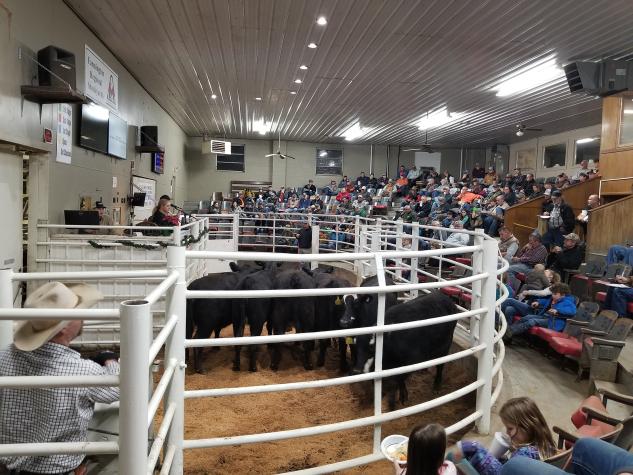
MU Show-Me-Select program had successful 2023
Show-Me-Select heifer program saw strong 2023 sales, high-quality heifers, and growing demand despite drought challenges.
Published
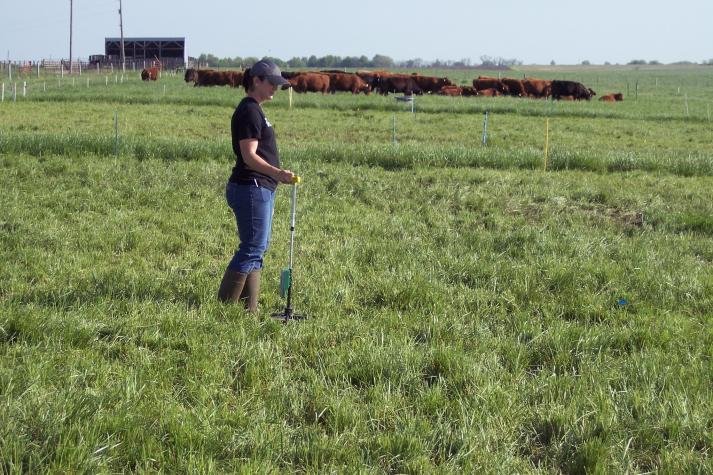
10 tips to bulletproof your beef operation
Boost beef farm resilience with expert tips on grazing, hay storage, herd health, and financial strategies to thrive through cycles and drought.
Published
A No. 2 pencil is a beef producer's best tool
COLUMBIA, Mo. – One of the most important tools for livestock producers is a sharp No. 2 pencil. The pencil and some basic arithmetic can help take the emotion out of desperate measures to find feed. When you do the math, buying grain or other alternative feeds may be the best bang for the buck, says University of Missouri Extension agricultural business specialist Wesley Tucker.
Published
Early weaning calves to reduce nutrient needs during drought
STOCKTON, Mo. – “Early wean calves to reduce cow herd nutrient needs to match drought-limited feed resources,” says Patrick Davis, University of Missouri Extension livestock field specialist. In addition, early weaning can improve calf performance because calves are put on a more nutritious diet following weaning.Davis discusses strategies to help cattle producers be successful in early weaning calves:
Published
Things to consider as you feed your way through the drought
“Cattle producers are dealing with varying degrees of drought and forage resources,” says Patrick Davis MU Extension livestock field specialist. Some cattle producers have received adequate rain and are recovering from the 2022 drought through rebuilding forage and cattle resources. Other cattle producers have received limited rain and are continuing to deal with drought conditions from 2022 with less resources in 2023.
Published
It's time to remove fescue seed heads to reduce toxins
Removing fescue seed heads helps reduce toxins, improve cattle health, and boost pasture quality through clipping, haying, or spraying.
Published
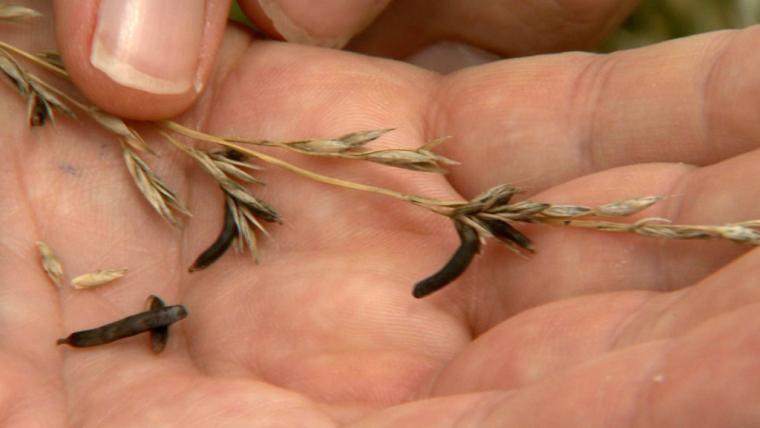
Time to scout for ergot
COLUMBIA, Mo. – University of Missouri Extension state forage specialist Craig Roberts says now is the time to check for ergot in the seed heads of grasses. Ergot can cause severe illness in livestock, especially cattle and horses. One early sign is yellow syrup drops called honeydew in flowering seed heads. Honeydew hardens and turns into dark ergot bodies, which look like mouse droppings and are up to 10 times the size of the grain.
Published
Extension specialist gives 4 O's for 'crazy' cows
Learn the 4 O's—open, old, ornery, other—to cull unproductive cows and protect herd profitability.
Published
MU Extension Feedlot School set for March 22-23, Kirksville
Missouri cattle producers: Attend the Feedlot School in Kirksville, March 22-23, to learn about cattle nutrition, health management, and economics.
Published
Forage expert gives 4 top reasons to frost seed legumes
Frost seeding legumes boosts pasture yield, cattle health, and reduces fertilizer costs in Missouri fields.
Published
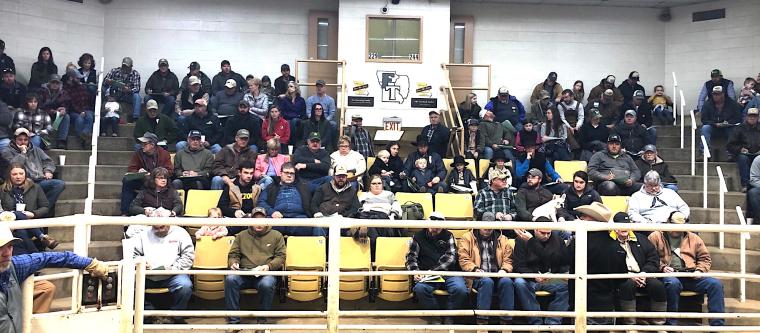
Show-Me-Select heifers average more than $2,600 per head in fall sales at Fruitland
Show-Me-Select heifers averaged over $2,600 per head in Fruitland fall sales, with strong demand for top genetics.
Published
Boost profits by frost seeding legumes now
Frost seed legumes in cool-season pastures to boost cattle weight and profits while improving pasture health.
Published
Beef producers: 'Get your house in order' in 2023
KIRKSVILLE, Mo. – Beef producers should approach 2023 with cautious optimism – matched with resolutions of good management and investment in infrastructure, says University of Missouri Extension agriculture business specialist Wesley Tucker.
Published
Fescue foot reported in Missouri cattle
Fescue foot threatens Missouri cattle during cold spells. Learn warning signs, prevention steps, and pasture solutions to protect herds.
Published
Start the year on the right foot with your cattle record-keeping system
STOCKTON, Mo. – As the year ends, University of Missouri Extension livestock specialist Patrick Davis urges cattle producers to evaluate their record-keeping system to determine if it was successful.“Record-keeping starts with proper cattle identification,” Davis said. Two nationally known identification systems are the four-digit system and the letter and three-digit system.
Published
How you feed hay this winter is more important than ever
GALENA, Mo. – With a shortage of standing forage for cattle and the low availability of hay, it is more important than ever this winter to reduce waste when feeding hay.Hay waste is normal, but it can be controlled and minimized, said University of Missouri Extension agronomy specialist Tim Schnakenberg.
Published
Calculating winter feed costs for beef cows
Estimate winter feed costs for beef cows based on hay quality and calving season to optimize expenses and ensure proper nutrition.
Published
Make sure bulls are ready for fall breeding season
STOCKTON, Mo. – Make sure bulls are physically and reproductively sound before the fall breeding season, says University of Missouri Extension livestock specialist Patrick Davis.
Published
Plan to meet weaning challenges
SEDALIA, Mo. – Weaning spring calves may be more of a challenge this year because of short pasture supplies and the questionable nutritional value of this year’s hay crop.“Pay very close attention to body condition score in September and be prepared to wean, if necessary,” said Gene Schmitz, University of Missouri Extension livestock specialist in Sedalia.Schmitz recently worked through a feeding scenario for a producer that highlights…
Published
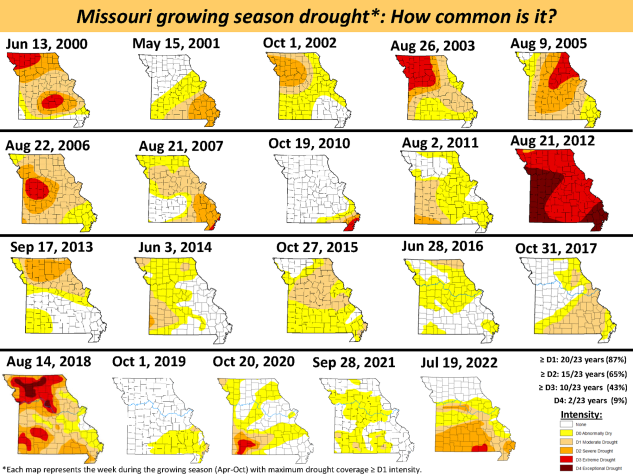
SW Missouri no stranger to drought in forages
Recurring drought in southwest Missouri strains pastures and forage growth; strategies for resilience and recovery.
Published
Short forage supplies require producers to make tough decisions
COLUMBIA, Mo. – Dry weather and short pastures have reduced forage supplies, prompting livestock producers to ponder “could have, would have, should have” scenarios, says University of Missouri Extension livestock specialist Eric Meusch.Producers should try to match their herd needs to anticipated forage supplies, Meusch says. This requires planning before a drought. Many factors will be out of your control if you wait until drought…
Published
Nitrate, prussic acid poisoning follow drought
COLUMBIA, Mo. – Nitrates and prussic acid build up in forages to levels dangerous to livestock during drought.Livestock face severe illness and even death after eating affected forages, says University of Missouri Extension agronomist Jamie Gundel.Nitrates tend to concentrate in the bottom third of the plant. It shows in the plant’s stem and stalks more than leaves, Gundel says.
Published
Tough culling decisions come with drought, forage shortages
COLUMBIA, Mo. – With dry weather and short pastures, Missouri cow-herd owners face tough culling decisions. One way to match cows’ needs to available grass is to sell cows.Give careful thought to which grass eaters go first, says Eric Bailey, University of Missouri Extension beef nutritionist. Under drought stress, identifying those cows becomes urgent.
Published
Corn silage as a forage
COLUMBIA, Mo. – An emergency feeding situation is shaping up for Missouri’s beef producers because of the drought. University of Missouri Extension recently hosted University of Wisconsin agronomist Joe Lauer on the MU Extension Forage and Livestock Hour to discuss his research on corn silage as a forage.