-
Image
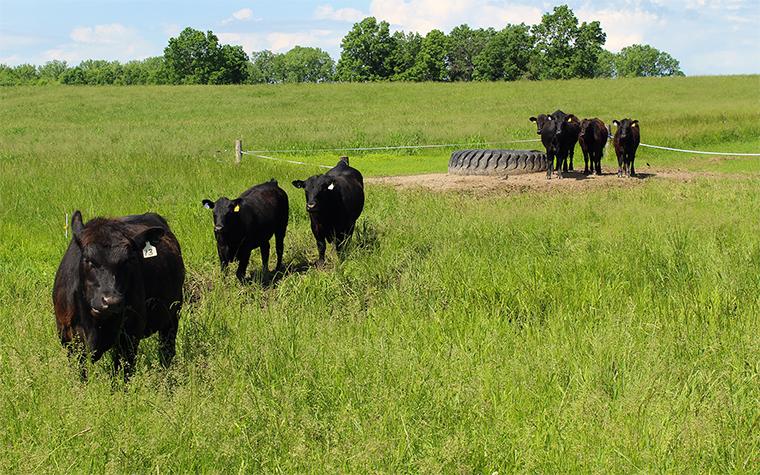 File photo by Linda Geist.
COLUMBIA, Mo. – Rotational grazing is often promoted as a cure-all for pasture health, soil conservation and ranch profitability.
Yet adoption remains surprisingly low, said Carson Roberts, state forage specialist with University of Missouri Extension. USDA data shows that only about 40% of cow-calf operations use any form of rotational grazing, and just 16% use intensive systems with paddock rotations of 14 days or less. Many producers conclude that the daily labor rarely justifies the payoff, Roberts said.
He notes that virtual fencing, while helpful, doesn’t solve the core challenges. “It sidesteps the real killers: herd fragmentation, water limits, performance trade-offs and inflexible stocking,” he said.
Why rotational grazing often fails
Frequent moves with too few animals. Moving cattle takes time—typically 15 to 45 minutes per move for experienced graziers. With small groups, that labor doesn’t scale, Roberts said. His research shows that daily labor costs can range from 50 cents per cow to as low as 1 cent per cow, depending on herd size and rotation length.
Too many separate groups. Fragmentation is one of the biggest efficiency killers. Roberts shared an example of a producer running 350 cows in 17 separate groups across 93 paddocks, or about 5.5 paddocks per group. Daily moves required more than 12 hours of labor, and even twice-weekly moves burned roughly two hours each day. Monitoring multiple groups and the forage resource remains challenging even with virtual fencing.
Poor water access. Water, not fencing, is often the limiting factor. When cattle must travel more than 800 feet to drink, their intake and forage utilization decline. That leads to back-grazing, trailing and pugging. Virtual fencing can’t fix these water access problems.
Lower individual animal performance. Some producers back away from rotational grazing because calves may wean lighter, even though pounds per acre usually increase due to higher stocking. Experienced graziers accept lower individual gains in exchange for better overall output, but many producers abandon rotational grazing to focus on individual animal gains.
Stocking rate rigidity in variable conditions. Drought and seasonal swings can quickly derail a rigid rotation. When forage crashes and regrowth slows, overgrazing can occur even in rotational systems. Fixed plans that don’t account for year-to-year and season-to-season variability often fail to maintain adequate rest periods
How to make rotational grazing work without burnout
Roberts offers several practical strategies to capture the benefits of rotational grazing without being overwhelmed:
Set an economically smart rotation interval. Weekly moves often deliver most of the benefits—improved recovery, utilization and soil health—without the labor burden of daily or three-day rotations, especially for smaller herds. “Weekly hits the sweet spot for many,” said Roberts.
Combine animals into larger herds. Merging groups into one larger herd reduces labor per head and increases grazing efficiency. Common fears about trampling, bull behavior or calf performance are often overstated, and well-managed large mobs typically improve both pasture health and animal outcomes.
Fix water infrastructure first. Water access within 800 feet improves intake, encourages even grazing and reduces trailing and pugging. Roberts emphasizes that water improvements often pay off faster than adding physical or virtual fencing.
Monitor continuously. Cow body condition, manure quality and pasture appearance provide real-time feedback. Look for good residual forage, well-formed dung pats and cattle maintaining flesh. Use observations to adjust rotation timing, stocking or supplementation. Remember that rotational grazing increases total production, not individual animal performance.
Build flexible stocking and drought plans. Pasture growth changes dramatically year to year. Producers should prepare to destock early during dry periods, maintain hay reserves or designate sacrifice areas. Adjust rest periods to grass recovery.
“Implement these fixes and rotational grazing stops being a chore and starts delivering real, sustainable returns without the 12-hour move days,” Roberts said. He also encourages producers to attend grazing schools to strengthen their management skills.
| HERD SIZE | Days between paddock moves | |||
|---|---|---|---|---|
| 1 | 2 | 3.5 | 7 | |
| 30 | $0.50 | $0.25 | $0.14 | $0.07 |
| 50 | $0.30 | $0.15 | $0.09 | $0.04 |
| 100 | $0.15 | $0.08 | $0.04 | $0.02 |
| 200 | $0.08 | $0.04 | $0.02 | $0.01 |
| 400 | $0.04 | $0.02 | $0.01 | $0.01 |