-
Image
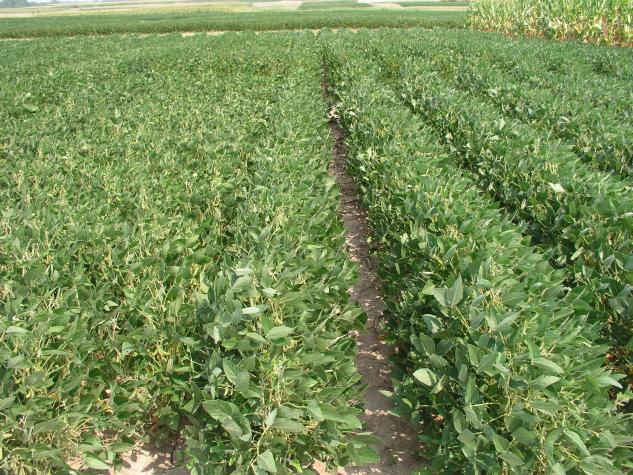 Soybean field. File photo.
COLUMBIA, Mo. – Farmers know that fertilizer prices fluctuate. They have seen a substantial shift in potassium (K) and phosphorus (P) prices, from low prices in the 2020 growing season to the highest prices in the past decade for fertilizer purchased now for the 2026 growing season.
When high fertilizer prices shock the system, farmers often ask if they can delay their P and K applications until next year, when prices may be lower. The quick answer is yes – if your soil test levels are near recommended levels, says University of Missouri Extension state nutrient management specialist John Lory.
Lory likens soil tests to the gas gauge on a car. “If your gas tank is full, you know you can travel 500 miles before the tank runs dry,” he says. “If you are making a trip that is 200 miles, you can, with confidence, make that trip once without refilling your tank. The second trip is also likely fine. But you know you will need to refuel before completing the third trip.”
A soil test at or above recommended levels is much like a gas gauge reading full. On most Missouri fields, an optimum soil test level means you should be fine skipping one year without refilling the tank, Lory says. Many farmers already apply P and K on alternate years.
But what if you did not apply last year? Can you take another year off? The way MU Extension’s recommendation system is designed, one more year should not be a problem, he says.
Options for managing high fertilizer prices
Lory lists options for reducing fertilizer costs this year:
- Do not apply fertilizer to fields that are at or above optimum soil test levels. Extensive research shows that soils at optimum soil test levels do not see increases in yield from the fertilizer applied that year. A benefit of following soil tests is you have the flexibility to skip a year of application if needed. Why not take advantage of this benefit in a year when price is high?
- Not comfortable with going to zero? A second option is to cut fertilizer rate by 50% or less of removal rate. Most yield response to fertilizer is driven by the first 30% to 50% of the fertilizer applied. If you are nervous about going to zero, going halfway will likely provide 100% of the yield benefit this year, even on low-testing soils.
- The most conservative option is to limit fertilizer rate to removal rate. In a year of high fertilizer prices, there is no reason to apply more than the crop removal rate. “If your field happens to be responsive to added P and K this year – a big if! – crop removal rate is guaranteed to maximize yield,” says Lory.
In some cases, however, soil test recommendations don’t fully identify fertilizer need. Lory has seen potassium deficiency symptoms associated with highly compacted areas of the field because restricted root growth prevents the plant from getting to the K in the soil. Cool soils also can temporarily limit the availability of phosphorus.
“Often these conditions lead to transient deficiency symptoms that the plant grows out of as soils warm and become less saturated,” he says.
Finally, sandy soils and soils with low organic matter may not have the same capacity to withstand multiple years with no fertilizer application; they have a smaller gas tank.
Fertilizers help sustain crop production on agricultural soils. Soil testing helps farmers understand the nutrient status of soils. “When fertilizer prices are high, we can also use soil testing to understand the risks of not applying fertilizer,” Lory said.