-
Image
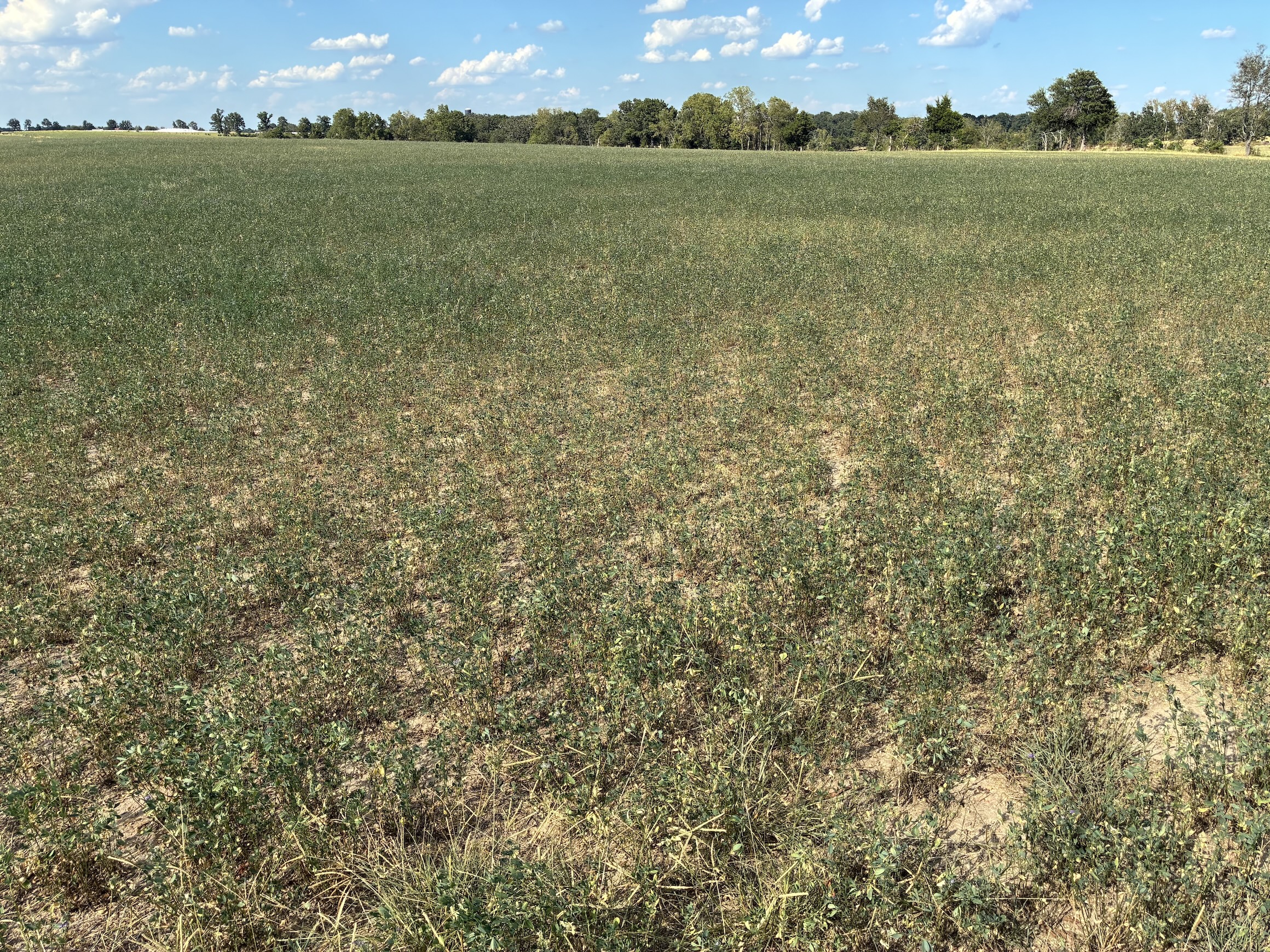
 Alfalfa stands are showing signs of extreme stress in southwestern Missouri, where livestock producers are buying and feeding hay much earlier than normal due to drought and heat. Photo by MU Extension agronomist Tim Schnakenberg.
COLUMBIA, Mo. – University of Missouri Extension specialists are worried about the combination of drought and prolonged high temperatures as crops approach their final growth stages, says University of Missouri Extension assistant professor of soybean farming systems Andre Froes de Borja Reis.
By Aug. 11, Reis began lowering yield predictions in his biweekly MU Extension soybean growth and yield prediction report, which uses crop models and historical data to simulate soybean growth and yield across different regions of Missouri. Reis’ report says models showed declining soil moisture and prolonged heat leading to smaller seeds, lower test weights and reduced yield potential.
Prolonged heat increases water demand in crops while speeding up the loss of moisture from already-dry soils. According to recent reports, dry conditions have expanded across parts of the state.
Livestock producers in southwestern Missouri are buying and feeding hay earlier than normal, says Caleb O’Neal, MU Extension plant scient specialist in Lawrence County. He and Tim Schnakenberg, longtime field MU Extension agronomist in Stone County, said drought conditions are creating forage shortages, and producers are concerned about having enough water for livestock.
Schnakenberg says a Christian County alfalfa field that had a strong stand earlier this year and even produced a winner in the Ozark Empire Fair haylage competition is now in rough condition. O’Neal says Hickory County pastures are “burned up and dormant until relief is found in some moisture and cooler temperatures.”
MU Extension centers have been barraged in the last three weeks with requests for nitrate testing and advice on grazing management on fields of sorghum Sudan grass and Johnsongrass. “Fall forage planting and fescue stockpiling are in jeopardy unless we get some rain,” Schnakenberg says.
Schnakenberg recently saw a field of crabgrass that had died due to lack of rain; it usually takes a killing frost to kill crabgrass. O’Neal saw drought-stressed, wilting Sericea in mid-August. “This weed is notorious for being as tough as boot leather,” he says. “When Sericea is wilting, you know we’ve been dangerously hot and dry.”
The Missouri Hydrology Information Center, a collaboration of MU Extension and state and federal researchers, measures water available to plants at varying soil depths in different types of soil across the state. MU Extension state climatologist Zachary Leasor notes there soil moisture deficits are showing throughout much of the state, particularly in southwestern Missouri.
Drought affects at least some part of Missouri nearly every year, Reis says, but it has been more widespread throughout the state in the last five years. Leasor points to a broader trend of more extreme swings between wet and dry conditions in the state. Missouri can move quickly from abundant rainfall to drought, as it did this year, creating challenges for farmers.
Based on preliminary data, average Missouri temperatures were 2.5 F warmer than average during July. Southwestern Missouri’s temperatures were nearly 4 F higher than normal.
The U.S. Drought Monitor reflects Missouri’s current dry and hot conditions, but some southwestern Missouri livestock and forage producers say conditions there are worse than the Drought Monitor reports. Leasor is working with MU Extension agronomists to collect impact reports to submit to the Drought Monitor.
Favorable conditions early in the 2026 growing season gave Missouri crops a head start. But MU Extension state weed scientist Kevin Bradley says heavy rains in parts of the state pushed back planting dates, and those later-planted crops face extreme stress due to high heat and low rainfall.
Bradley says extended drought over the past five years has increased weed pressure in pastures and could delay planting of cover crops and forages this fall.
He adds that farmers should be aware of the potential for herbicide carryover injury in corn or soybean fields where cover crops will soon be planted, especially in sandy soils or fields with low organic matter. Drought dramatically increases the risk of herbicide carryover because dry soils lack the moisture needed for microbial breakdown and chemical hydrolysis. Without adequate rainfall or microbial activity, residual herbicides stay active in the soil much longer.
More information: MU Extension drought resources
Photo
Alfalfa stands are showing signs of extreme stress in southwestern Missouri, where livestock producers are buying and feeding hay much earlier than normal due to drought and heat. Photo by MU Extension agronomist Tim Schnakenberg.