-
Image
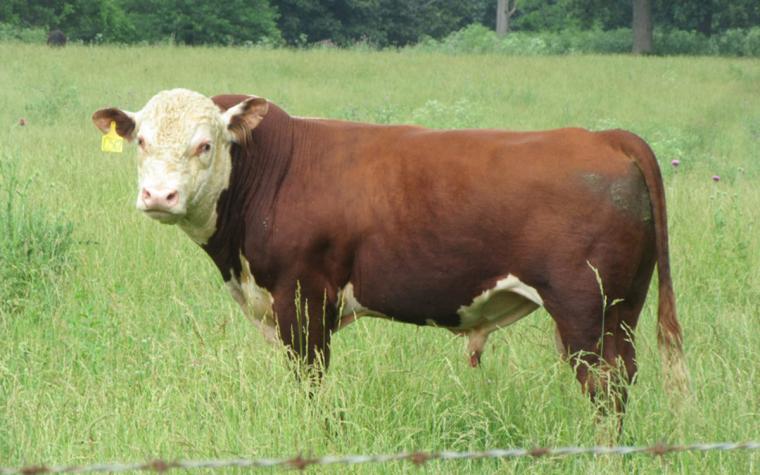 File photo.
STOCKTON, Mo. – What is a bull worth? What is that future calf crop worth? “Significant investments are being made in bulls, and the prospects for income from current and upcoming calf crops appear favorable,” says Patrick Davis, University of Missouri Extension livestock field specialist.
Nevertheless, Davis advises cattle producers to implement effective management practices for bulls as they transition out of the breeding pasture and prepare for future breeding seasons to safeguard their investment.
Davis will outline key management strategies to ensure optimal performance and success in subsequent breeding cycles.
“Bull’s energy status, best measured by body condition score (BCS), is important for breeding success,” says Davis. BCS ranges from 1 (extremely thin/emaciated) to 9 (extremely fat/obese); ideal is 6 (smooth appearance) at turnout. Producers should assess bulls now and plan nutrition accordingly. For instance, one BCS unit equates to approximately 75 to 100 pounds. Therefore, if a bull has a BCS of 4.5, an increase of roughly 150 pounds is necessary to achieve an optimal BCS prior to turnout. If the target time frame is 60 days, the bull should be provided with adequate nutrition to support a daily weight gain of 2.5 pounds. For more information on BCS management, look at MU Extension guide G2230, Body Condition Scoring of Beef Cattle.
“Because bulls cover a lot of pasture and cows during breeding season, structural soundness matters,” he says. Prior to the breeding season, it is important to assess each bull's feet and leg structure by examining claw shape, foot angle, and evaluating the rear legs from the side. These traits are typically scored on a scale of 1 to 9, with a score of 5 being ideal and scores between 3 and 7 being acceptable. Additional information can be found in the Red Angus Association’s foot and leg scoring guide. Davis recommends that cattle producers use bulls within the acceptable range to ensure success during the breeding season and to produce structurally sound offspring.
“Schedule your bull’s breeding soundness exam (BSE) with your veterinarian 30 to 60 days before the breeding season,” says Davis. The BSE checks the bull’s reproductive tract, sperm quality and overall fertility, allowing the veterinarian to pass, fail or defer the bull. Failed bulls should be culled, while deferred bulls can be retested as advised by the veterinarian. This exam is also an opportunity to administer vaccinations and dewormer, which are sometimes available at reduced rates in spring, so contact your veterinarian for details. Additionally, test newly acquired nonvirgin bulls for trichomoniasis. These steps help ensure healthy, fertile bulls for optimal performance.
“Use a proper bull-to-cow ratio in the breeding pasture,” says Davis. Generally, a young bull can breed with one cow for each month of his age, while mature bulls should follow a 1:25 bull-to-cow ratio. For multi-sire pastures, Davis suggests selecting bulls that are similar in age and ensuring they are accustomed to each other before introducing them to the breeding pasture to minimize fighting and injuries. It’s also important to monitor the bulls during breeding season to confirm they are actively breeding, maintaining good condition and remaining injury-free. If there are signs of poor breeding success, such as cows returning to heat repeatedly, rapid weight or condition loss in the bull, or injuries, be prepared to replace the bull promptly.
Applying these strategies to your bull management protocol can protect your investment, promote breeding success, and support a productive and profitable operation. For more details, contact your local MU Extension livestock field specialist.