-
Image
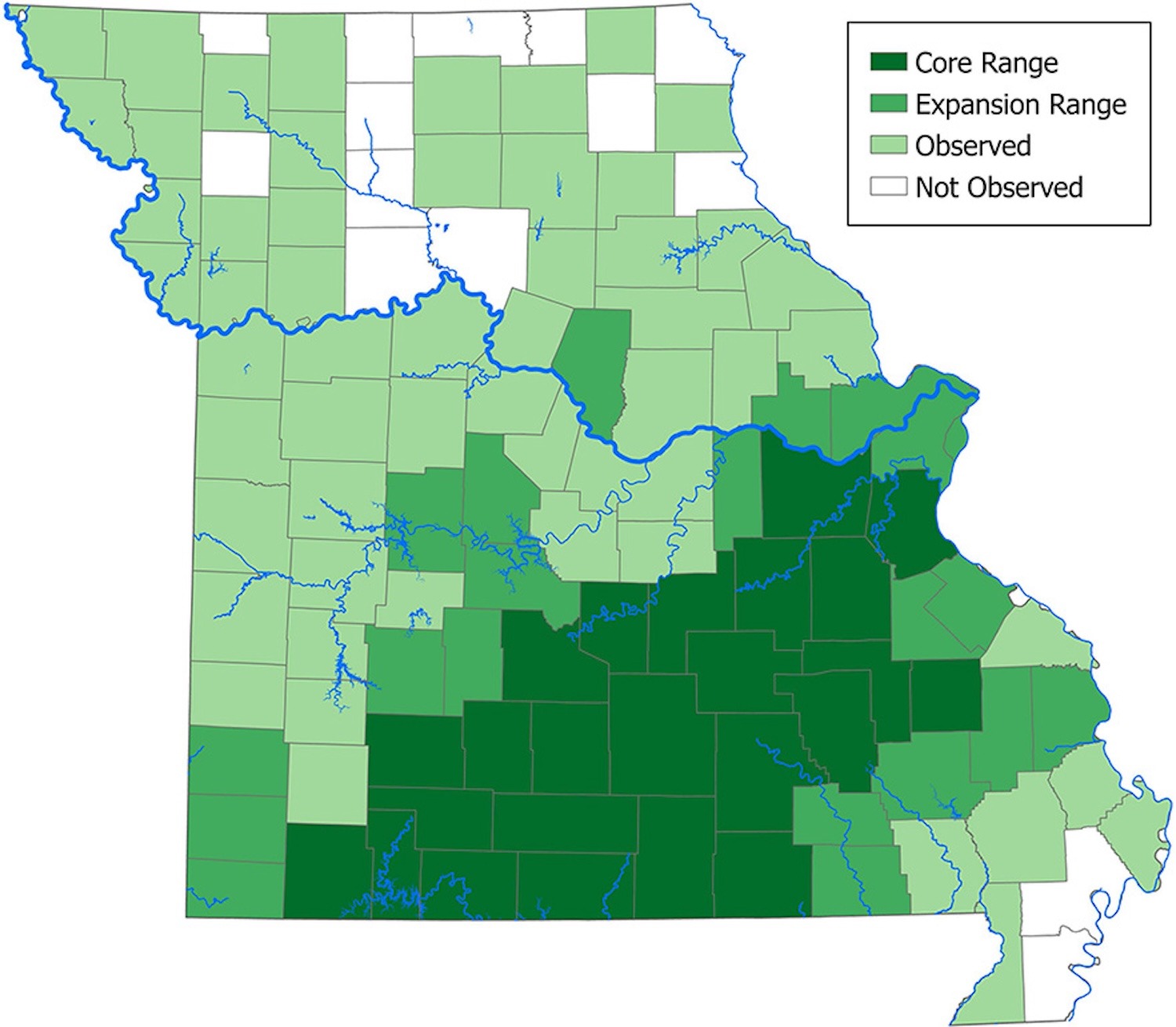
 Black bear sow in southwestern Missouri. Photo by Noppadol Paothong, Missouri Department of Conservation.
 -
Image
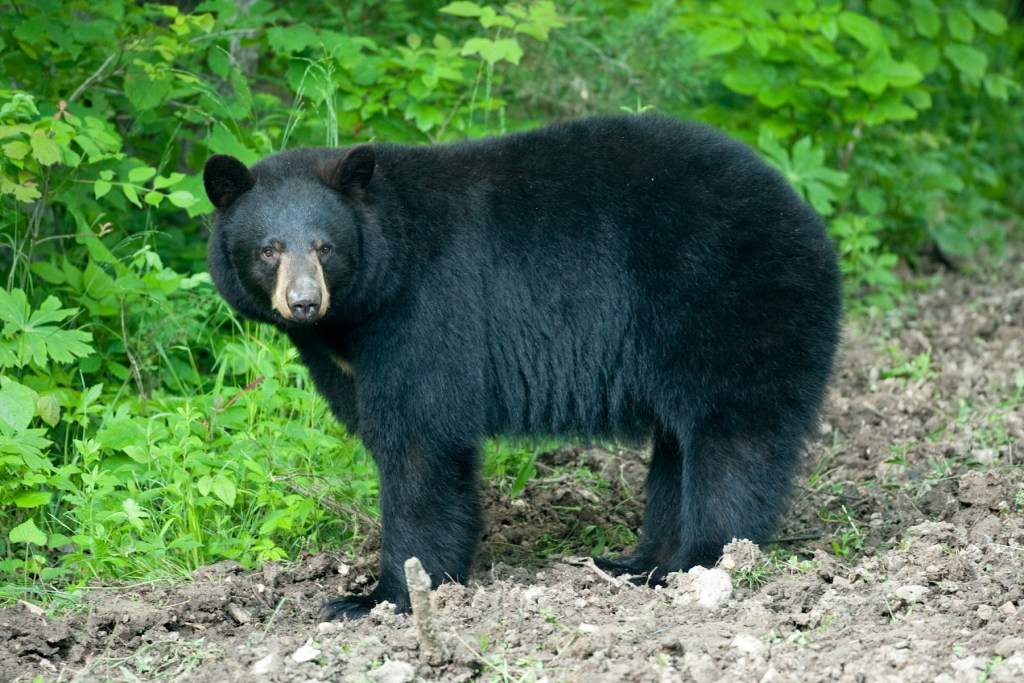
 Black bears observed in Missouri, by county. Missouri Department of Conservation.
COLUMBIA, Mo. – A new publication from University of Missouri Extension looks at black bears, their ecology and how research by the Missouri Department of Conservation helps us better understand their behavior and growing numbers.
Ecology and Management of Black Bears in Missouri is available for free download.
The black bear is the most abundant bear species in North America, says Robert Pierce, MU associate extension professor and state wildlife and fisheries specialist. Pierce says Missouri’s black bear population has gradually increased in the past several years, with current numbers estimated at about 1,000. Most bears in Missouri are found in the oak-hickory forests of the Ozark region of the state.
Black bears are native to Missouri. They were abundant here until the 19th century, when unregulated harvest and loss of forest habitat reduced the population.
During the 1960s, the Arkansas Game and Fish Commission captured 254 black bears in Minnesota and Manitoba, Canada, and released them in the Ozark and Ouachita mountain ranges in northern and western Arkansas. Missouri numbers have increased as bears traveled northward, gradually edging north of the Missouri River.
“The growth of Missouri’s bear population should be considered a significant conservation success story,” says Pierce. “Now that a sustainable population is in place, a highly regulated hunting season has been established in certain areas of the state.”
Adult male bear can range in weight from 130 to 600 pounds, with an average of 280 pounds. Adult females range from 90 to 296 pounds and average 179 pounds. They have life expectancies of less than 20 years.
Known for their black coats and brown muzzles, black bears occasionally have white chest markings. Missouri bears can range from black to brown to reddish brown or cinnamon to blond. They use their sharp claws for climbing to escape danger or to dig and forage. The wear of their teeth is an indicator of their age.
Bears have good eyesight, a keen sense of smell and strong hearing. They are also excellent swimmers.
They hibernate for much of the winter in caves, hollow trees, tree stumps, brush piles or underground. They will abandon a den that has been disturbed and mate from mid-May to mid-July. Cubs are generally born in the den during late January to February after a 230-day gestation period. They are about the size and weight of a can of soda when born.
From research conducted by MDC, an estimated 60% of female bears in Missouri reproduce each year, and they have an average of two cubs. About 70% of the male cubs and 90% of female cubs survive their first year of life.
Research has found that bears in Missouri are very adaptive and as the population increases, they may be more likely to use marginal habitats such as forested areas that are fragmented by agriculture and residential areas. “Bears can move large distances, and research indicates that young bears may travel into these types of areas in search of adequate habitats,” says Pierce.
MDC has a Bear Management Plan to guide future decisions about black bears. Current regulations allow up to 40 bears to be harvested in the state each year, but as the population continues to grow, the 40-bear harvest quota limit will likely be adjusted, Pierce says.
Photo
Black bear sow in southwestern Missouri. Photo by Noppadol Paothong, Missouri Department of Conservation.
Infographic
Black bears observed in Missouri, by county. Missouri Department of Conservation.