Image
New $64 to $76.50
Editor’s note
The following abstract describes a publication that is available for purchase as an e-book.
To order publications for a tax-exempt organization, contact extpubs@missouri.edu for instructions.

New $75.74 to $89.10
This book details the basic processes that apply to all incidents as well as some of the specific procedures necessary to make effective decisions at certain common occupancies. It covers incident scene decision-making in depth, presenting the two current and successful methodologies for making emergency decisions.
New $71.91 to $84.60
Airport firefighters, airport driver operators, and airport crew chiefs will use this text to meet the most current NFPA, FARs and ICAO requirements. This manual provides the information firefighters need to effectively perform the tasks for aircraft rescue and fire fighting and to complete airport firefighter certification.
New $80.33 to $94.50
The new editions of IFSTA’s fire apparatus driver/operator training materials mark a new approach to training driver/operators. The Pumping and Aerial Apparatus Driver/Operator Handbook, Thfive5 chapters relevant to aerial apparatus. Personnel on departments that operate both types of apparatus now only need one manual and one curriculum for training.

New $71.91
This manual is a primary training text for Level I Rescuers, presenting the knowledge and skills for fire service search and technical rescue for Level I Rescuers to safely and effectively conduct Operations-level rescues as defined in NFPA 1006. It also supports the corresponding chapters of NFPA 1670, Standard on Operations and Training for Technical Search and Rescue Incidents (2014 Edition).

New $105
This manual covers the entire spectrum of the 2014 Edition of NFPA 1021: Standard for Fire Officer Professional Qualifications.
Revised
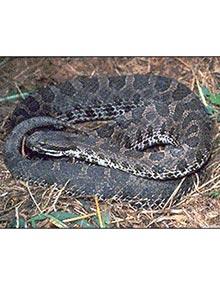
The massasauga rattlesnake is found in the northern half of the state. Although this species has very toxic venom, there are few records of human deaths caused by this small rattlesnake. Massasaugas have become rare in Missouri.
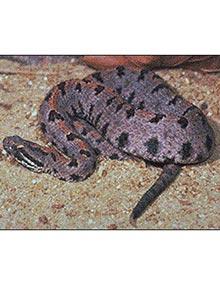
Revised
The western pygmy rattlesnake often is called the ground rattler. Its range is restricted to the southern counties bordering Arkansas and the eastern Missouri Ozarks. Although no human deaths are known to have been caused by this species, a bite victim should seek immediate attention.
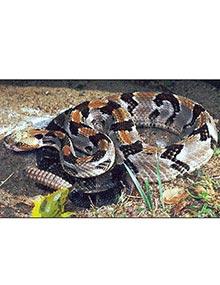
Revised
The timber rattlesnake is the largest venomous snake in Missouri and is found throughout the state. The bite of the timber rattlesnake is dangerous and can be fatal to humans.
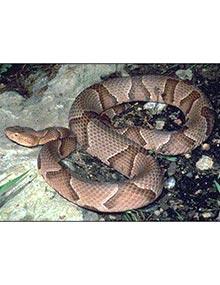
Revised
Copperheads are the most abundant venomous snake found in Missouri. The two subspecies are found in Missouri are the Osage copperhead, found in the northern two-thirds of the state, and the southern copperhead, found in the southern third of the state.
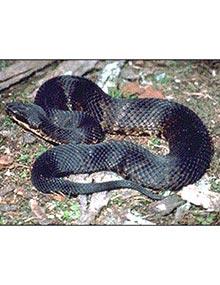
Revised
The western cottonmouth is confined to swamps and wetlands in the southeastern part of the state and to the rocky streams and river sloughs in the southern Ozarks. This heavy-bodied snake is dangerously venomous and, contrary to popular belief, can bite underwater.
Revised
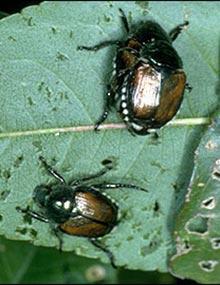
Annual white grub species that can cause turfgrass damage: May/June beetles, masked chafers, black turfgrass ataenius, green June beetles, and Japanese beetles.
Revised
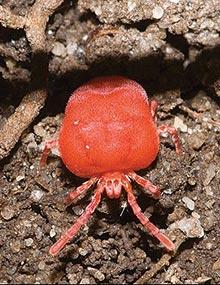
Learn about nuisance pests in turfgrass, including ants, centipedes, millipedes, chiggers, cicadas, crickets, earwigs, fleas, grasshoppers, and more.
Revised
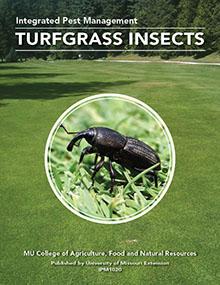
Learn to manage turfgrass insect pests through integrated pest management, combining cultural practices with minimal pesticide use.
Reviewed
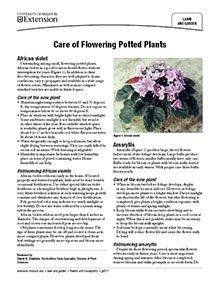
Learn how to care for flowering potted plants like African violets and amaryllis, including watering, light, humidity, and reblooming tips.
Revised
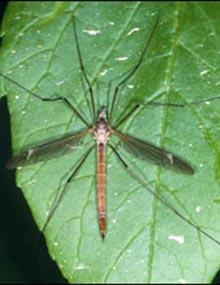
Billbugs, crane flies and mole crickets are subsurface-feeding insects that can cause turfgrass damage.
Revised
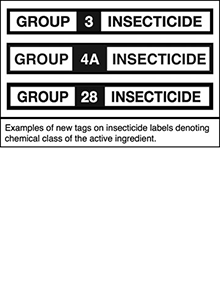
Insecticide use should be the last resort in managing insect pests, but may be necessary even with a careful integrated pest management plan in place.
Revised
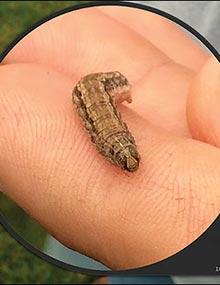
Surface-feeding insects can cause turfgrass damage: fall armyworms, bermudagrass mites, chinch bugs, cutworms, greenbug aphids, mealybugs and sod webworms.
Revised
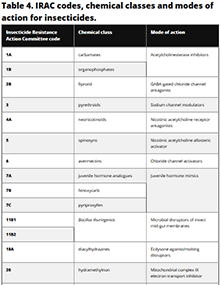
These tables contain information describing active ingredients, products and target insects of insecticides currently labeled for turfgrass insect control. Insecticide labels are subject to change.
Revised
Proper insulation and air sealing reduce heating and cooling costs, enhance comfort, and improve energy efficiency in your home.
Reviewed
Tips on selecting broad-leaved evergreen plants for your landscape, from ideal soil conditions to winter care, enhancing year-round beauty and structure.
Revised
Raised-bed gardening enhances soil drainage and root health, offers customizable design options and extends the growing season for better yields.
Reviewed
There are about 30 species of fleas in Missouri and many pose a health risk to pets and humans. Visit our site today to learn more about fleas.

New
Retailers participating in the Stock Healthy, Shop Healthy program can use this 8.5-by-5.5-inch sign to encourage deli customers to include a salad as a part of their meal. Learn about this program that aims to create healthy communities.