Image
Reviewed
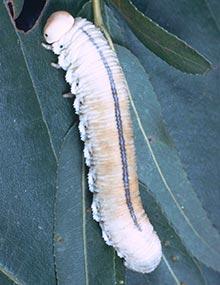
Elm sawfly caterpillars (Cimbex americana) are present from summer to fall. They produce one generation per year.
Reviewed
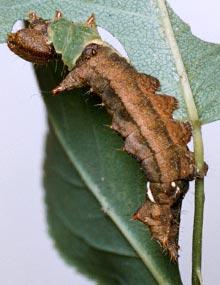
Unicorn caterpillars (Schizura unicornis) are present from summer to fall. They produce one generation per year.
Reviewed
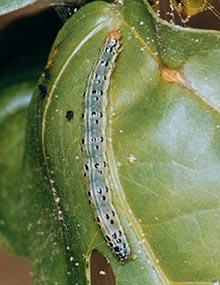
Garden webworm caterpillars (Achyra rantalis) are present from late spring to fall. They produce two to three generations per year.
Reviewed
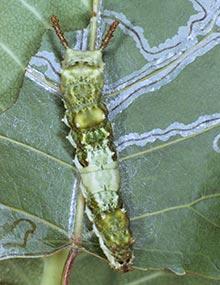
Viceroy caterpillars (Limenitis archippus) are present from early summer to fall. They produce two generations per year.
Reviewed
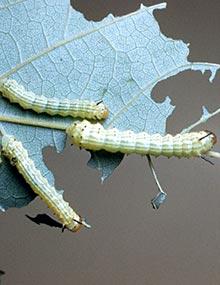
Greenstriped mapleworm caterpillars (Dryocampa rubicunda) are present from late spring to late fall. They produce one to two generations per year.
Reviewed
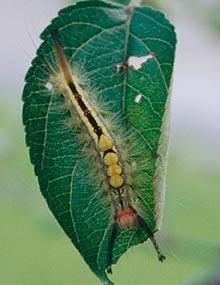
Whitemarked tussock moth caterpillars (Orgyia leucostigma) are present from May to October. They produce two generations per year.
Reviewed
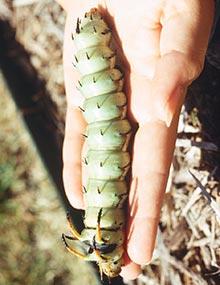
Hickory horned devil caterpillars (Citheronia regalis) are present from July to October. They produce two generations per year.
Reviewed
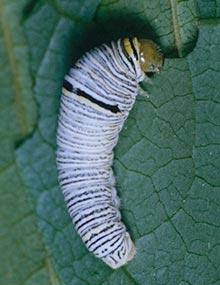
Zebra swallowtail caterpillars (Graphium marcellus) are present from May to November. They produce two to three generations per year.
Reviewed
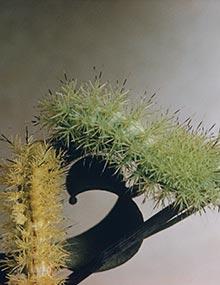
Io moth caterpillars (Automeris io) are present from July to October. They produce two generations per year.
Reviewed
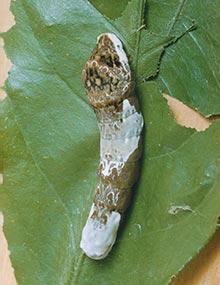
Orangedog caterpillars (Papilio cresphontes) are present from July to October. They produce two generations per year. They are considered a pest to citrus trees.
Reviewed
Feeding hay to cattle is expensive, mostly due to waste. Learn good management practices to minimize the losses that occur due to poor storage methods, improper feeding methods, or both.
Reviewed
Learn how pelvic measurements can help estimate calf birth weight and reduce calving difficulty in beef cattle.
Reviewed
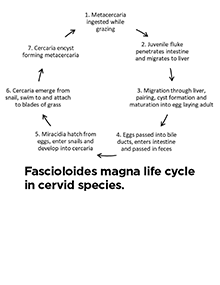
Cattle operations should evaluate their risk for is Fascioloides magna, also known as the deer fluke or the giant liver fluke. Learn about its distribution in Missouri, its life cycle, treatment and more in this guide.
New
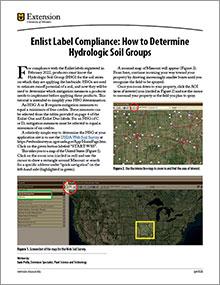
Learn how to use the USDA Web Soil Survey interactive map to determine your field's hydrologic soil group for the soil series on which you plan to apply an Enlist herbicide.

Reviewed
Explore four decision-making techniques to help community groups identify and prioritize projects effectively.
Reviewed
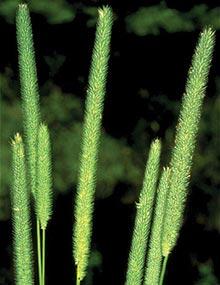
Timothy is a cool-season bunch grass. By late spring it can be readily identified by the blue-green, cylindrical seed head resembling a small cattail. It has an elongated ligule at the base of the leaf, with a notch on each side.

Reviewed
Before writing a column, think about purpose, audience, content and structure. Visit our website today to learn more about writing columns.
Reviewed
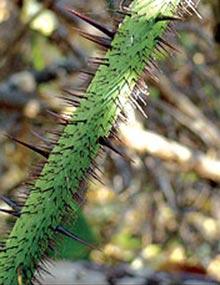
Greenbriers grow as stout vines, climbing with the aid of tendrils that arise in pairs at the base of leaf stalks. The flowers are small and green and grow in clusters of 5 to 26 flowers on long stalks.
Reviewed
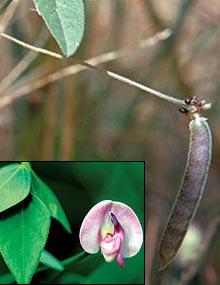
Three species of wild bean occur in the Midwest. Each is a somewhat small plant with twining vines and relatively small leaves composed of three leaflets. Seeds are present in hairy pods.
Reviewed
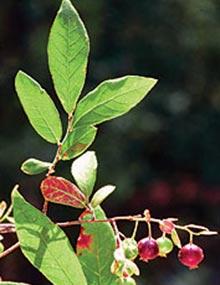
Huckleberries are stiffly branched leafy shrubs or small trees, often found in extensive colonies, from 6 inches to 10 feet tall. The alternate, simple leaves are 3/4 to 3 inches long and 1/2 to 1 inch wide. The fruits are blue to black berries with a faint whitish coating.
Reviewed
Learn to manage vole damage in Missouri's horticultural plantings and orchards with effective control strategies for these small mammals.
Reviewed
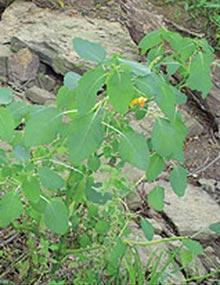
Jewelweed commonly reaches 18-24 inches. Leaves have scalloped edges and fleshy stems that exude a clear, watery gel-like liquid when crushed. Flowers are orange (I. capensis) or pale yellow (I. pallida).
Reviewed
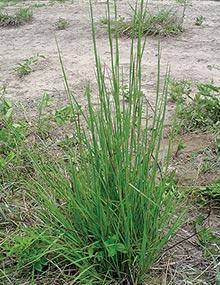
Little bluestem is a native grass that occurs in clumps with fine leaves less than 1/4 inch wide. Seed stalks are commonly 2 to 3 feet tall. Stems are hairy and flattened near the base. Seeds are light and fluffy.
Reviewed
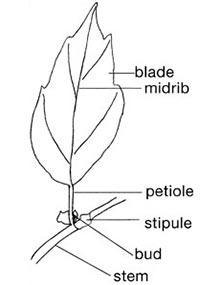
Refer to this glossary for definitions of words and phrases related to plants.
Reviewed
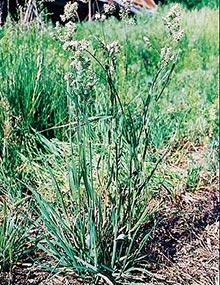
Orchard grass is a cool-season bunch grass. Its leaves have a bluish cast. Close inspection of the leaf collar reveals a flattened shape and membranous ligule. Its rather distinctive seed heads form by late May. Height at maturity averages 3 feet.