Image
Reviewed
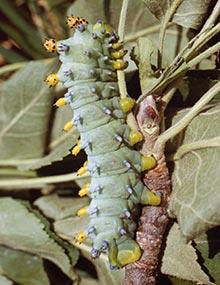
Cecropia moth caterpillars (Hyalophora cecropia) are present from May to August. They produce one generation per year.
Reviewed
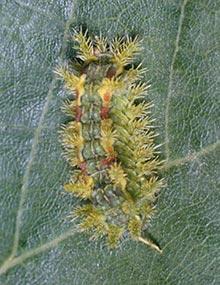
Spiny oak slug caterpillars (Euclea delphinii) are present in summer and fall. They produce one to two generations per year.
Reviewed
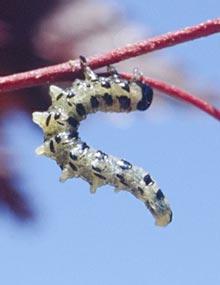
Dusty birch sawfly caterpillars (Croesus latitarsus) are present in summer and fall. They produce two to three generations per year.
Reviewed
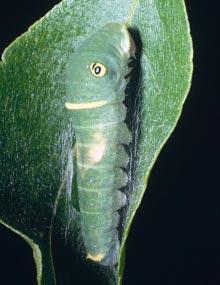
Tiger swallowtail caterpillars (Papilio glaucus) are present from May to October. They produce two to three generations per year. Preferred host plants include hoptree, birch, tulip tree, ash, basswood, cherry, apple, willow and magnolia.
Reviewed
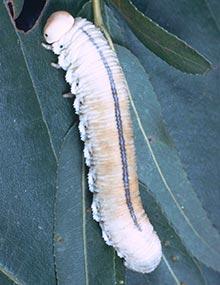
Elm sawfly caterpillars (Cimbex americana) are present from summer to fall. They produce one generation per year.
Reviewed
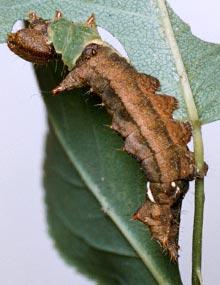
Unicorn caterpillars (Schizura unicornis) are present from summer to fall. They produce one generation per year.
Reviewed
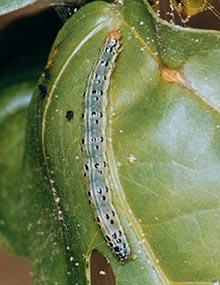
Garden webworm caterpillars (Achyra rantalis) are present from late spring to fall. They produce two to three generations per year.
Reviewed
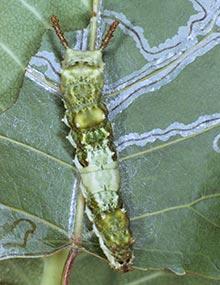
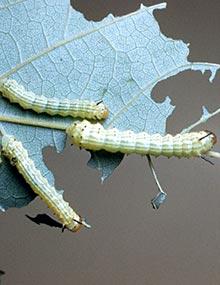
Viceroy caterpillars (Limenitis archippus) are present from early summer to fall. They produce two generations per year.
Reviewed
Greenstriped mapleworm caterpillars (Dryocampa rubicunda) are present from late spring to late fall. They produce one to two generations per year.
Reviewed
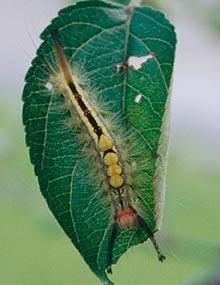
Whitemarked tussock moth caterpillars (Orgyia leucostigma) are present from May to October. They produce two generations per year.
Reviewed
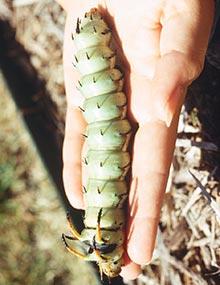
Hickory horned devil caterpillars (Citheronia regalis) are present from July to October. They produce two generations per year.
Reviewed
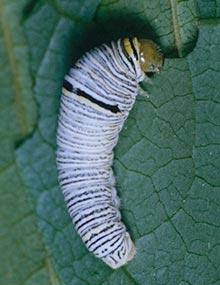
Zebra swallowtail caterpillars (Graphium marcellus) are present from May to November. They produce two to three generations per year.
Reviewed
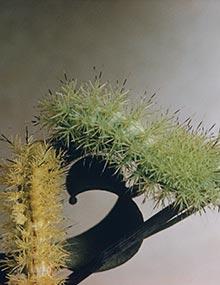
Io moth caterpillars (Automeris io) are present from July to October. They produce two generations per year.
Reviewed
Caterpillars are some of the most easily observed insects in backyards and gardens. Learn to identify them so you will know what type of butterflies or moths they will turn into.
Reviewed
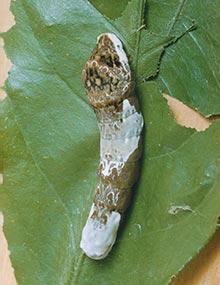
Orangedog caterpillars (Papilio cresphontes) are present from July to October. They produce two generations per year. They are considered a pest to citrus trees.
Reviewed
Feeding hay to cattle is expensive, mostly due to waste. Learn good management practices to minimize the losses that occur due to poor storage methods, improper feeding methods, or both.
Reviewed
Learn how pelvic measurements can help estimate calf birth weight and reduce calving difficulty in beef cattle.
New
Learn how to use the USDA Web Soil Survey interactive map to determine your field's hydrologic soil group for the soil series on which you plan to apply an Enlist herbicide.
Reviewed
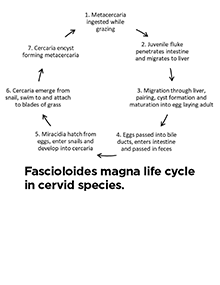
Cattle operations should evaluate their risk for is Fascioloides magna, also known as the deer fluke or the giant liver fluke. Learn about its distribution in Missouri, its life cycle, treatment and more in this guide.

Reviewed
Explore four decision-making techniques to help community groups identify and prioritize projects effectively.
Reviewed
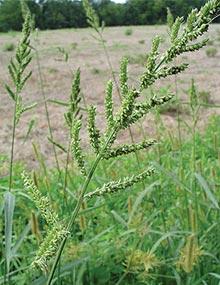
Barnyardgrass is most often found growing in moist areas. The large seeds of this grass make it an important food source for bobwhites.
Reviewed
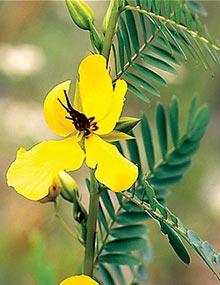
Partridge pea grows from 12 to 18 inches up to 3 feet tall. It has compound, alternate leaves. Leaflets are less than 1 inch long. Flowers are bright yellow with reddish-purple bases, about 1 inch across. Ripened seedpods are red-brown.
Reviewed
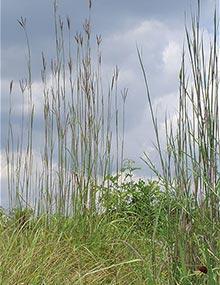
Mature seed stalks of big bluestem are copper colored and often grow more than 5 feet tall. The clumpy growth of big bluestem allows room for other plants to exist and provides excellent habitat structure for nesting and roosting
Reviewed
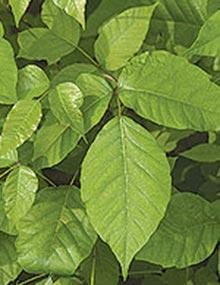
Poison ivy is a vine that can grow up to 60 feet high or a low, upright shrub. It has alternate leaves with three oval to lance-shaped leaflets with a pointed tip.The flowers are greenish white and grow in clusters 1 to 4 inches long on new growth of stems.

Reviewed
Common ragweed commonly grows to 18 inches. Leaves are simple, alternate, smooth and deeply lobed. Often the lobes are lobed again.