Physical Activity
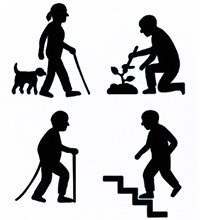
Physical activity doesn’t have to mean structured exercise. There are many enjoyable, everyday ways to move more and build activity into your routine without setting aside time for a workout.
Physical activity: Any movement of the body that uses energy. This includes everyday activities like walking the dog, gardening, cleaning the house, or taking the stairs.
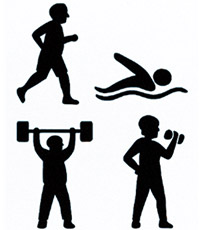
Exercise: A planned, structured, and repetitive form of physical activity with the goal of improving or maintaining physical fitness. Examples include jogging, swimming laps, lifting weights, or participating in a fitness class.
So, all exercise is physical activity, but not all physical activity is exercise.
Why physical activity matters for healthy aging
Regular physical activity is essential for maintaining good health and independence as we age. Staying physically active is one of the most effective ways to prevent falls, as regular exercise improves strength, balance, and coordination. Physical activity is generally safe and beneficial for most individuals, but several factors should be considered for a safe start.
Tips for getting started safely
- Complete a Physical Activity Readiness Questionnaire (PAR-Q+).
- This helps identify any health conditions or risks before starting a physical activity program.
- Use the results to guide your next steps.
- Talk with your health care provider before starting a new exercise program, especially if you have any underlying health conditions.
- Review your PAR-Q+ results with a doctor or nurse.
- Ask about any restrictions or recommended activities.
- Know yourself and your limits.
- Consider: Previous injuries or surgeries; Current medications; Chronic conditions (e.g., arthritis, heart disease). These factors may require modifications or precautions.
- Start slowly and progress gradually.
- Begin with low-intensity activities like walking or gentle stretching.
- Increase time and intensity only as tolerated.
- Choose activities you enjoy.
- Examples: walking, water aerobics, chair yoga, group exercise, light resistance training.
- Enjoyable activities help you stay consistent.
- Listen to your body.
- Stop if you feel pain, dizziness, or shortness of breath.
- Rest and hydrate as needed.
- Stay hydrated. Drink plenty of water before, during and after exercise to prevent dizziness and fatigue.
- Have a certified exercise professional help you perform exercises safely before trying them yourself if needed.
- Before exercising at home, check that your space is clear and there’s nothing on the floor you could trip over.
How much physical activity do we need?
When we talk about physical activity, it is easy to jump immediately to exercise as the only option. However, there are many ways to increase your physical activity without adding exercise.
Regular physical activity helps us maintain strength, balance, and flexibility – key components for performing daily tasks like walking, climbing stairs, and carrying groceries. Staying active reduces the risk of falls and supports independence in everyday life.
Physical activity guidelines for older adults
Some physical activity is better than none. Adults who sit less and engage in any amount of moderate to vigorous physical activity gain health benefits.
Use the Talk Test to determine your physical activity intensity
| Intensity | Talk level | Examples |
|---|---|---|
Light |
Normal breathing rate – can sing or talk |  Slow walking, stretching, light housework Slow walking, stretching, light housework |
Moderate |
Breathing is getting faster and heavier – can talk but not sing |  Brisk walking, team sports, leisurely swimming Brisk walking, team sports, leisurely swimming |
Vigorous |
Breathing heavily and rapidly – can’t hold a conversation |  Jogging, hiking or walking uphill, fast-paced dancing Jogging, hiking or walking uphill, fast-paced dancing |
For substantial health benefits, the US Department of Health and Human Services (DHHS) suggests that older adults try to meet the following guidelines each week:
- Do at least 150 minutes of moderate-intensity aerobic activity or at least 75 minutes of vigorous-intensity aerobic activity. Ideally, this activity will be spread throughout the week.
- Do muscle-strengthening activities of moderate or greater intensity that involve all major muscle groups on 2 or more days a week.
- Do physical activity that includes balance training throughout the week.
MyActivity Pyramid for Adults (65+)
The MU Extension publication MyActivity Pyramid for Adults (65+) is modeled after the USDA’s MyPyramid and is based on the 2018 Physical Activity Guidelines for Americans. This handout is designed to help adults ages 65+ meet the 2018 Physical Activity Guidelines for active adults. You can find a summary of these guidelines below.
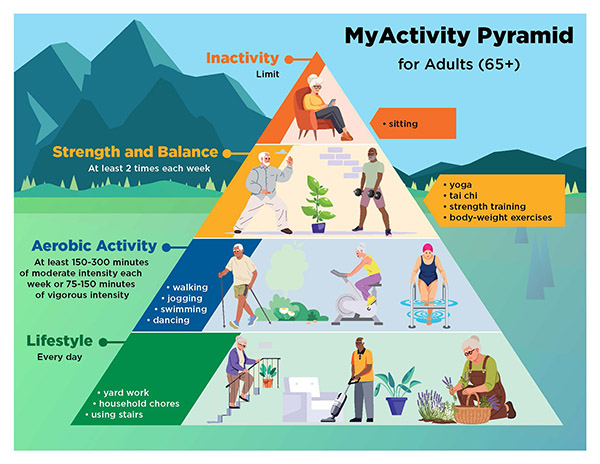
Lifestyle activities
Frequency: Every day or as often as possible. Some physical activity is better than none.
Pick an activity you like and one that fits your life. Examples of lifestyle activities:
- Walking
- Yard work
- Household chores
- Using stairs
Aerobic activity
Frequency: At least 150–300 minutes (2.5 to 5 hours) of moderate intensity each week, or 75–150 minutes (1.25 to 2.5 hours) of vigorous intensity each week. Or do a combination of moderate- and vigorous-intensity activities.
What is a moderate-intensity activity? You can talk while you do it, but you can’t sing. What is a vigorous-intensity activity? You can only say a few words without stopping to catch your breath.
Aerobic activities should be spread throughout the week. Examples of aerobic activities:
- Walking
- Jogging
- Swimming
- Dancing
Strength and balance
Frequency: At least 2 times each week. Aim for at least 10 minutes per day of stretching exercises to increase range of motion and flexibility.
For strength activities, include all major muscle groups and it should be moderate or greater intensity. For balance, include activities that challenge balance such as standing on one leg, walking backwards, tai chi, or using a wobble board. Examples of strength and balance activities:
- Yoga
- Tai chi
- Strength training
- Body-weight exercises
Inactivity
Frequency: Limit inactive time. Examples of inactivity:
- Screen time (television, computer, video games).
- Sitting longer than 60 minutes.
Major research findings about the health benefits of physical activity
From the Physical Activity Guidelines for Americans, research findings indicate:
- Regular physical activity reduces the risk of many adverse health outcomes such as heart disease, type 2 diabetes, and some cancers.
- Most health benefits occur with at least 150 minutes (2 hours and 30 minutes) a week of moderate-intensity physical activity.
- For additional health benefits, adults should increase their aerobic physical activity to 300 minutes (5 hours) a week of moderate-intensity, or 150 minutes a week of vigorous-intensity aerobic physical activity, or a combination of both. Additional benefits include lower risk of colon and breast cancer and prevention of unhealthy weight gain.
- People with disabilities and chronic conditions can also benefit from physical activity.
Physical Activity Guidelines are also available for the following:
- Children and adolescents
- Women during pregnancy and the postpartum period
- Adults with disabilities
Adults and older adults with chronic conditions or disabilities benefit from physical activity and should follow these guidelines as much as possible. If unable to meet them, they should remain as active as their abilities allow, avoid inactivity, and consult a healthcare professional about appropriate types and amounts of activity.
To learn more, visit the Office of Disease Prevention and Health Promotion website.
Places to be active in Missouri
- Area Agencies on Aging (AAAs)
AAAs offer a variety of in-person and virtual physical activity programs. These programs are available on a pay-what-you-can basis for some caregivers and individuals aged 60 and above. Find your local AAA or contact them at 1-800-235-5503 for more information. - Community gardens
A community garden is an outdoor space where fruits, vegetables, and other plants are grown collaboratively. Some community gardens charge a fee for use, while others are open to the community at no cost. Find your local MU Extension representative to learn more about community gardens in your area. - Fitness centers
A fitness center, also known as a gym or health club, is a facility that provides equipment and space for individuals to exercise and improve their fitness. Most fitness centers are privately owned, for-profit organizations; however, some offer discounts for older adults and low-income families. There are also nonprofit fitness centers, like the YMCA, that can offer additional discounts and services. Some health insurance plans also offer discounts on fitness center memberships. Programs like SilverSneakers, available through certain Medicare plans, may provide access to free or low-cost physical fitness classes. Consult a Medicare Counselor to ensure that any changes you make to your plan will still meet your health care needs. You can contact your local area agency on aging to find a Medicare counselor in your area by calling 1-800-235-5503 and entering your zip code. - State and county parks
Missouri has 93 state parks and historic sites. Each location offers the opportunity to be physically active and enjoy Missouri’s natural beauty. Some parks offer track chairs that provide accessible outdoor recreation for all. Track chairs are electronic off-road chairs that allow visitors with limited mobility the opportunity to explore designated routes throughout select state parks and historic sites. Missouri State Parks currently has six track chairs in place across the state. Find track chairs to learn more about where track chairs are available and how to reserve one. Missouri State Parks also offers Tuesday on the Trail Tram Tours. Learn more about this program or call 573-449-7402. Most counties in Missouri have at least one park with multiple resources for outdoor physical activity. You can find some of these parks online. You may find additional parks by doing an online search for your town plus "park" or by calling your local government officials. - Walking and hiking trails
Missouri has a wide variety of walking and hiking trails. You can search Missouri’s conservation areas for hiking trails. You can also find the State Parks in Missouri with hiking trails. Many areas have active walking or hiking groups. You can search sites like Meetup and Facebook to find groups in your area.
Physical activity programs in Missouri
In-person programs
- Aging Ahead AAA: Franklin, Jefferson, St. Charles, and St. Louis Counties.
- Aging Best AAA: Audrain, Boone, Callaway, Camden, Cole, Cooper, Crawford, Dent, Gasconade, Howard, Laclede, Maries, Miller, Moniteau, Morgan, Osage, Phelps, Pulaski, and Washington Counties.
- Aging Matters AAA: Bollinger, Butler, Cape Girardeau, Carter, Dunklin, Iron, Madison, Mississippi, New Madrid, Pemiscot, Perry, Reynolds, Ripley, Scott, St. Francois, Ste. Genevieve, Stoddard, and Wayne Counties.
- Care Connection AAA: Bates, Benton, Carroll, Cedar, Chariton, Henry, Hickory, Johnson, Lafayette, Pettis, Saline, St. Clair, and Vernon Counties.
- Conservation Areas: Search the map for locations near you.
- County Parks: Find parks in Missouri by county.
- Mid-America Regional Council AAA: Cass, Clay, Jackson, Platte, and Ray Counties.
- MU Extension: Visit our Healthy Aging page or contact your local specialist to find in-person physical activity classes and programs available throughout the state.
- Northeast Missouri AAA: Adair, Clark, Knox, Lewis, Lincoln, Macon, Marion, Monroe, Montgomery, Pike, Ralls, Randolph, Scotland, Schuyler, Shelby, and Warren Counties.
- Region X AAA: Barton, Jasper, McDonald, and Newton Counties.
- SeniorAge AAA: Barry, Christian, Dade, Dallas, Douglas, Greene, Howell, Lawrence, Oregon, Ozark, Polk, Shannon, Stone, Taney, Texas, Webster, and Wright Counties.
- St. Louis City AAA: St. Louis City.
- State Parks and Historic Sites: Refer to the map for locations near you.
- YMCA: Boonville, Brookfield, Cameron, Carrollton, Carthage, Chillicothe, Fort Leonard Wood, Fulton, Glasgow, Hannibal, Jefferson City, Joplin, Kansas City, Kirksville, Louisiana, Macon, Marshall, Mexico, Moberly, Mountain Grove, Neosho, Nevada, Osage Beach, Sikeston, Springfield, St. Joseph, and St. Louis. There may be additional YMCA locations near you. Enter your zip code on the YMCA locations page or call the one near you to learn about branches closest to you.
- Young at Heart AAA: Andrew, Atchison, Buchanan, Caldwell, Clinton, Daviess, DeKalb, Gentry, Grundy, Harrison, Holt, Linn, Livingston, Mercer, Nodaway, Putnam, Sullivan, and Worth Counties.
Virtual programs – Statewide
- Care Connection AAA: Chair One Fitness, Chair Yoga, EnhanceFitness, and Tai Chi.
- MU Extension: Visit our Healthy Aging page or contact your local specialist to find virtual physical activity classes and programs available throughout the state.
- SeniorAge AAA: Afternoon Stretch, Chair Yoga, Fit Fusion, Morning Stretch, and Tai Chi.
- Young at Heart AAA: Arthritis Foundation Exercise Program and Walk with Ease.
Overcome challenges to being more physically active
There are many challenges that may prevent you from becoming more physically active, but there is almost always a solution to every challenge. Try some of these ideas to increase physical activity in your daily life.
Add physical activity to other activities you enjoy
Some people just don’t enjoy exercising. If that sounds like you, there are still ways to increase physical activity. One way is to add it to something you enjoy. For example, do simple exercises or stretches during commercial breaks or between shows on your streaming service. You can also find activities that you enjoy that provide opportunities to be physically active, even if it is just parking farther from the entrance to that activity.
Be physically active at home with no equipment
There are many simple exercises that you can do from home with no equipment. There are multiple free resources online. You can also ask your healthcare provider for exercises that would be safe for you to do in your home.
Find a friend or family member to be active with
When trying to start or maintain a new habit, it can be helpful to have company. This provides additional opportunities for social interaction and accountability for you and your partner.
Find physical activity that you enjoy
There are many common activities that can help increase your physical activity. Activities such as dancing, gardening, and walking in nature are all excellent ways to increase your physical activity. Find an activity you enjoy, and you will be more likely to stick with it.
Start slow
Physical activity does not have to be done in thirty-minute sessions to count. You can still see health benefits by adding five-minute physical activity sessions throughout the day. Each minute of physical activity contributes to improving your overall health and well-being. As you build strength and endurance, you can slowly increase the length or intensity of your physical activity.
If you plan to use exercise equipment, only use items specifically designed for exercise, such as dumbbells. Avoid substituting with household items like cans, bottles, or bags, as these can lead to uneven weight distribution, poor grip, and an increased risk of injury. Exercise equipment, such as dumbbells and machines, are designed for safe handling and balanced resistance, helping maintain good form and reduce strain on joints.