Safety
Safety is the first chapter of this healthy aging guide because there are many things that can be done to age well, but making the physical environment safer will have the most immediate impact on your daily life. This chapter provides information about:
- Home safety assessments – tools to find potential hazards in and around the home
- Home modifications – ways to make the home safer
- Assistive technology – tools, including personal medical alert devices and mobility devices, that can help people age safely
- How to access home modifications and assistive technology – organizations and programs available in Missouri
- Community accessibility – tools to help people safely navigate their community
- Fall response plan – tools to help people recover from a fall and prevent future falls
Home safety assessments
Completing a home safety assessment is an important step to protect yourself and others and maintain your independence as you age. It helps you spot potential hazards like loose rugs, poor lighting, or cluttered walkways before they lead to accidents. By making a few simple changes, you can create a safer environment that gives you more confidence and peace of mind as you and others move around the home. The following checklists and diagrams can help you assess the home for fall risks.
Fall prevention checklists with diagrams
Check off all the fall prevention modifications that have already been made and review the list for additional modifications that can make the home a safer place to age.
Lighting
- Install easy-to-see and easy-to-reach light switches.
- Ensure that each room is well-lit and that light bulbs are replaced.
- Keep flashlights with batteries throughout the house for power outages, especially in the bedroom.
- Install automatic lighting or nightlights with a motion sensor, especially in the bathroom, bedroom, and hallways.
Bathroom
- Install a door without locks.
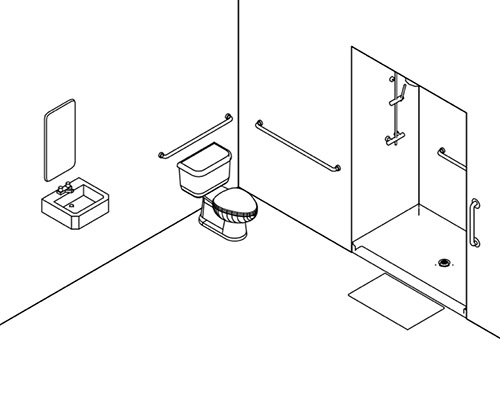 Install grab bars securely into the wall inside the shower, outside the shower, and by the toilet.
- Use non-slip mats, non-slip tape, or non-slip strips on areas of the floor that are likely to get wet, including the shower floor.
- Use a removable or built-in shower seat or install a curbless shower.
- Use a wall-mounted soap and shampoo dispenser.
- Use a handheld showerhead. A holder with suction cups can be used to hold it out of the way.
- Use a toilet that is at least 24 inches high, raised toilet seat, or toilet safety frame.
- Use a bidet or a wiping assist tool.
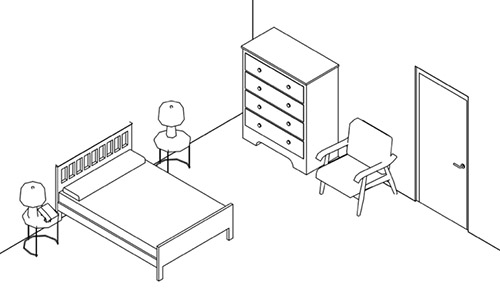 Bedroom
- Keep a lamp next to the bed.
- Install grab bars securely into the wall by the bed, use a bed transfer rail, or use a transfer pole.
- Keep a charged phone or landline by the bed.
- Keep a chair you can use while getting dressed.
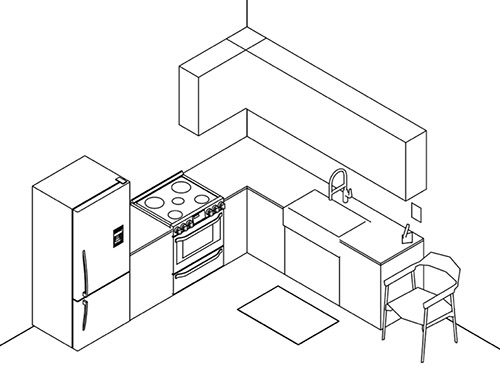 Kitchen
- Keep a seat for food preparation or dishes.
- Use non-slip rubber mats on areas of the floor that are likely to get wet.
- Keep a list of emergency contacts by your landline.
- Install easy-to-reach storage or store most frequently items in easy to reach areas (not too high or too low).
Floors
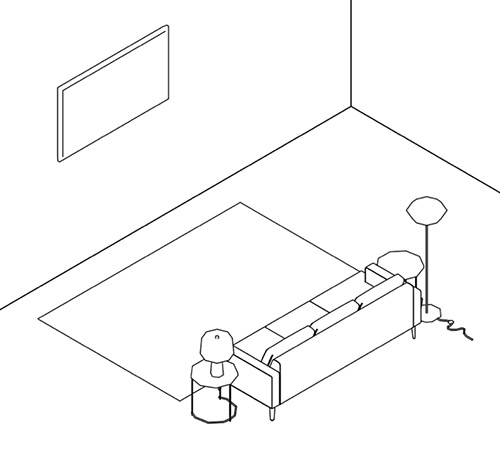 Keep wide walkways between all furniture.
- Have a cord organization system so cords stay out of the way.
- Keep floors, especially walkways, free of clutter.
- Fix loose floorboards or carpet.
- Remove all rugs or ensure they are properly taped down.
Stairs
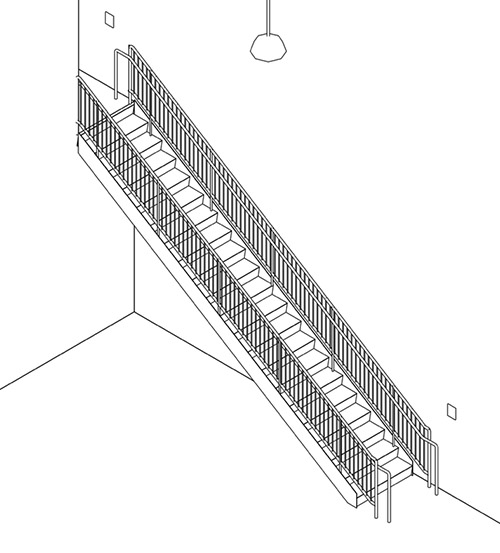 Handrails are securely installed on both sides of the staircase and run the full length of the staircase.
- Install and securely attach non-slip treads on the stairs.
- Use high-contrast paint to make the stairs easier to see.
- Broken steps or handrails are repaired.
- The entire stairway is properly lit with switches at both ends.
- Stairs are free of objects.
- Install a stair lift or use another mobility device specifically designed to assist with stairs.
Outdoors
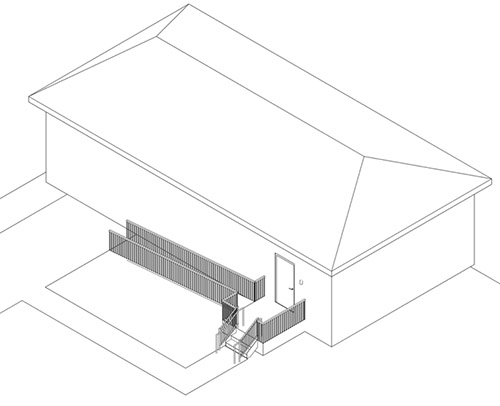 Repair sidewalks from the car to the door to ensure a safe walkway.
- Install grab bars securely into the wall near the entry door.
- If there are stairs, install railings on both sides of the stairs and ensure even step heights.
- Install a ramp and ensure it is in good repair.
- Install motion sensor lighting.
- Keep walkways and yard clear of debris, including snow and ice during inclement weather.
Home modifications
Once you have completed a home safety assessment, you may learn that you or the person you care for would benefit from home modifications or assistive technology to make it safer to get around in and around the home.
The Americans for Independent Living explains that “home modification refers to converting or adapting the environment in order to make performing tasks easier, reduce accidents, and support independent living.” Some of these modifications, like moving clutter and cords out of the walkway, are simple and inexpensive. Others, like expanding doorways and installing stairlifts, can be more complex and expensive. As we age, it is a good idea to consider what home modifications we can make that will allow us to continue living safely in our homes. Some common home modifications that may be able to help you or the person you care for age in place are listed below.
Simple, inexpensive modifications
- Chairs and furniture: Put a sturdy chair in the bedroom to sit on while dressing and in the kitchen to sit on while preparing meals. Use wall anchors to secure furniture to the wall.
- Contrasting colors: Painting stairs and other nonmovable trip hazards a contrasting color can make them more visible and decrease the fall risk.
- Grab bars: Install grab bars near the front door to provide balance while locking and unlocking the door and in the bathroom. Make sure all grab bars are securely attached to the wall and anchored.
- Handrails: Install handrails on both sides of the stairs. Make sure all handrails are securely attached to the wall and anchored.
- Lights: Install light switches at the top and bottom of the stairs and at both ends of long hallways. If a light switch is unavailable, install nightlights in the bathroom and other areas you may need to navigate at night. Keep flashlights throughout the house in case the power goes out.
- Non-slip strips: Add non-slip material to indoor and outdoor stairways. Put nonslip strips in the bathtub and shower.
- Pets: Ensure that pet supplies are kept off the floor and out of the walking path. Consider keeping pets in a kennel or other room at night to avoid tripping over them in the dark.
- Storage and clutter: Remove clutter and electrical cords from walking paths and stairs. Remove rugs or use non-slip strips to secure them firmly to the floor. Store frequently used items between waist and shoulder height.
Complex, expensive modifications
Bathroom renovations
- Convert a tub to a roll-in or walk-in shower.
- Install a zero-threshold shower with built-in seating and grab bars.
- Upgrade to a comfort-height toilet and reposition fixtures for accessibility.
- Complete a full bathroom remodel for wheelchair accessibility, including sink and vanity clearance.
Electrical and environmental enhancements
- Upgrade lighting throughout the home, especially in hallways, stairs, and bathrooms.
- Install smart home systems (voice-activated lighting, thermostats, fall detection sensors, home monitoring systems, etc.).
Entryway and exterior improvements
- Construct a wheelchair-accessible ramp with proper slope, handrails, and a nonslip surface.
- Replace front steps with a graded entry or no-step entryway.
- Install automatic door openers or smart entry systems.
Major structural modifications
- Widen doorways and hallways to accommodate wheelchairs or walkers.
- Install a residential elevator or vertical platform lift.
- Add a stair lift or chair lift to navigate multi-level homes.
- Build a first-floor bedroom and/or fully accessible bathroom if one doesn’t already exist.
Assistive technology
The World Health Organization states that “assistive technology is an umbrella term for assistive products and their related systems and services. Assistive products help maintain or improve an individual’s functioning related to cognition, communication, hearing, mobility, self-care and vision, thus enabling their health, well-being, inclusion and participation.” There are many different types of assistive technology, but here are a few that can help you and the person you care for age safely.
Hearing aids
Hearing aids are electronic devices designed to improve hearing for individuals with hearing loss. They work by amplifying sound waves and making them more audible. If you or the person you care for is over 60, hearing tests are recommended annually. Before age 60, hearing tests should be done every three to five years or more frequently if there are concerns. Hearing loss can increase the risk of falls, depression, and dementia. However, using hearing aids can reduce these risks.
Medical alert devices
A medical alert device or personal emergency response system allows you or the person you care for to get immediate help in the event of an emergency. The device is programmed to send a signal to a response center and/or emergency contact at the touch of a button or when a fall is detected. Various companies provide medical alert devices. Most devices have an initial cost and a monthly service charge, which vary by company, style of device, and type of device.
Mobility devices
As we age, using a mobility device can help maintain independence, improve stability, and prevent falls. Choosing the right device and using it correctly are essential for staying safe and confident while moving around. The following tips will help ensure canes, power chairs, walkers, and wheelchairs are adjusted properly and used safely in everyday life.
Cane use
- When standing with the cane tip about four inches in front of and four inches to the side of the foot, the top of the cane should align with the hip joint.
- Adjust the height so the elbow is slightly bent (about 20 degrees) when holding the cane.
- Hold the cane in the hand opposite the weaker or injured leg to provide the best support when stepping.
- Move the cane and the weaker leg forward at the same time, then follow with the stronger leg.
- Always ensure the cane has a non-slip rubber tip for safety and replace it if worn.
Power chair use
- Adjust seat, armrests, and footrests for proper fit and comfort.
- Always fasten the seat belt (if available) for added safety.
- Keep feet on the footrests and hands clear of moving parts.
- Drive at safe speeds, especially on ramps, around corners, and in crowded areas.
- Use ramps and curb cuts; avoid steep slopes or uneven terrain.
- Ensure the chair is fully charged before outings and monitor battery levels.
- Check tires, brakes, and controls regularly for proper function.
Walker use
- Adjust the walker height so the handles align with the hip joint and allow for a slight bend in the elbow (~20 degrees).
- Place the walker firmly on the ground, ensuring all four legs (or wheels and legs) are in contact with the floor before stepping.
- Keep the walker within a comfortable arm’s reach, and do not overextend the arms or lean too far forward.
- Stand tall and avoid bending or hunching over while walking.
- Move the walker first, then step forward with the weaker leg, followed by the stronger leg.
- Use a walker bag or basket to carry personal items safely—never hang heavy bags on the sides, as this can affect balance.
- Make sure the rubber tips or wheels are in good condition and free of debris.
- Safety note: Walkers with a seat should not be used as seated mobility devices. The seat is designed for you to take a break from walking. It is not safe to have someone push the walker while someone is seated on the walker.
Wheelchair use
- Adjust seat, armrests, and footrests for proper fit and comfort.
- Keep feet on the footrests while moving to prevent injury.
- Always lock brakes before getting in or out of the chair.
- Use ramps and curb cuts when available; avoid steep or uneven surfaces.
- Check wheels, brakes, and cushions regularly for wear and safety.
Mobility device overview
| Cane | Power chair | Walker | Wheelchair |
|---|---|---|---|
| Tip of cane ~4 in. in front/side of foot; handle at hip level | Adjust seat, armrests, and footrests for proper fit | Adjust height so elbows are slightly bent (approximately 20 degrees) | Adjust seat, armrests, and footrests for proper fit |
| Elbow slightly bent when holding | Always fasten seat belt if available | Hold with both hands; keep back upright | Keep feet on footrests when moving |
| Hold in hand opposite weaker leg | Keep feet/hands clear of moving parts | Move walker first, then step in with weaker leg | Always lock brakes before transfers |
| Move cane + weaker leg forward together | Drive at safe speeds, especially on ramps/corners | Keep walker close; avoid leaning too far | Use ramps/curb cuts; avoid steep/uneven surfaces |
| Ensure non-slip rubber tip is in place | Use ramps/curb cuts; avoid steep/uneven terrain | Ensure all legs have rubber tips for stability | Check wheels, brakes, and cushions regularly |
| Charge battery fully before outings; check tires/controls | Shift weight often to prevent pressure sores |
Mobility device setup
To ensure the mobility device is set up correctly, consult with:
- Healthcare professional – Doctor, Physical Therapist, Occupational Therapist, Pharmacist.
- Medical equipment supply stores – They may also offer delivery, setup, and training on how to use the equipment safely.
Footwear
Safe footwear plays an important role in preventing falls among older adults. Shoes that fit well and provide good support can improve balance, stability, and confidence while walking. The CDC recommends wearing shoes with low heels, firm slip-resistant soles, good arch support, and secure fastenings such as laces or Velcro. Avoiding loose fitting shoes, high heels, backless shoes, and walking barefoot or in socks can help reduce the risk of slips, trips, and falls both indoors and outdoors. To learn more about appropriate footwear please see this Feet and Footwear for Older Adults fact sheet (PDF) developed by the CDC.
How to access home modifications and assistive technology
It can be difficult to access home modifications or assistive technology that would be beneficial as you or the person you care for age. The following organizations can provide you with information and support.
- Area Agencies on Aging (AAAs) – 1-800-235-5503 – may know of local programs to help older adults access home modifications or assistive technology. The AAA may also be able to provide some of these items directly.
- CAPABLE – 1-816-691-2000 – is a person-directed, home-based program that integrates services from an occupational therapist (OT), a registered nurse (RN), and a handy worker who work together with the older adult to improve health, independence, and safety. This program is currently available in the Kansas City area.
- Home Hazard Removal Program (HARP) is an evidence-based fall prevention intervention that includes a comprehensive assessment, home modification prescription, assistance in removing home hazards, and education on fall risks and strategies to address them. This program is currently available in the St. Louis area.
- Home Modification Planning Guides can help ensure the current home or a new home meets all qualifications for safe aging in place.
- Missouri Assistive Technology (MoAT) – 1-816-655-6700 – offers programs that allow individuals to try out devices and programs that help you pay for or decrease the cost of devices.
- Missouri Centers for Independent Living (MOCIL) may know of local programs to help people with disabilities access home modifications and assistive technology.
- Missouri Home Modifications and Repair resources page can provide resources for consumers and professionals specific to Missouri, including featured programs, funding sources, home modification and repair providers by city, and educational materials.
Community accessibility
Safe, well-designed environments help people remain active, independent, and connected to communities. Features such as even sidewalks, safe pedestrian crossings, accessible public transportation, and age-friendly public spaces reduce barriers and risks while encouraging mobility and social engagement. When communities invest in accessibility, they not only improve safety but also make it easier for people of all ages and abilities to stay active and engaged.
Age-friendly public spaces and facilities
- Accessible entrances, restrooms, and pathways in parks, libraries, community centers, etc.
- Good lighting and clear signage in public buildings.
- Handrails and non-slip flooring in frequently-used facilities.
Pedestrian safety
- Even, well-maintained sidewalks free of cracks or obstacles.
- Curb cuts and ramps at intersections for mobility aids.
- Availability of benches or rest areas along walkable routes.
- Clearly marked crosswalks with visual and audible signals.
- Pedestrian crossing times that accommodate slower walkers.
- Awareness of local programs to report traffic safety issues.
Public transportation
- Services that offer priority seating, ramps/lifts, and securement for mobility devices.
- Reduced-fare or senior transit options through local or regional transit providers.
- Paratransit services or ride programs available through Missouri Area Agencies on Aging (AAAs).
Who to contact: Community improvement and advocacy organizations
- Call 311 to report community hazards (e.g., uneven sidewalks, poor lighting) to local governments.
- Get involved in community planning and age-friendly community initiatives like the Mid-America Regional Council (MARC) Communities for All Ages initiative.
- Missouri communities are embracing the Complete Streets movement, focused on implementing policies and plans that make streets and sidewalks safe, accessible, and supportive of healthy, thriving communities for people of all ages and abilities. Visit Missouri Complete Streets to find communities that have implemented complete streets already and learn how to make community streets safer.
Fall response plan
If you or the person you care for falls, it is important to have a safe fall response plan in place. A fall response plan should be tailored to the individual’s needs. A basic outline is included below. You may want to include additional steps, such as creating a list of important numbers to keep near the home phone or in a cellphone that the individual carries at all times. ‘You’ in the outline refers to the person who the fall response plan is for.
- Stay calm and assess the situation.
- Before you try to get up, check for any injury.
- Injuries may include soreness, weakness, dizziness, disorientation, loss of time, or feeling different in some way than you did before you fell.
- If you believe you are injured or are concerned that you may fall again, get assistance by asking a friend or family member, calling 911, or using a medical alert device.
- If you believe you are uninjured and do not believe you will fall again, crawl to a sturdy chair, slowly rise, and turn your body to sit in the chair.
- Contact a friend or family member to let them know you have fallen.
- Contact your medical provider’s office to inform them of your fall. The National Council on Aging has helpful tips for talking to your doctor about falls.
- Consider requesting a screening for traumatic brain injury, especially if you have fallen more than once or are having trouble thinking or remembering after your fall.
If you are not seeking immediate medical attention for the fall, treat any minor injuries.