Imagine this: You’ve spent weeks watering, weeding, and cheering on your tomato plants. The first beautiful, plump fruits are finally turning a gorgeous shade of red. You go out to harvest your prize, flip it over, and... oh no. There is a soft and sunken spot staring back at you. You have just met one common fruit rot disease of tomato: Anthracnose. It is a tomato disease caused by a fungal pathogen called Colletotrichum coccodes.
Symptoms
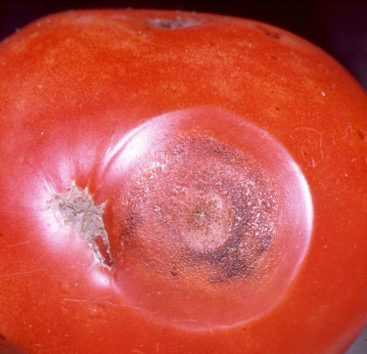
This fungus favors warm and humid weather and can infect both green, ripe and overripe fruits. The symptoms start as small circular spots, and they enlarge in size as the disease develops, causing the flesh of the tomato below the skin become very soft. As the sunken areas develop a pattern of concentric rings on the surface, they turn dark in color, producing fungal fruiting bodies which are tiny and black spots. Those structures release massive amounts of spores that can be spread to other fruits by physical contact, insects, wind or splashing water. Gradually, the fruit continues to rot until the entire fruit collapses. The entire process from initial symptom emergence to fruit rot only takes 5-7 days.
Control practices
Managing tomato anthracnose disease shall focus on an Integrate Pest Management (IPM) approach as follows:
- Start with clean seeds and healthy plants. The pathogen can be seed-borne, thus seeds collected from diseased plants should not be used for the next season. The use of resistant cultivars against anthracnose is always recommended and the growers can look up tomato resistance information at Cornell University's site.
- Perform good cultural practices. As the pathogen can produce fungal structures that survive in the soil, crop rotation every three to four years can reduce the chance of re-infection. Increasing space between the plants will minimize humidity and overhead irrigation should be avoided. The rotten tomatoes, the diseased plants as well as the volunteer tomato seedlings should be removed and are not suggested to be used for compost.
- Fungicide application. The chemical control options as well as the timing of application can be found in 2026 Midwest Vegetable Production Guide.
Sources
Gretchen Voyle, MSU Extension. Tomato anthracnose: When those prized, ripe tomatoes go bad.
Daniel Heck, Ong Island Horticultural Research & Extension Center. Anthracnose on tomatoes.