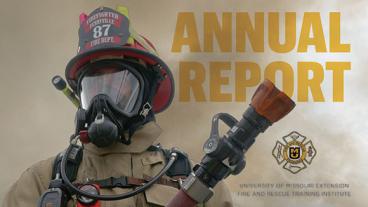
Welcome to MU Fire and Rescue Training Institute
The University of Missouri Fire and Rescue Training Institute (MU FRTI), a premier unit of MU Extension, provides comprehensive cognitive education and manipulative skills training for Missouri’s fire and emergency service responders. Utilizing an extensive system of instructional outreach, MU FRTI assists fire departments, agencies, and organizations in meeting complex public protection challenges and training issues. This outreach initiative takes the training programs directly into local communities throughout the state and provides training and education, which are otherwise unavailable.
When responding to a fire, rescue, hazardous materials incident, or other emergency event, Missouri’s emergency first responders have come to rely on the unsurpassed expertise and technical hands-on training they have received from MU FRTI’s broad range of programs. MU FRTI’s programming is focused on providing effective, standards-based, quality training and education to fire and emergency service responders. Enabled by this training, Missouri’s emergency responders have made a significant impact on the protection of lives and property of the citizens of our state and nation. MU FRTI provides: “Training for Life!”
“Since the first Mid Missouri Fire College in 1933, the University of Missouri and the state’s fire service has worked together to enable the very best in training for career and volunteer firefighters. We owe a great deal to those early fire service leaders, who laid the foundation for what would become the University’s Firemanship Program, and then in 1982, an accredited Institute of the University. The University of Missouri Fire and Rescue Training Institute (MU FRTI) encompasses a statewide outreach that provides a diverse range of fire and emergency response training programs. Through locally hosted classes by fire departments and other entities, regional conferences, and statewide fire schools, MU FRTI connects with Missouri’s firefighters and emergency responders through accessible, quality training programs. Every day the Institute is improving the safety and wellbeing of our state’s fire and emergency service first responders and the citizens they serve through the training programs conducted. MU FRTI remains committed to its mission and our goals of customer service, quality training, and safety. Thank you to our partners, constituents, and students for your continued support and participation in the Institute’s training programs.”
David E. Hedrick, CPM, CFO, CTO
Director (Retired)
Fire and Rescue Training Institute
University of Missouri Extension

Mission statement
The mission of the University of Missouri Extension’s Fire and Rescue Training Institute is to plan, develop, deliver and administer state-of-the-art continuing professional education courses which meet the comprehensive training needs of fire and rescue personnel and other emergency managers and responders utilizing the most efficient and effective means possible, thereby enabling them to better protect lives and property within their communities.