-
Image
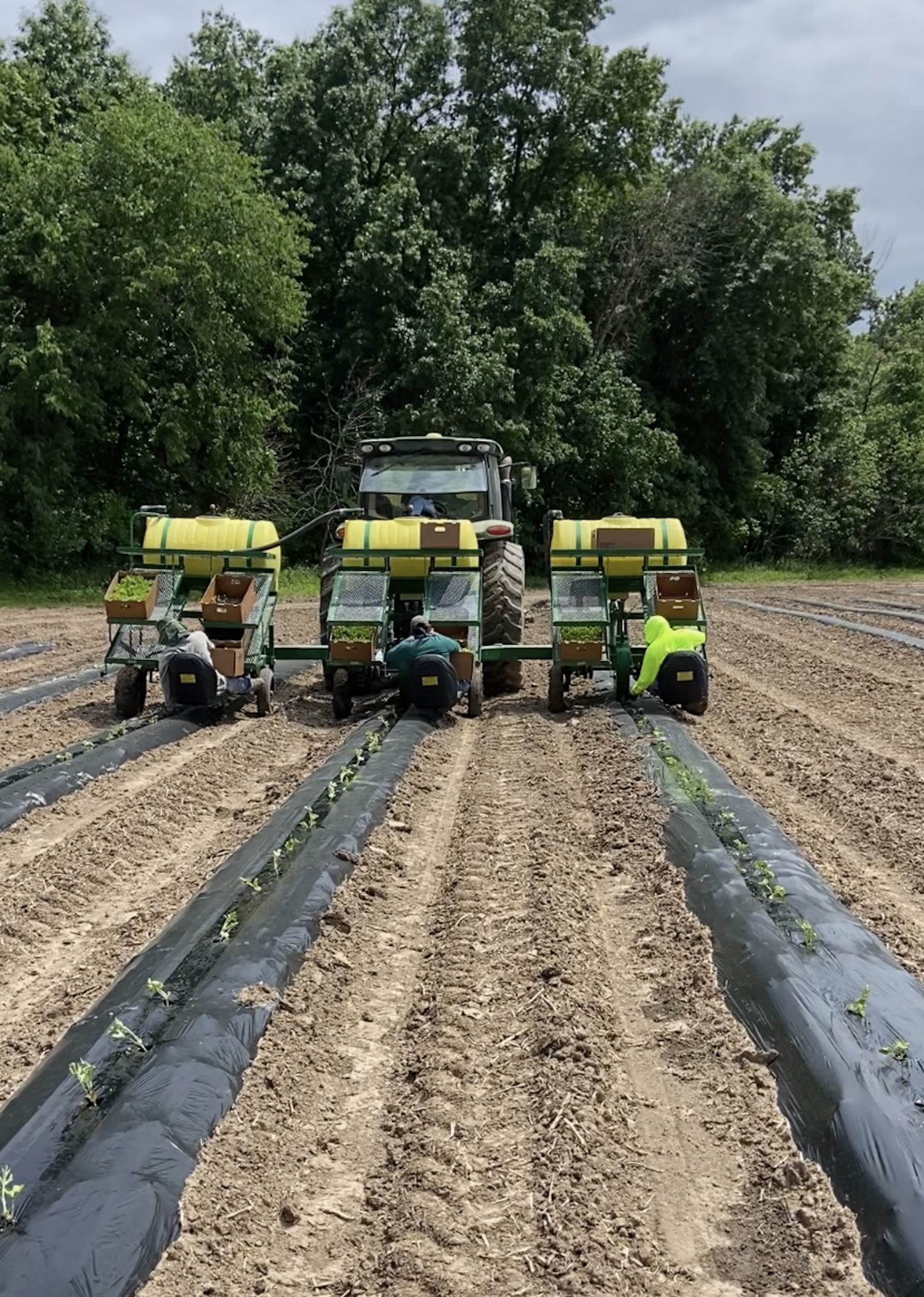
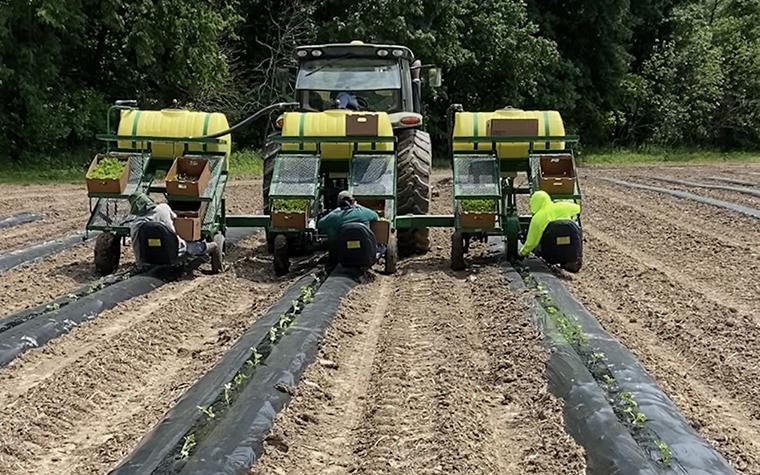 Watermelon planting is labor-intensive, says Florida watermelon grower Bob Stewart, who is now expanding operations to Missouri. A three-row machine with four laborers lays plastic for weed control. Workers sit on the back of the three-row planter and drop plants into the ground. Photo courtesy of Bob Stewart.
 -
Image
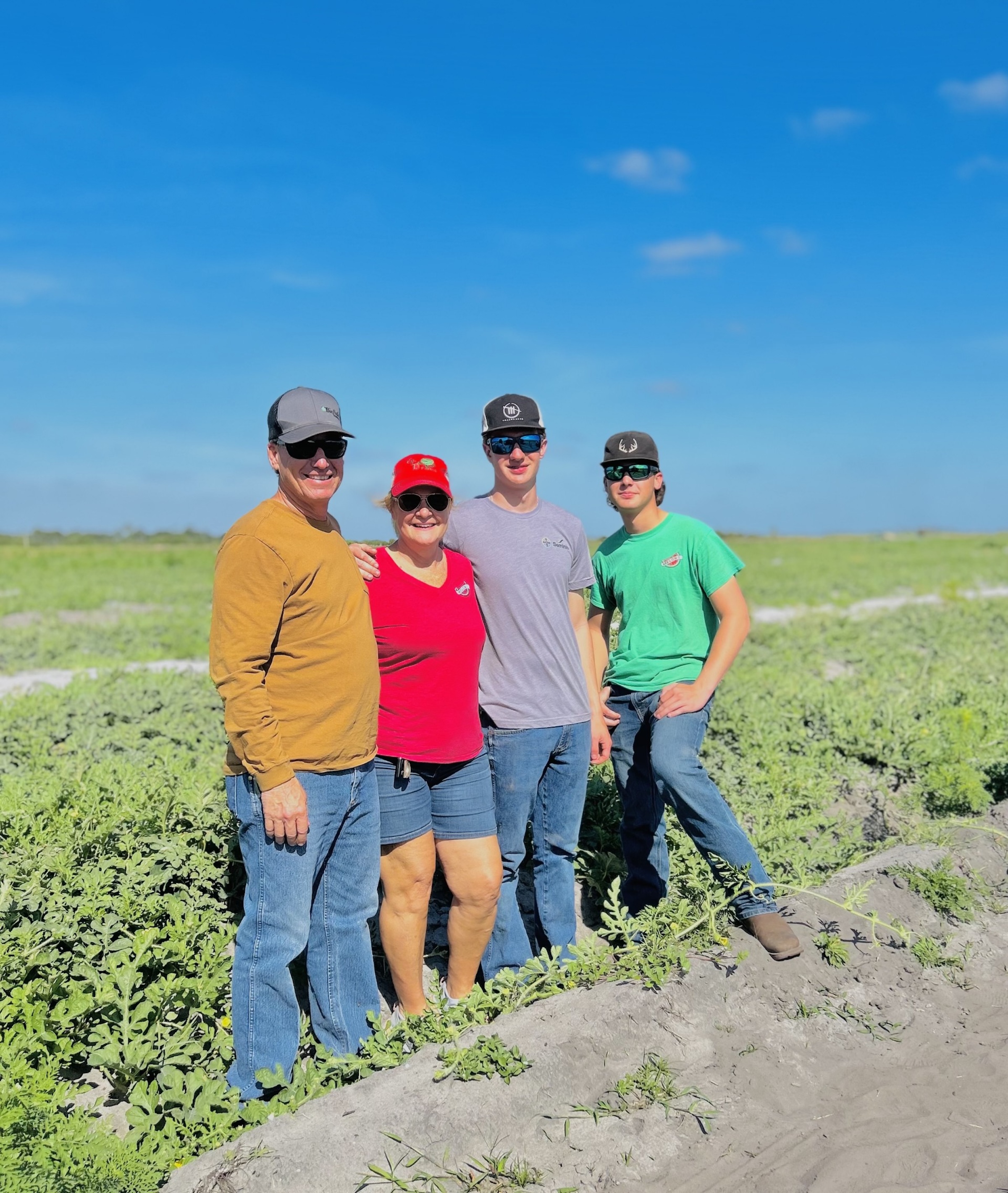
 The Stewart family grows watermelons on 300 acres of Florida ground and supplies them to Melon 1, the largest watermelon grower, packer and shipper in the United States. Stewart had success in expanding his operation this past season to northeastern Missouri, which typically has not been used for commercial watermelon growing. Photo courtesy of Bob Stewart.
MONROE CITY, Mo. – Florida watermelon grower Bob Stewart is finding northeastern Missouri ripe for growing what Monroe County-born author Mark Twain called the “food of angels.”
Stewart, owner of GID Farms of Immokalee, Florida, grew 6 million pounds of watermelon on 150 rented acres near Monroe City this past season. The location offers new challenges and opportunities to expand Stewart’s 20-year-old business.
Typically, over 95% of Missouri’s watermelons grow in the southeastern Bootheel, where sandy soil and a warm climate create ideal conditions, but northeastern Missouri offers fertile ground and opportunities, says University of Missouri Extension agronomist Nick Wesslak. He visited with Stewart about how nutrients, weed and pest control differ from state to state.
Stewart began growing watermelon in Florida in 1986 while working on the watermelon and cabbage farm of his friend’s father. He now raises 300 acres of watermelons that are contracted to Melon 1, the nation’s largest watermelon grower, packer and shipper. Melon 1’s customers in the United States and Central America include Walmart, Sam’s Club, Schnucks, Costco and Whole Foods, among others.
Florida is the nation’s largest producer of watermelons, followed by Texas, Georgia and California, according to the USDA’s National Agricultural Statistics Service. Missouri ranks seventh.
Florida melons are the first to be harvested domestically, giving them an edge in the market over melons imported from Guatemala and Mexico.
Stewart planted two seedless hybrid varieties in Missouri: El Capitan, known for its excellent yield and extended shipping ability; and Cracker Jack, an early maturing variety known for its dark red fruit and outstanding yield. In Florida, he plants seeded and unseeded varieties.
Stewart’s expansion complements his Florida operation. The Florida growing season begins Dec. 1, and harvest begins March 20, just as Missouri soils are starting to warm. Northeastern Missouri’s proximity to major distribution points reduces transportation costs and enables melons to arrive quicker and fresher at major retailers.
The expansion also spreads out risk of drought and disease among states. For example, watermelon crinkle leaf is an emerging cucurbit disease transmitted by the sweet potato whitefly in Florida, according to the University of Florida, but it is not present in Missouri.
MU Extension field horticulturist Justin Keay works with specialty crop growers. He says that it is not uncommon for specialty crop growers to lease broad-scale acreage in other states.
Growers benefit from printed and online materials from MU Extension to guide specialty growers in assessing differences among states in soils, water availability, nutrients, herbicides and insecticides.
Research-based resources such as the Missouri specialty crop budgets plus in-person visits by MU Extension agronomists and horticulturists can help growers with decision-making.
Watermelon growing is labor-intensive, Stewart explains. The 70-day growing season in Missouri starts with planting nursery stock grown in a Georgia greenhouse.
A three-row machine with four laborers lays plastic for weed control. Six workers sit on the back of the three-row planter and drop plants into the ground. The field is irrigated with drip tape for good fruit set, size and yield. Water comes from a well with a mobile pump to a trench dug around the field.
Stewart also brings beehives to the fields because the pollinators transfer pollen essential for fruit development, even in seedless varieties. Insufficient pollination results in smaller, lower-quality melons.
The Missouri land was fertilized with 500 pounds of dry fertilizer per acre halfway through the growing season, followed by liquid fertilizer later in the season.
Harvest timing is critical for the best-looking and best-tasting fruit, says Stewart. The internal color and sugar content of the melon do not change after harvest, so it is important to pick at full maturity.
At full maturity, a crew cuts the melons from the vines and then handpicks them. A pitching crew then moves the watermelon “hand to hand” in assembly-line fashion into a modified “cutout” school bus. The “cutout” bus is painted white to distinguish it from its original purpose, and its top and windows are cut out to allow easy access.
Stewart says the heavy frames of the buses help to navigate the fields well and carry large amounts of watermelons from the field to a packing facility such as an abandoned manufacturing facility in Monroe City.
Missouri watermelon fields will be rotated back to soybean or corn next season, and Florida fields are rotated to pastureland for cattle that provide natural nutrients for the next year’s watermelon crop.
Wesslak and Keay say they looks forward to working with Stewart in future years to develop options for Missouri farmers.
Photos
Watermelon planting is labor-intensive, says Florida watermelon grower Bob Stewart, who is now expanding operations to Missouri. A three-row machine with four laborers lays plastic for weed control. Workers sit on the back of the three-row planter and drop plants into the ground. Photo courtesy of Bob Stewart.
The Stewart family grows watermelons on 300 acres of Florida ground and supplies them to Melon 1, the largest watermelon grower, packer and shipper in the United States. Stewart had success in expanding his operation this past season to northeastern Missouri, which typically has not been used for commercial watermelon growing. Photo courtesy of Bob Stewart.