-
Image
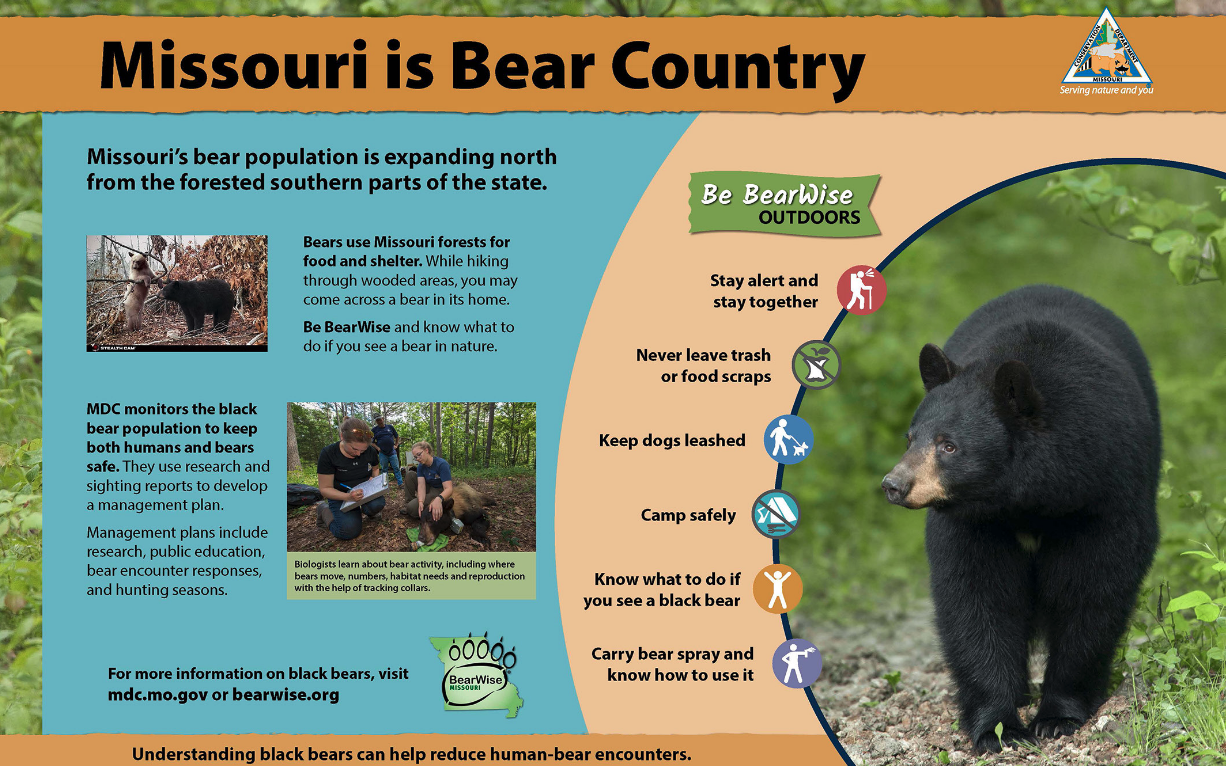
 Missouri Department of Conservation.
COLUMBIA, Mo. – With hiking and camping season right around the corner, a University of Missouri Extension has tips on how to prevent and avoid problems when in bear habitat.
Missouri’s black bear population is growing, with current numbers estimated at about 1,000, says Robert Pierce, MU Extension state wildlife and fisheries specialist and co-author of a new MU Extension publication, Ecology and Management of Black Bears in Missouri, which is available for free download.
Most bears in Missouri are found in the oak-hickory forests of the Ozark region, but bears can move over large distances and may sometimes be seen in marginal habitats, even in urban areas.
Most encounters with bears can be avoided, says Pierce. Here are some general guidelines:
- Never approach a black bear, and don’t let one get close to you. Watch from a distance. If in a vehicle or home, stay inside. If possible, stay at least 100 yards away from a black bear.
- Keep garbage, pet foods, bird feed and other foods away from bears. “Bears that feed on human foods can quickly lose their natural fear of humans,” says Pierce. “Don’t feed them.”
- When hiking in bear habitat, make noise to avoid surprising bears. Talk, whistle or sing to alert them to your presence. Leave your dogs at home or keep them leashed. Dogs can antagonize bears and cause an encounter.
- Keep campsites clean. Don’t put food in your tent. Store food in airtight or bear-resistant containers, and lock food in the trunk of your vehicle or hang it in a tree 15 feet off the ground and 8 feet away from the tree trunk.
- Wash dishes when you have finished eating. Cook food away from where you sleep. Do not sleep in the same clothes you cooked in. Burn trash only if you are unable to properly secure it; never bury it.
Learn more about bears at BearWise. Developed and run by biologists, BearWise shares information about living responsibly with bears.
Infographic
Missouri Is Bear County. Missouri Department of Conservation.