Managed grazing pays off: Regional schools show producers how.
-
Image
Missouri Grazing Schools are a multidisciplinary collaboration among University of Missouri Extension field specialists, USDA Natural Resources Conservation Service, Soil and Water Conservation Districts, the Missouri Forage and Grassland Council, and farmer-cooperators.
Southeast Regional Grazing Schools include 12 counties, with Ste. Genevieve and St. Francois counties to the north and Pemiscot and Dunklin counties to the south, also reaching surrounding counties outside the region. In 2026, two regional schools reached 31 participants, who received a mixture of classroom and on-farm education.
The goal of Grazing School is to educate forage/livestock producers about managed intensive grazing (MiG). Regional grazing schools deliver research-based methods to develop an economically viable managed grazing system to local producers. When adopted, forage producers optimize forage yield, quality, persistence, and utilization while meeting the nutritional needs of livestock. Long-term impacts of MiG include improved manure distribution, reducing input costs on fertilizer; extended grazing days, reducing the costs associated with harvested forage; and reduced weed pressure, reducing the hidden costs of weeds and input costs used to control them. A 2018 University of Missouri study looked at these impacts on the bottom line from producers across Missouri who attended Grazing School. The study, “Economic Impact of the Missouri Grazing Schools,” estimated producers were increasing returns by $61.50 per acre annually when shifting from low-intensity pasture management of cattle to a high level of pasture management (MiG).
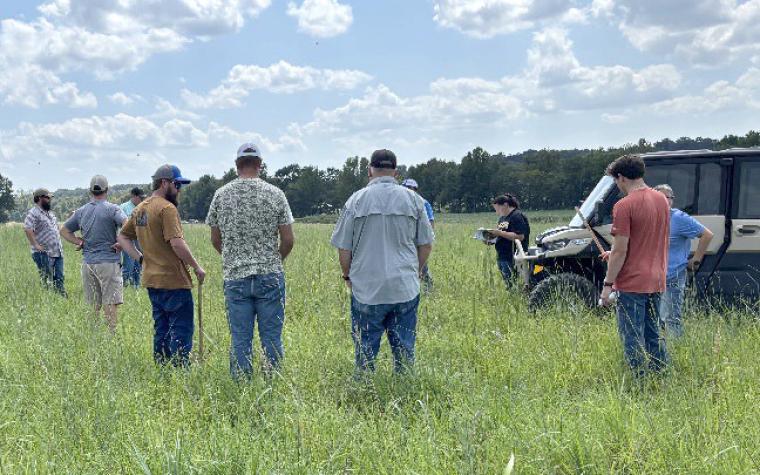
A highlight of school is the on-farm tour where research-based classroom information meets the proving grounds of MiG on an actual working farm from a past Grazing School participant/producer’s perspective. Participant’s quotes typically indicate the in-depth information, resources and plans to add something they learned to their operation. One producer said, “I plan to make full use of the wealth of information. It is amazing to have so many experts/resources/information in one three-day program.” Survey responses indicated that 63% plan to adopt MiG while 33% indicated they currently use some level of managed grazing, while 92% of respondents plan to extend grazing days.
Surveyed participants also indicated they planned to better manage soil fertility and feed less harvested forage, such as hay.