-
Image
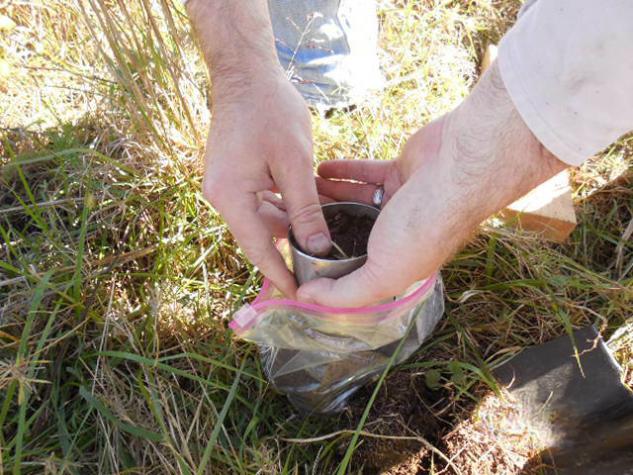 File photo.
COLUMBIA, Mo. – University of Missouri Extension Soil and Plant Testing Laboratory is transitioning to a new soil nutrient extraction method, called Mehlich-3, which has become the industry standard for soil testing, says lab director Rasel Parvej.
Before making this change, the laboratory conducted extensive testing to ensure that results from Mehlich-3 accurately match and correlate with the longstanding methods previously used by MU Extension. “This careful evaluation ensures that soil test results remain reliable and consistent for farmers, gardeners and agricultural service providers,” says Parvej.
Adopting the Mehlich-3 method enhances laboratory efficiency and enables faster turnaround times, typically within three business days, depending on the sample volume, he says. It also enables the laboratory to provide a more complete nutrient analysis in a single test while keeping overall testing costs lower.
Mehlich-3 is a multi-nutrient soil extractant that measures plant-available phosphorus (P), potassium (K), calcium (Ca), magnesium (Mg), sulfur (S), sodium (Na), zinc (Zn), iron (Fe), manganese (Mn), copper (Cu), boron (B) and aluminum (Al), offering a more comprehensive picture of soil fertility across a wide range of soil types.
For phosphorus in particular, Mehlich-3 offers a clear advantage, Parvej says. The older Bray-1 method works best in acidic soils and is less reliable in neutral to high-pH or calcareous soils. Mehlich-3, by contrast, performs well across a broader range of soil conditions, making it better suited to the diversity of soils found in Missouri.
The MU lab’s complete soil test package will be priced at $15 for all samples received. You may submit samples by mail, bring them in person to the lab on the MU campus in Columbia, or, for a small additional fee to cover postage, bring them to a county MU Extension center. Also, the lab offers volume single-order discounts:
- More than 100 samples, 10% discount.
- More than 500 samples, 15% discount.
- More than 1,000 samples, 20% discount.
For more than 5,000 samples yearly, contact the lab at soiltestingservices@missouri.edu or 573-882-0623.
Included analyses:
- Soil pH (salt), neutralizable acidity, organic matter.
- P, K, Ca, Mg, S, Na, Zn, Mn, Fe, Cu, B.
- Cation exchange capacity (CEC).
- Soil pH (water), buffer pH, base saturation, CEC-based soil texture and extractable aluminum (will be reported soon).
The new system also allows MU Extension to build a complete statewide nutrient database, says Parvej. This would benefit Missourians by:
- Improved calibration of soil-test interpretation and fertilizer/lime recommendations across Missouri soils.
- Better tracking of nutrient trends over time and by region.
- Stronger, research-based guidance for profitable nutrient management and environmental stewardship.
The Soil and Plant Testing Laboratory analyzes soil (routine, special, nitrogen package, heavy metals, trace elements), plant (tissue and grain), forage, water, manure, compost and greenhouse media. The laboratory’s mission is to provide high-quality testing and unbiased, research-based recommendations that support economically sound and environmentally responsible nutrient management, says Parvej.
The fee-based services are available to farmers, homeowners, vegetable and fruit growers, lawn and landscape specialists, golf course managers, consultants, researchers and government agencies.
Services include:
- Analyzing soil for nutrient content and fertility status.
- Providing recommendations for economical, environmentally safe and balanced fertilizer and lime applications.
- Special soil tests for nutrient management plans and for addressing environmental issues.
- Analyzing potting mixes for nursery growers.
- Analyzing plant tissue for field crops, ornamentals, vegetables, fruits and turfs.
- Compost testing.
- Manure analysis.
- Water testing for domestic, irrigation, poultry and livestock suitability.
Learn more at the Soil and Plant Testing Laboratory website.