-
Image
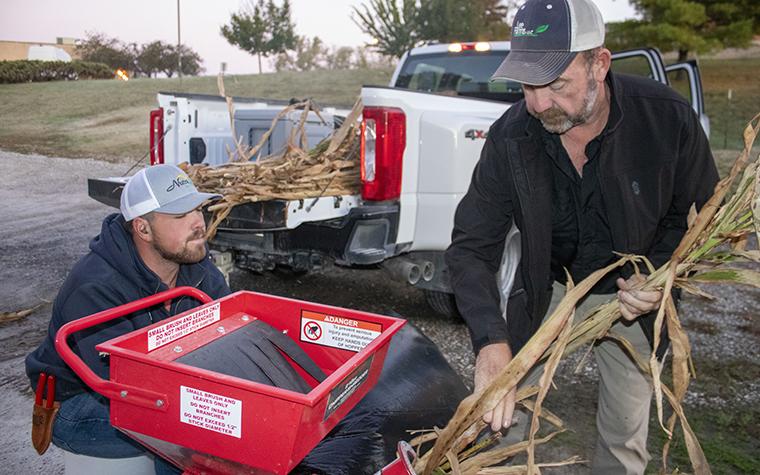 Milo producers and MU employees William Lee, left, and his father, Rusty, right, are researching the use of scrapped milo byproducts as a high-energy winter feed when supplemented by protein and other nutrients. Photo by Linda Geist.
 -
Image
 Rusty and William Lee are experimenting with ways to use scrapped milo stalks to keep beef producers from turning to low-quality, high-priced hay as a last resort to feed herds during Missouri droughts. Photo by Linda Geist.
COLUMBIA, Mo. – University of Missouri Extension agricultural systems technology specialist Rusty Lee calls it “tabletop silage,” putting milo residue on the menu for livestock.
Lee and his son, William, are strong supporters of standing milo grazing. They’ve used milo in their diversified farm operation in east-central Missouri for about 14 years.
The younger Lee is an MU master’s student and an employee of the MU College of Agriculture, Food and Natural Resources. His supervisor, Tim Reinbott, is communications and construction services director for the Missouri Agriculture Experiment Station. In the past year, the Lees teamed up with Reinbott on further on-farm research.
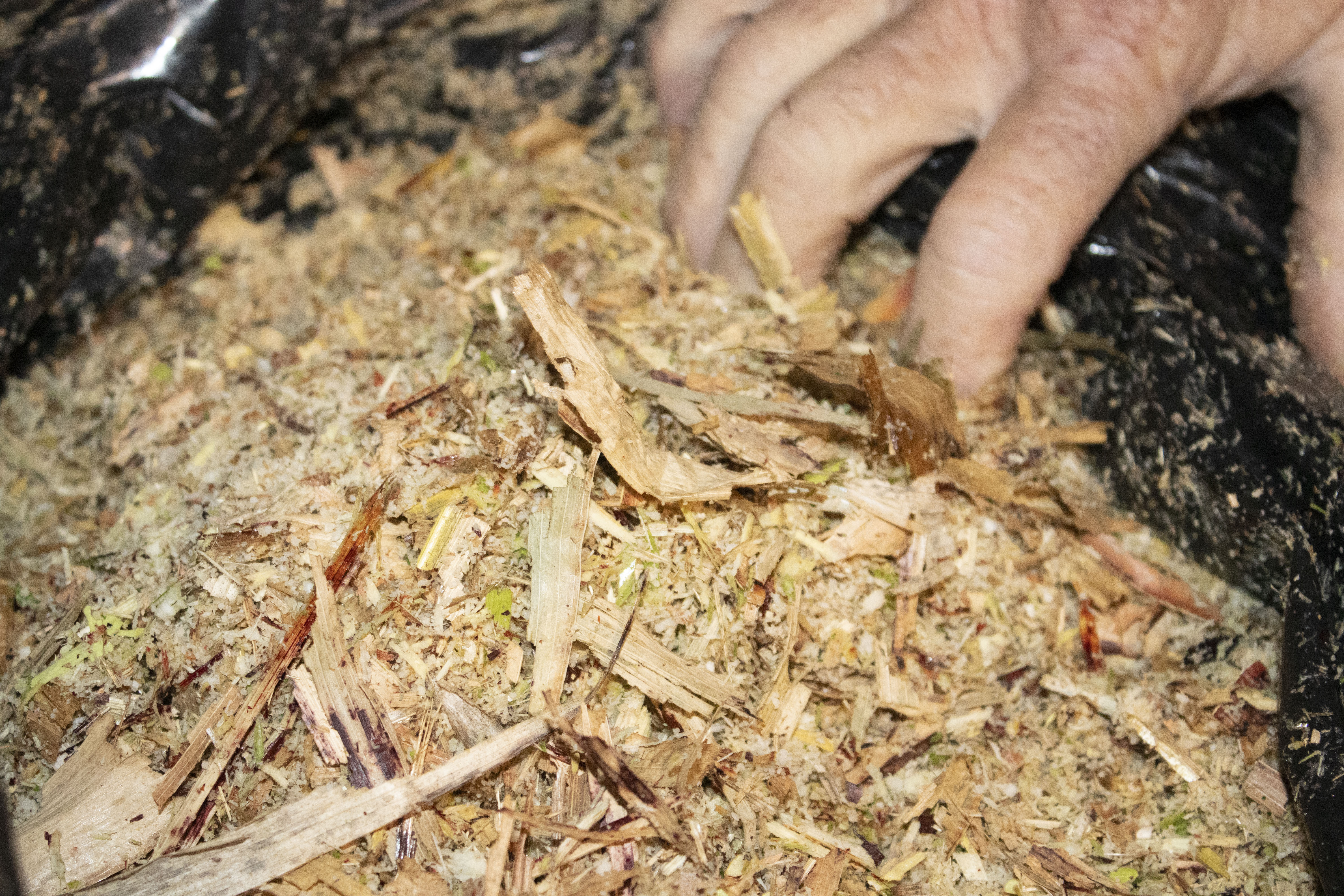
One experiment involves making “tabletop silage.” The Lees took milo stalks left behind by the combine, fed them through a wood chipper and bagged them in airtight plastic bags to ensile them. After processing, the silage is tested for nutrient value.
The Lees want to find a way to better use crop byproducts that would otherwise go to waste. Typically, ruminants go for the high-nutrition milo head, which is filled with energy and protein, and leave behind the stalk and valuable nutrients.
If successful, the Lees will have found another way to reduce feed costs by using milo as a winter-feeding strategy. “We’re scrapping for an opportunity,” says Rusty. “This byproduct has the potential to be of better quality than low-quality fescue hay.” And in times like recent Missouri droughts, scrapped milo stalks could keep producers from turning to low-quality, high-priced hay as a last resort to feed herds.
Milo stalks can provide a valuable source of energy when supplemented by protein and other nutrients.
The elder Lee has created YouTube videos and publications for MU Extension. He also is participating in webinars for other Midwestern land grant universities on why milo grazing saves money and labor as a winter-feeding option for ruminants.
Visit MU Extension’s website for more information on milo grazing.
Photos
Milo producers and MU employees William Lee, left, and his father, Rusty, right, are researching the use of scrapped milo byproducts as a high-energy winter feed when supplemented by protein and other nutrients. Photo by Linda Geist.
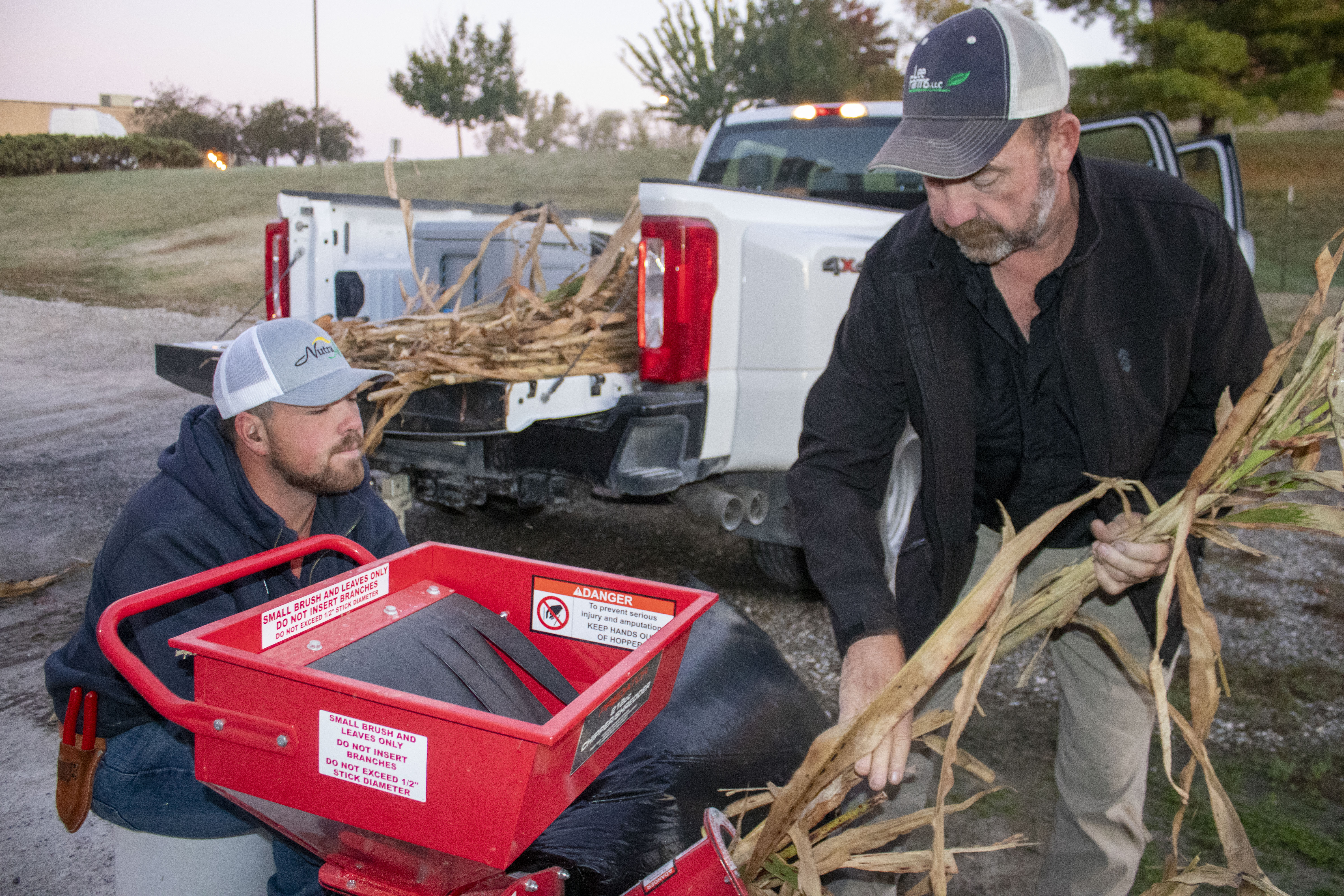
Rusty and William Lee are experimenting with ways to use scrapped milo stalks to keep beef producers from turning to low-quality, high-priced hay as a last resort to feed herds during Missouri droughts. Photo by Linda Geist.