National Farm Safety and Health Week is Sept 21-25.
-
Image
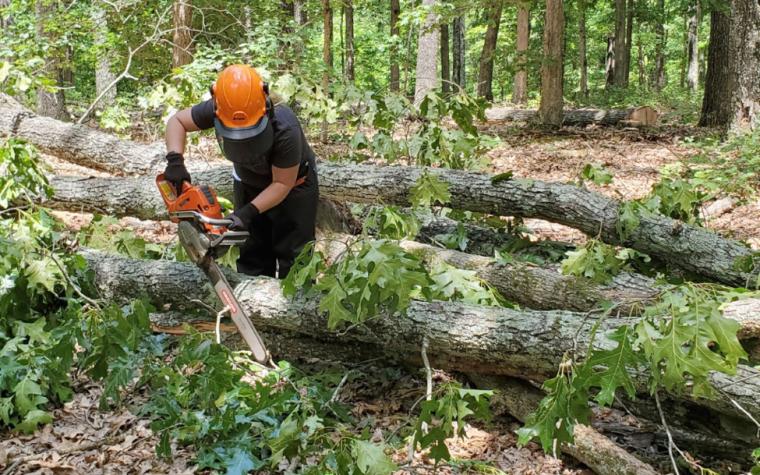 Chain saw accidents are painful, expensive and preventable. MU Extension file photo.
 -
Image
 National Farm Safety and Health Week logo.
COLUMBIA, Mo. - The phrase “not out of the woods yet” takes on new meaning during fall when the number of chain saw accidents increase.
Chain saw accidents are painful, expensive and preventable, says University of Missouri Extension state forester Hank Stelzer. Plan before entering the woods to avoid accidents, he says. “If you fail to plan, you plan to fail.”
The Occupational Safety and Health Administration reports that more than 250 people die annually from chain saw accidents in the U.S. Legs, knees, wrists and hands face the most risk of injury when things go wrong in the woods, says Stelzer. Most chain saw accidents involve kickback, happens when the upper tip of the chain saw guide bar touches an object. This contact may cause a lightning-fast reverse action of the guide bar back toward the operator.
Proper protective equipment saves lives and lessens the severity of injuries, says Stelzer, especially for the casual operator who makes infrequent visits to the woods.
Select a chain saw to meet your needs; every chain saw offers pros and cons. Stelzer recommends visiting a trained dealer with knowledgeable staff before buying a chain saw. He offers tips in the MU Extension guide Selecting and Maintaining a Chain Saw.
Don’t go into the woods alone, Stelzer says. Let others know your location and estimated time of return. Carry a cellphone, and check to see if you have a signal where you will be working.
Go to the woods with proper safety equipment
Properly fitted chain saw leg chaps and headgear are wise investments, Stelzer says. He prefers wraparound chaps that sell for about $100. Measure for chaps from the outseam, not the inseam, from the waist or belt to the top of the boot. Choose a full helmet with sound muffs and a guard or safety glasses. Helmets cost less than $60. Choose flexible gloves.
Take a first aid kit equipped with large trauma pads and bottles of water for eyewash.
Train first
Teach employees and young people how to use chain saws properly and how to dress safely. Talk about safety hazards and what to do in an emergency. Always work within your skill level.
Check the work area
Make sure you have sure footing. Check for other people in the area. Identify electrical lines in and near the work area. Look for branches that might dislodge and fall.
Before you start the saw
Read the manual and follow manufacturer’s instructions. Make sure the chain saw is in good working order. If you have any doubt about the chain saw’s safety or your ability, put the chain saw down. Never use a chain saw that is damaged or has disengaged safety devices.
Never drop-start a chain saw, says Stelzer. Drop-starting is holding the saw in one hand while pulling on the starter rope with the other. The operator has no control of the saw when it starts. “It’s a quick and easy way to end up in the urgent care clinic … or worse!” he says.
Stelzer recommends two ways to start the chain saw:
- Place the saw on the ground, put one foot inside the rear handle, place one hand on the top handlebar, and pull the starter rope with the other hand.
- Hold the saw in one hand, place it between your legs at the knee, firmly squeeze the saw and pull the starter rope with the free hand.
“In both cases, make sure the safety brake is engaged,” he says.
Location, location, location
Keep feet secure and both hands on the handles. Plan where objects may fall and do not cut directly overhead.
More information
- Reduce your risk: Chain saw safety (MU Extension publication)
- Working Safely With Chainsaws (OSHA fact sheet)
- Stelzer provides tips in this chain saw safety YouTube video from Monsanto.
Photo
Chain saw accidents are painful, expensive and preventable. MU Extension file photo.
