Registration is open for Winter 2026 courses.
-
Image
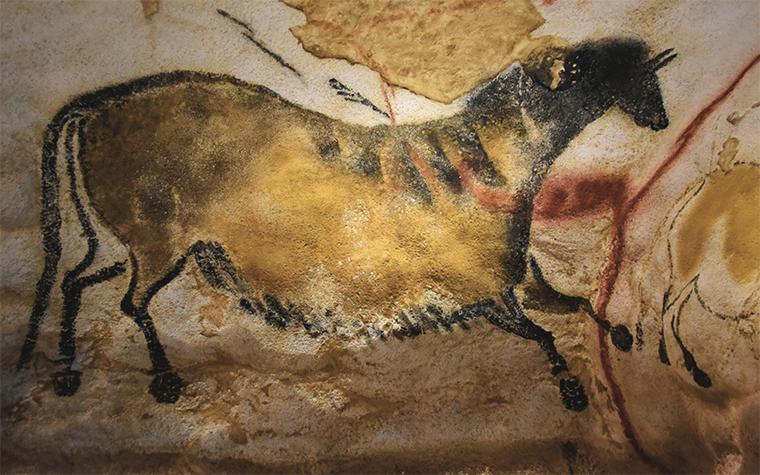 Detail from a cave painting in Lascaux, France. The Osher course "Last Hominin Standing" will draw on fossil evidence and evolutionary theory to explore why Homo sapiens survived while other human relatives did not.
COLUMBIA, Mo. – The Osher Lifelong Learning Institute at the University of Missouri has a slate of Winter 2026 courses spanning religion, history, science, finance, creative writing, public policy and the natural world.
“Together, the courses offer what Osher does best: structured learning without grades or pressure, combined with the social engagement that comes from shared inquiry,” says Osher@Mizzou educational director Jennifer Erickson.
A program of MU Extension, Osher@Mizzou offers affordable noncredit courses and other educational, cultural and social gatherings designed for adults age 50 and up, she says.
Courses are taught by a mix of retired professionals, university faculty and longtime Osher instructors, many with deep ties to Columbia and decades of teaching experience, Erickson says.
Individuals who purchase a Standard Osher membership for $30 per year pay $20 to enroll in two-week courses and $40 for four-week courses. For no additional charge, members can also participate in shared interest groups, Friday lectures and book talks, and various club activities and social events.
Big questions, ancient and modern
Several courses invite participants to step back and consider enduring human questions. “Buddhism 101,” offered in a hybrid format, introduces the historical Buddha and core teachings such as the Four Noble Truths and the Eightfold Path. The course instructor is Lisa Isaacson, a Columbia native and longtime philosophy and religious studies instructor who taught at Columbia College for four decades,
On Thursdays, “The Gospel According to Mark” revisits one of Christianity’s foundational texts through the lens of modern scholarship. The course is led by Timothy Materer, emeritus professor of English at MU and a veteran Osher instructor known for making biblical texts accessible to both longtime readers and newcomers.
Looking squarely at the present, “Thinking Machines, Changing Minds” explores how artificial intelligence is reshaping work and redefining knowledge. Instructor J. Scott Christianson brings his background as a former director of MU’s Center for Entrepreneurship and Innovation to a discussion that balances technical understanding with human implications.
History close to home
Missouri history figures prominently in the winter lineup. “Cinders and Silence: Western Missouri’s Burnt District” examines a largely erased chapter of the Civil War, when 2,200 acres in Missouri were depopulated and destroyed. Instructor Tom Rafiner, a Mizzou graduate and independent researcher, has spent more than 20 years reconstructing the region’s history and is known for his vivid, story-driven lectures.
Another hybrid course, “Three Missouri Civil War Campaigns All Missourians Should Know,” focuses on pivotal battles and military strategy within the state. The class, taught by retired Lt. Col. Whit McCoskrie, an author and a fellow at the National Churchill Museum in Fulton, combines maps, leadership analysis and ideas for local field exploration.
“MU Special Collections: A Behind-the-Scenes Look” demystifies rare books and archival collections at Mizzou Libraries. The course is led by Marian Toledo Candelaria, who became head of Special Collections and Rare Books in 2025.
Science, health and the natural world
“The Leading Cause of Adult Disability: Stroke” returns as a hybrid course led by Kathy Morris, a retired physical therapist who spent 25 years working on the stroke team at the Rusk Rehabilitation Center. The class blends medical information with discussion and shared experience.
Evolution takes center stage in “Last Hominin Standing,” taught by MU biological anthropologist Libby Cowgill. Drawing on fossil evidence and evolutionary theory, the course explores why Homo sapiens survived while other human relatives did not.
Nature lovers can enroll in “Backyard Birding for Beginners—Winter Version,” where longtime birder Bill Clark introduces common winter species and encourages participants to observe from their own yards. Clark, a familiar Osher instructor, has logged thousands of bird checklists in Missouri and is known for blending humor with deep knowledge.
On Thursday afternoons, “Astronomical Highlights for 2026” looks to the coming year’s celestial events, which include planetary alignments and a rare interstellar comet. Instructor Val Germann has taught astronomy for decades and continues to volunteer at MU’s Laws Observatory.
Creativity, memory and meaning
Several courses emphasize creativity and personal reflection. “Sharing Our Stories: Introduction to Memoir Writing,” offered in person, guides participants through the early stages of shaping life experiences into written narratives. Instructor Julia Kooi Talen, a Ph.D. candidate in creative writing at MU, draws on contemporary memoirists and hands-on writing prompts.
Poetry and visual art intersect in “Ekphrasis,” a discussion-based, in-person course led by archaeologist and art historian James Terry, now interim curator of ancient art at the MU Museum of Art and Archaeology.
Practical knowledge, lifelong value
Practical concerns are also addressed. “Future in Focus: Retirement Strategies” provides an online, non-sales-oriented look at financial planning, while “Navigating Your 1040” offers a two-session guide to understanding federal tax forms with retired CPA Garry Weiss.
Friday “value-added” lectures round out the semester with one-time talks on topics including Mizzou’s 2015 protests, Missouri folklore, estate planning and a memoir by a retired MU nurse.
Winter 2026 Osher@Mizzou courses
- When: Semester begins on Monday, Jan. 12; most courses run 2–4 weeks.
- Where: Moss Building, 1905 Hillcrest Drive, Columbia, and via Zoom. (Some courses include site visits to various locations in Columbia, as described in the catalog.)
- Catalog and registration.
- Questions? Email Osher@Mizzou.edu or call 573-882-8189.