Machinery is necessary for most farm operations and is often one of a farm’s largest investments and a significant annual expense. Fuel, labor and maintenance are the most obvious costs of operating farm equipment, but when making financial decisions, the fixed cost of owning machinery must also be considered. Fixed equipment costs include depreciation, interest, (capital) repairs, taxes and insurance; DIRTI for short. The DIRTI expenses can constitute 50% or more of a machine’s total lifecycle expenses and generally occur regardless of the use of the machinery. This publication explains how to calculate the fixed machinery expenses on your farm, how to manage those costs, and machinery ownership options to minimize your fixed machinery expenses.
Fixed machinery costs
Depreciation
Depreciating machinery for management purposes is different than tax depreciation. Tax depreciation diminishes the value of equipment over a term, set by the IRS, that is much shorter than the useful life of most pieces — unless the annual use is extremely high. Depreciation costs for management purposes represent the replacement cost spread out over the useful life of the machine. When calculating annual depreciation, estimate the number of years until the machine is expected to be replaced. Then, assign a salvage value, an estimated value of the machine at the end of its useful life. Retaining equipment value over the ownership term and maximizing its useful life both work to minimize annual depreciation expenses.
Interest
Interest expense allocated to machinery can represent either interest paid to a lender or the opportunity cost of capital to own that machine. If you own a piece of equipment outright, the interest charged to that machine should be at a rate equal to what your money could earn you if invested in your preferred alternative. Assuming your preferred alternative investment is certificates of deposit earning 3% interest, Table 1 shows an example of how interest expense in a particular year will differ between owning a $100,000 tractor outright versus having an outstanding loan balance on it.
Table 1. Comparison of annual interest expense for a machine purchased with cash vs. a loan.
| Factor determining interest expense | Purchased on bank note | Purchased with cash |
|---|---|---|
| Purchase price | $100,000 | $100,000 |
| Accumulated depreciation | $15,000 | $15,000 |
| Outstanding loan balance | $50,000 | |
| Note’s interest rate | 7.0% | |
| Interest expense | $3,500 | |
| Equity in machine | $35,000 | $85,000 |
| Opportunity cost of capital with 3% return | $1,050 | $2,550 |
| Total interest cost | $4,550 | $2,550 |
In any case, these calculations represent interest expense paid in a particular year. To estimate interest expense over the life of a machine, find its average value (purchase price plus salvage value, divided by two) and then multiply by each rate being offered.
Repair
A portion of total machinery repair costs is considered ownership costs. For most farm equipment, planned service and maintenance can be easily budgeted on an annual basis and are considered operating expenses. Most breakdowns that cause downtime when the equipment is in use are not planned. These types of repairs effectively extend the lifespan of the machinery by replacing or rebuilding major components. As a result, they are considered capital repairs and will typically be reflected in the value of the machine.
Repairing the equipment following these breakdowns cannot be easily budgeted per hour of operation and would inflate annual repair costs if the entire cost were accounted for in the year the repair was made. These types of repairs are considered ownership costs because they extend the useful life of the equipment. There are two common accounting methods for such repairs:
- Estimating the annual cost of capital repairs as a dollar amount or percentage of machine value. While expenses fluctuate by machine and by year, accurate estimates make total repair cost for the operation like the budgeted amount.
- Amortizing major repairs for several years after the repair is made. This method spreads the cost over the useful life added when major repairs or upgrades are made.
Tax
Missouri assesses property tax on farm equipment at 12% of its market value. Market value of machinery is determined by county assessors with methodology varying slightly by county and individual assessors. Market value is generally defined as “the price the property would bring when offered for sale by a person who is willing but not obligated to sell it and is bought by a person who is willing to purchase it, but who is not forced to do so.” A recently purchased $100,000 tractor would have a market value of $90,000 and an assessed value of $10,800. The property tax depends on your local tax rate but is generally around 1% of assessed value. Minimizing total equipment owned is the only strategy for reducing property taxes.
Insurance
Insurance is a tool to transfer risks associated with owning and operating a farm from the farm business to an insurance company. Many insurance types are available for farm equipment. Liability insurance is available for incidents with others, collision, natural disaster, and theft coverage, plus many others. Equipment insurance can be administered by the piece, group of machinery, or a whole farm umbrella policy that covers most or all farm assets. Farm financial databases indicate insurance expense for farm equipment to be between 0.5% and 1% of the machinery value. To reduce machinery-related insurance expenses, consider either reducing the value of equipment needing coverage, opt for high-deductible policies or working with your insurance company on how risks can be mitigated or avoided.
Housing
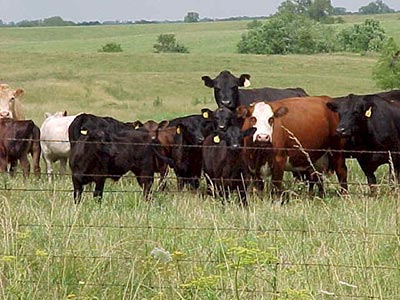
An ownership cost not considered in DIRTI is the cost of housing equipment in a shed. The investment in machinery indicates that storing it inside rather than letting it sit in the elements can decrease depreciation — by increasing salvage value and useful life — and decrease maintenance costs (Figure 1). Calculating storage costs is challenging. Storage costs can be calculated by assigning a percentage of the market value (e.g. 0.5%) of the machinery stored or by calculating a price per square foot of storage times the square feet of storage required. Larger pieces of equipment may require a taller, more valuable shed than smaller pieces and should be allocated a higher housing expense per square foot.
Housing is a true fixed cost because it is unchanged based on the fullness of the structure and additional housing costs are only incurred when more space is added or the cost to maintain spaces increase. To reduce housing expenses, find undervalued spaces for rent, prioritize maximizing the use of existing spaces before building new, and consider minimizing total housing requirements by storing less critical or weather-sensitive machinery outdoors. Take caution that savings from storing equipment outdoors may result in increased depreciation and repair expenses from sun and moisture exposure.
Managing fixed machinery costs
All fixed machine costs use the value of the machine and the amount of annual use as a factor in their calculation. Since fixed machinery costs are relatively unchanged on an annual basis regardless of how much use occurs, doing more work with a given piece of equipment will minimize its fixed cost per hour.
Reasonably minimizing the value of your machinery fleet will always reduce total machine costs. For example, if you need 1,200 hours of tractor operation per year for your farm, that work can be done by one tractor operating for the entire time or by three tractors operating for 400 hours each. Operating a single tractor wholly commits the farm to that tractor, with no backup in the event of a breakdown, requiring downtime when switching implements, and preventing the accomplishment of multiple tasks at the same time. Operating three tractors enables multiple operators to complete different jobs at once, reduces the time spent switching implements, and offers redundancy. Yet, this efficiency comes with increased maintenance as hydraulic hoses, batteries and tires degrade on multiple machines; the risk of aging technology; and the need for more storage space. Each additional machine owned increases the likelihood of the occurrence of an insurable loss — such as fire, vandalism or natural disaster — since these risks are created by owning the machine and are minimally impacted by the amount of use. Owning more machines will also likely increase insurance costs.
An operation relying on a single or small number of tractors for many hours a year will likely choose to operate new or nearly new machinery. Although costly, newer machinery comes with a warranty and dealer support to minimize the downtime of the machine. Operations using many tractors can reduce their total investment by using older equipment. In this tradeoff, operators accept more possible downtime and costly repairs at their own expense in exchange for less depreciation and greater redundancy. In either case, a farm can be very efficient with its machinery. These are a few strategies to minimize the value of owned machinery without compromising the efficiency of the operation:
- Match the number of power sources to the simultaneously available operators.
- Maximize the number of hours a regularly replaced machine is used with a low-value, low-use replacement for redundancy.
- Operate new or nearly new equipment with a warranty and dealer-provided replacement in the event of a catastrophic failure.
Leasing equipment
Leasing farm equipment allows farms access to equipment at a fixed annual cost. Lease payments are tax deductible expenses. Insurance is the only DIRTI expense incurred, as most leases require the lessee to carry insurance on the leased equipment. Today, most leases are administered by the credit arm of the major farm equipment manufacturers. However, some individual dealers or local banks may also offer equipment leases and can be more flexible with the terms of the lease, but expect lease payments to vary accordingly.
Leases do not offer the same flexibility as outright ownership. Certain modifications to equipment for specific uses may not be allowed if the changes could reduce the resale value of the machine. Many machine leases limit annual use and charge high overage fees. Operators of leased machinery should use the maximum allowed hours since their payment is unchanged whether they use 50% or 99% of the allowed hours.
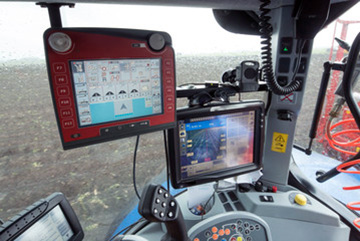
Popularity of farm equipment leasing ebbs and flows. Manufacturers and others offering leases are incentivized when used equipment is sold for high prices relative to the change in new machinery pricing over the lease period. Additionally, leases are popular with farmers and dealers when the farm economy doesn’t support significant spending on equipment upgrades, since the lease payment is a known annual cost. Farms regularly updating to the latest technology may find leases favorable by avoiding the purchase cost of precision add-ons (Figure 2). Lease payments are also fully deductible from income taxes.
Custom hire
Sometimes the cost of owning or leasing equipment is too high to be justified for a specific operation. In such cases, custom hire offers a solution. Custom operators own machinery and offer their services to others on a per unit — acre, bale, ton, mile, etc. — basis. Efficient custom operators use their machinery extensively, minimizing the cost of ownership per unit. As a result, they can often offer services for less than it would cost a farm to do the work independently. Typically, custom hire makes sense in scenarios where large, expensive or specialized machinery is necessary for only a short time on a given operation. Commonly used custom services include chemical and fertilizer application, harvesting grain or forage, drainage work, and land management activities. For more information on the cost of hiring custom operators, see the results of the latest Missouri custom rates survey in MU Extension publication G302, Custom Rates for Farm Services in Missouri.
Making the machinery ownership decision
The most economical choice for accomplishing machine work varies by farm, machine type, and equipment market conditions. Table 2 features an example assuming a 1,500-acre crop farm in central Missouri growing corn and soybeans. The farm needs an updated sprayer to replace its aging pull-type machine. The farm’s four options are to buy a used self-propelled sprayer, to buy a new pull-type sprayer, to lease a new pull-type sprayer, or to hire a neighbor with a new self-propelled sprayer to do its spraying. In all cases, the farm buys its own chemicals, and the tractor used to pull the pull-type sprayer must be kept for performing other jobs on the farm. The neighbor’s new sprayer has individual nozzle shutoffs, which will save an estimated 5% of chemical cost on the farm’s irregular fields. Average chemical cost per acre averages $60 for the entire year.
Table 2. Machinery ownership options example.
| -- |
Purchase used SP sprayer |
Purchase new PT sprayer |
Lease PT sprayer |
Existing tractor for use with PT sprayers |
Custom hire |
|---|---|---|---|---|---|
|
Purchase price |
$50,000.00 |
$45,000.00 |
$60,000.00 |
||
|
Lease payment |
$5,000.00 |
||||
|
Lifespan |
10 |
20 |
20 |
||
|
Remaining value |
$20,000.00 |
$15,000.00 |
$30,000.00 |
||
|
Depreciation |
$3,000.00 |
$1,500.00 |
$1,500.00 |
||
|
Repair rate (% of average cost) |
5% |
2% |
3% |
||
|
Repair cost1 |
$1,750.00 |
$600.00 |
$402.00 |
$1,350.00 |
|
|
Insurance rate |
0.75% |
0.75% |
0.75% |
||
|
Insurance cost |
$262.50 |
$225.00 |
$225.00 |
$337.50 |
|
|
Interest and proper tax cost2 |
$2,726.50 |
$2,337.00 |
$0.00 |
$3,505.50 |
|
|
Equipment housing |
$500.00 |
$200.00 |
$200.00 |
$200.00 |
|
|
Annual ownership cost |
$8,239.00 |
$4,862.00 |
$5,827.00 |
$6,893.00 |
|
|
Use factor3 |
33% |
||||
|
Tractor cost for spraying |
$2,274.69 |
||||
|
Annual acres sprayed |
1,500 |
1,500 |
1,500 |
1,500 |
|
|
Ownership cost per acre |
$5.49 |
$3.24 |
$3.88 |
$1.52 |
|
|
Operating cost per hour |
$90.00 |
$75.00 |
|||
|
Acres per hour sprayed |
65 |
48 |
|||
|
Operating cost per acre |
$1.38 |
$1.56 |
|||
|
Ownership and operating cost per acre |
$6.88 |
$3.24 |
$3.88 |
$3.08 |
|
|
Custom rate per acre |
$8.25 |
||||
|
Chemical savings per acre4 |
$3.00 |
||||
|
Total cost per acre, including power |
$6.88 |
$6.32 |
$6.96 |
$5.25 |
|
Abbreviations: SP = self-propelled; PT = pull-type. |
|||||
Although the example in Table 2 lists custom hire as the most economical option, other nonmonetary factors may come into play. Owning or leasing machinery for your farm offers more flexibility and automatically prioritizes getting work done in a timely manner on your farm. Operators familiar with your fields will be more efficient and less likely to experience difficulties. In a normal year, custom hire is likely to provide the savings listed above, but in adverse conditions machinery ownership and its flexibility has many immeasurable advantages.
Other considerations
Operational efficiency, interaction with other equipment, and flexibility to complete work in a timely manner are other factors to consider when making a machinery decision. These factors can be difficult to assign value without detailed analysis of farm operations over many years, but having an estimation of these factors will help in making a good machinery decision for your farm.
Also, consider the variability of machinery costs. While some repairs can be planned for after a specific number of operating hours or acres covered, others become apparent suddenly and must be completed immediately to resume the use of the equipment. As a result, leased machinery or custom hire offer the advantage of machine costs that are fully known up front and consistent from year to year. The warranties on new or nearly new equipment offer a similar benefit in an ownership scenario. When a warranty is not available, budgeting for repair costs over a five- or 10-year period and saving accrued excesses can moderate year-to-year repair expenses.