MU Extension plant pathologist urges scouting now
-
Image
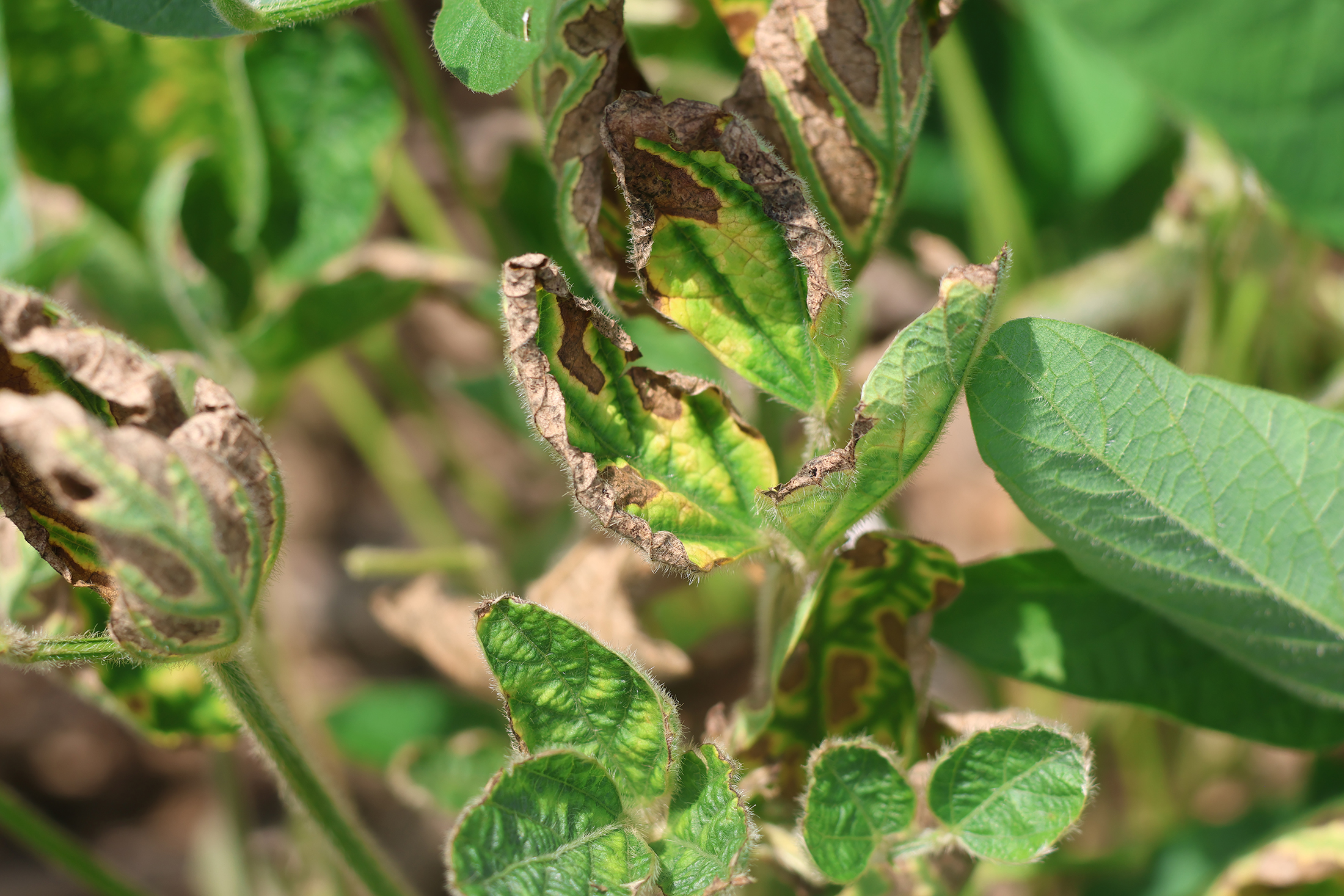
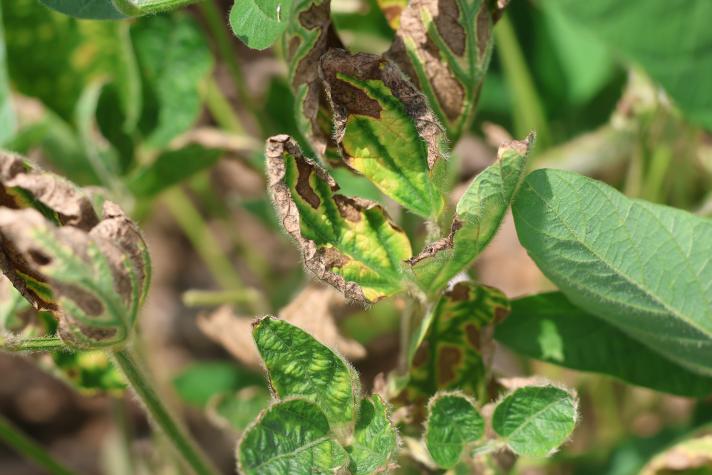 Leaves of plants infected with red crown rot can have symptoms that resemble sudden death syndrome. Yellow spots become visible on upper canopy leaves and can progress into yellow and brown spots that grow between leaf veins. Photo courtesy of Mandy Bish, MU Extension plant pathologist.
 -
Image
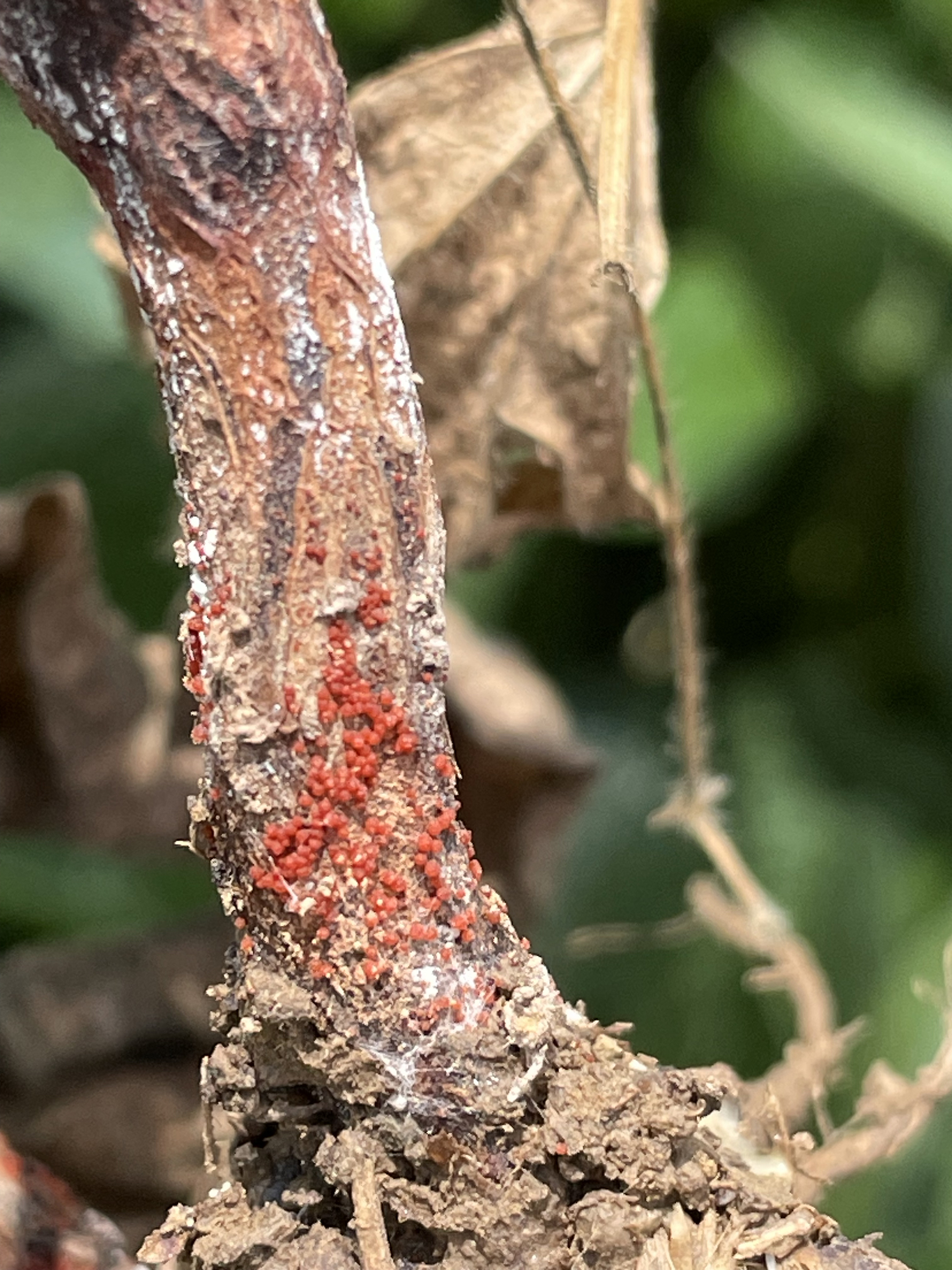
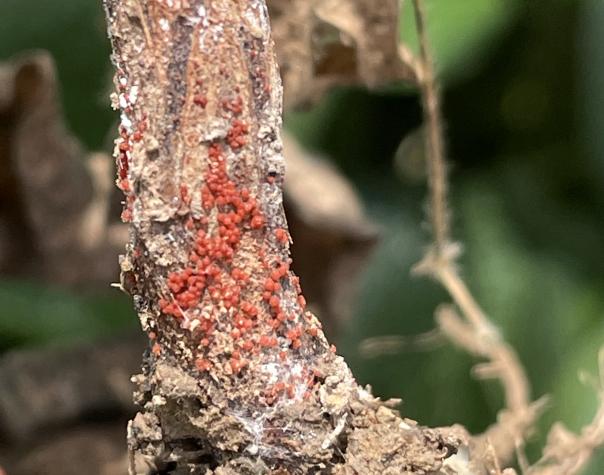 Closeup of red spheres (perithecia) that appear on the roots of soybean infected with red crown rot, a yield-robbing soybean disease recently confirmed in Missouri for the first time. Photo courtesy of Mandy Bish, MU Extension plant pathologist.
 -
Image
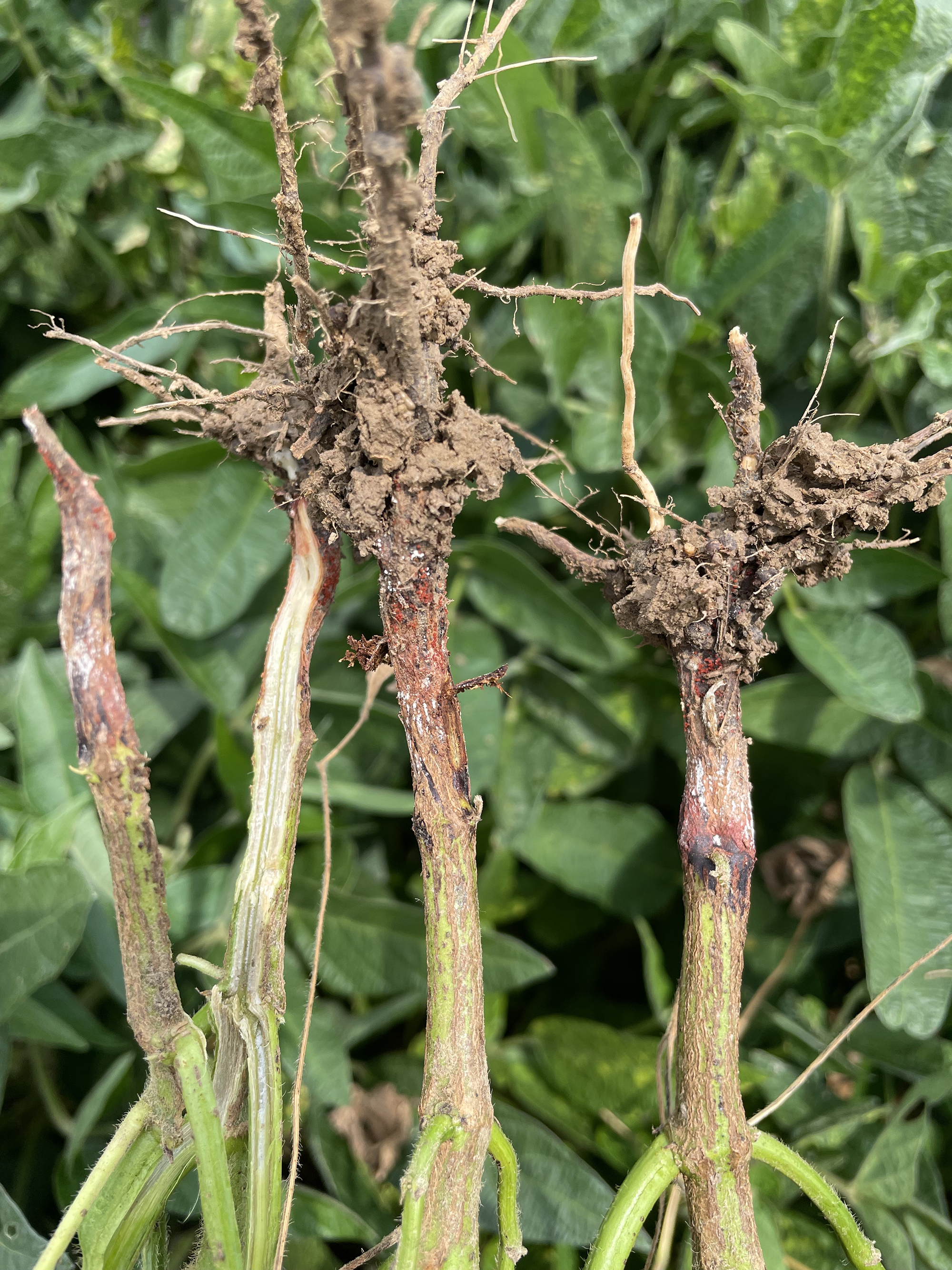
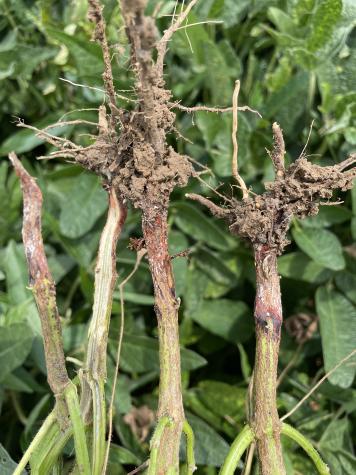 Symptoms of red crown rot disease include reddish discoloration at the base of the stem and root near the soil line. White fungal growth (mycelia) may be visible on the roots along with red spheres (perithecia). Photo courtesy of Mandy Bish, MU Extension plant pathologist.
 -
Image
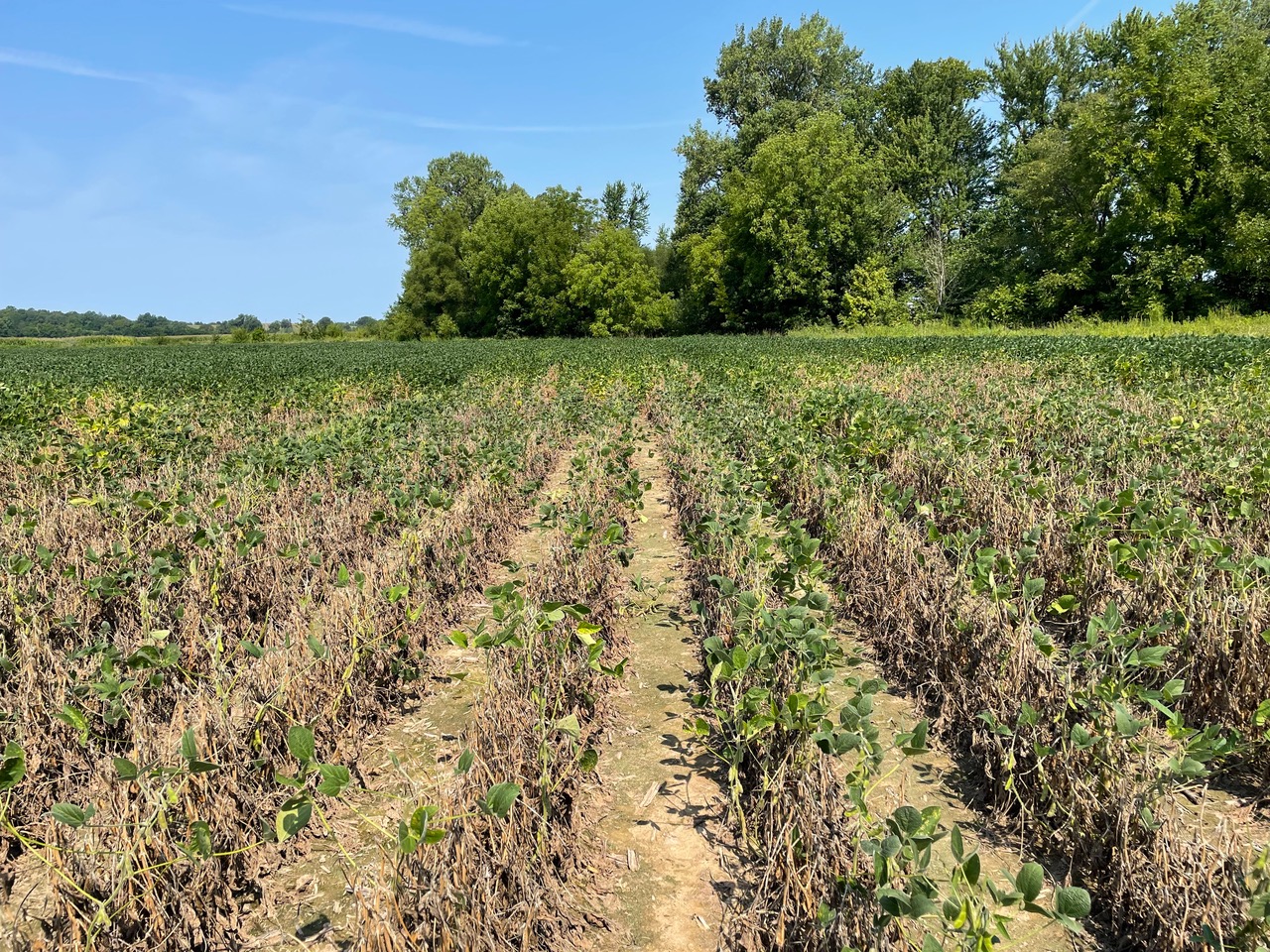
 Damage is extensive in this photo of Illinois soybean fields across the Mississippi River from northeastern Missouri counties where red crown rot disease has been confirmed. File photo courtesy of MU Extension state pathologist Mandy Bish.
COLUMBIA, Mo. – United Soybean Board and Missouri Soybean Merchandising Council, in cooperation with the University of Missouri Extension, are partnering to increase awareness of and diagnostic capabilities for red crown rot (RCR) in soybean.
The groups will provide “4-in-1” testing for 100 farmer-submitted samples of RCR and its most common lookalikes: sudden death syndrome (SDS), brown stem rot and dectes stem borer. MU Extension will provide physical examination, pathogen culturing and real-time PCR analysis, says Mandy Bish, MU Extension state plant pathologist.
Each farmer may submit up to two free samples of 5-10 symptomatic plants to MU Extension’s Plant Diagnostic Clinic. Plants should show symptoms and be in the reproductive growth stages, says clinic director Peng Tian. Leaves of infected plants show yellowing between veins.
This yellowing, called interveinal chlorosis, is also a symptom of SDS, so it’s important to inspect past the leaves. “Look for signs and symptoms at the base of the stem,” Tian says. “Infested plants will have a red color at the base of the stem, and later in the season the fungus will form tiny red spheres called perithecia in the same region. This distinguishes RCR from SDS and other diseases that cause identical leaf symptoms.”
Yield losses up to 70%
Caused by the soilborne fungus, Calonectria ilicicola, RCR leads to deterioration of soybean roots and stems. Fields affected with RCR typically show symptoms after the R3 reproductive stage. Patches of symptomatic plants often occur in low-lying or poorly drained areas of the field. RCR has caused yield losses of nearly 70% in affected areas. “In Missouri, we have estimates around 54% yield losses,” says Bish.
No known cure
“Once red crown rot spreads, you cannot unspread it,” says Bish. Soybean and disease specialists know of no cure. Seed treatments and soybean variety tolerance can reduce symptoms and infection. Planting date may have a role as well. Early planting favors SDS but not RCR. Foliar fungicides are ineffective, she says.
Management options
Some management practices may reduce severity:
- Plant early: planting into cooler soils
- Sanitation: cleaning equipment when leaving an infected field
- Crop rotation: rotating to a non-host crop such as corn for at least two years to reduce inoculum in the soil
This disease was first identified in the southern U.S. in the 1960s and was confirmed in Illinois in 2018. Since 2024, RCR has been confirmed in nine Missouri counties, including counties with limited soybean acreage such as Maries and Phelps, underscoring the need for increased awareness.
“We will need physical samples for the diagnostic analysis,” says Tian, along with some additional information for the sample submission form.
For questions, visit the Plant Diagnostic Clinic website or contact the clinic at 573-882-3019.
You can follow the spread of red crown rot and other plant diseases at the Crop Protection Network website.
Photos
Leaves with yellow and brown spots between leaf veins. Soybean leaves may show yellow spots on upper canopy leaves. Symptoms may resemble those of sudden death syndrome. Disease typically appears in nonuniform patches within fields. Photo courtesy of MU Extension state plant pathologist Mandy Bish.
Red spheres on roots. White fungal growth (mycelia) may be visible on the roots before red balls (perithecia) appear on the soybean plant roots. White mycelia appear first, but red spheres on soybean roots and the crown are the distinguishing indicator of red crown rot. Photo courtesy of MU Extension state plant pathologist Mandy Bish.
Reddish discoloration. Symptoms of red crown rot disease include reddish discoloration at the base of the stem and root near the soil line. White fungal growth (mycelia) may be visible on the roots along with red spheres (perithecia). Photo courtesy of Mandy Bish, MU Extension state plant pathologist.
Red crown rot in a soybean field. Damage is extensive in this photo of Illinois soybean fields across the Mississippi River from northeastern Missouri counties where red crown rot disease has been confirmed. Photo courtesy of MU Extension state plant pathologist Mandy Bish.