Always use appropriate personal protective equipment.
-
Image
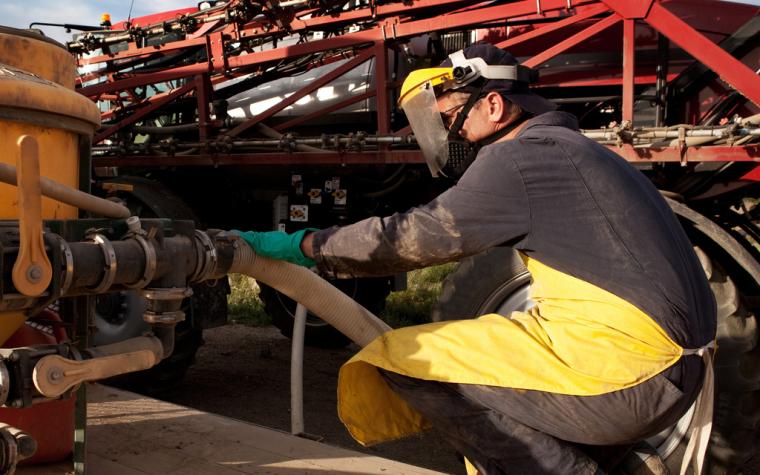 Pesticide applicator wearing personal protective equipment. Stock photo.
COLUMBIA, Mo. – Not all body parts are equally vulnerable to pesticide exposure.
University of Missouri Extension specialist Rusty Lee stresses the importance of wearing personal protective equipment (PPE) when applying pesticides.
Required PPE varies by product toxicity, formulation and application method. The pesticide label is the law and provides the most accurate PPE guidance for each product.
Use label-recommended PPE
At a minimum, pesticide labels will always require PPE to include a long-sleeved shirt, long pants, socks, and closed-toe shoes or boots. As product toxicity increases, the label will reflect additional PPE requirements, which can include chemical-resistant gloves, apron, boots, eye protection, chemical cartridge respirator and, in some cases, head or neck gear.
Pesticides contact the body in four main ways:
- Oral exposure when swallowed.
- Dermal exposure when it contacts the skin.
- Inhalation exposure when breathed in.
- Ocular exposure when it gets in the eyes.
Exposure can range from minor to life-threatening, Lee says, with exposure symptoms that can be acute, delayed or allergic.
Acute symptoms
- Oral – Burned mouth, sore throat, upset stomach.
- Dermal – Itching, blisters, rash.
- Inhalation – Pain or tightness in chest.
- Ocular – Irritation, temporary or permanent blindness.
Delayed effects may include tumors, genetic changes, miscarriage, impotence and cancer.
Allergic effects are often an irreversible sensitivity that your body develops from repeated exposure to an agent. Years of repeated exposure that caused no noticeable effects in the past can lead to allergic reactions with future exposures.
Scrotum most at risk of pesticide absorption
Men are at particular risk because the scrotum absorbs nearly 12 times more pesticide than the forearm; wearing a protective apron can reduce exposure. The forehead is also highly absorbent—four times more than the forearm—so protective eyewear is important.
Choose PPE carefully
Select PPE carefully. Choose wide-brimmed headgear and avoid fabric or leather materials, which absorb pesticides. Wear socks and closed-toe shoes. Wear pants over boots to prevent chemicals from soaking into socks or leather. Duct tape around sleeves and pant legs can add protection.
Gloves are a critical first line of defense. The product label specifies the type and material to use; gloves should be unlined, without holes, and never made of fabric or leather.
After applying pesticides, remove reusable clothing before entering your home. To avoid cross-contamination, wash it separately from other laundry in hot water with normal amounts of detergent, then dry—preferably in sunlight. Run an empty wash cycle afterward with detergent, bleach or vinegar. Discard clothing with holes or concentrated residues.
Wear a NIOSH-approved respirator when applying pesticides. Like charcoal filters in ground rigs’ cabin air systems, respirator filters must be replaced regularly.
Lee also recommends keeping gallon jugs of water in tractor cabs or vehicles for quick rinsing of exposed areas—especially the eyes—when no eyewash station is available.
For more information, the MU Extension publication Understanding the Pesticide Label is available for free download.