It was hotter than in July in some parts of the state.
-
Image
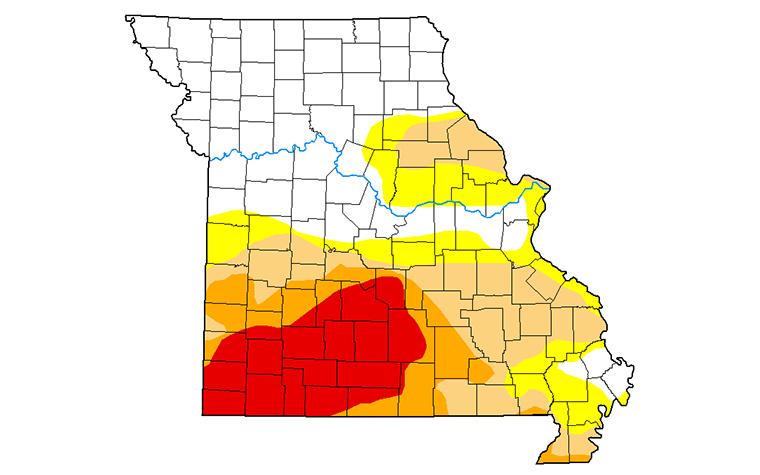 Oct. 6 U.S. Drought Monitor map for Missouri.
COLUMBIA, Mo. – September 2026 was Missouri’s warmest September on record, says University of Missouri Extension state climatologist Zachary Leasor. “It was exceptionally warm and generally dry across Missouri,” he says.
With an average statewide temperature of 77 degrees Fahrenheit, the month was 8.4 F higher than average, according to the National Oceanic and Atmospheric Administration. This breaks the previous September record of 74.8 F in 1931 by 2.2 F.
Blazing hot for days
Temperatures were highest across southwestern and south-central Missouri. The highest temperature recorded in the state this year was 106 F in both Marshfield and Licking on Sept. 6. Springfield’s average temperature during September (80.7 F) was warmer than July (80.2 F).
Not only was it hot, it was hot for long spells. Leasor noted the number of consecutive days with high temperatures greater than or equal to 100 F: Marshfield had temperatures of over 100 F for Sept. 1 to Sept. 9; Joplin felt it during an eight-day stretch from Sept. 2-9; Billings had seven from Sept. 1-7; and West Plains had four days of blazing heat from Sept. 3-6.
Rainfall variable across the state
September rainfall was variable across the state during September, says Leasor.
Most of northern Missouri received average to above average rainfall with the highest totals in northwest Missouri. Pattonsburg in Daviess County received 11.4 inches during the month.
“Southern Missouri unfortunately missed out on the rain, with many locations in southwest and south-central Missouri receiving less than 1 inch of rainfall,” Leasor says. “The city of Tecumseh in Ozark County received no rainfall during the month of September.”
Statewide average precipitation during September was 2.82 inches, 1.11 inch below average, and marking the state’s third consecutive drier-than-average month. With the combined dryness and elevated temperatures, 44% of the state was classified in at least moderate drought, according to the U.S. Drought Monitor, with 15.27% of the state in extreme drought designation.
Heat, drought stressed SW Mo. crops
The drought impacts were concentrated in southwestern and south-central Missouri. Low soil moisture resulted in pastures drying up and crop stress for late-planted soybeans. MU Extension livestock specialists reported that livestock producers are using supplemental feed and are facing problems low ponds and farm water supply.
Many streams and creeks are running low, and the drought has led to increased fire risk, with many burn bans in place by the start of October, says Leasor.
But El Niño conditions may bring some relief. “The long-term forecast with El Niño conditions in the Pacific Ocean favors a wetter pattern for Missouri,” he says. “Late fall and winter rainfall will be critical for drought recovery.”