-
Image
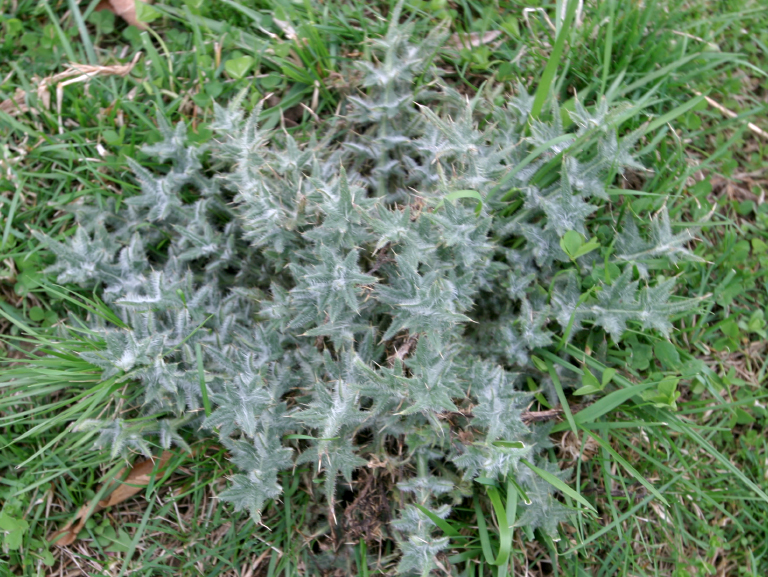
 Bull thistle. Kevin Bradley, University of Missouri Extension.
BOONVILLE, Mo. – The spiny growth of thistles can shade out desirable pasture grasses and clover, reducing both profitability and productivity of pastureland.
Many Missouri fields now have large populations of musk and bull thistles, says Todd Lorenz, University of Missouri Extension field specialist in agronomy.
“Cattle will not graze in areas with heavy thistle infestations,” Lorenz says. “That lowers pasture productivity and increases the likelihood that thistle populations will continue to grow if proper controls are not put in place.”
Each thistle plant produces up to 4,000 seeds, making early control critical. Lorenz recommends scouting pastures in late fall and early spring to assess plant numbers and plan control strategies.
Maintaining good soil fertility and practicing proper herd management also help prevent thistle infestations. Overgrazing and recurring drought can weaken grass stands and create openings for perennial weeds such as thistles to establish.
Missouri law requires landowners to control and prevent the spread of noxious thistles. The state designates Canada thistle, musk thistle and Scotch thistle as noxious weeds. Landowners must manage these plants frequently enough to prevent them from producing seed.
Control is harder when some landowners manage thistles and others do not, Lorenz says.
Control at the right time
Winter weeds such as thistles should be controlled early to avoid forage losses.
Mowing provides only limited control and can spread seed to new areas. If mowing is used, it should happen before flowers emerge. The same is true for hand digging or pulling; plants must be removed before flowering, and as much of the root as possible should be extracted. Viable seed can begin developing within seven days of the first pink color appearing in flower heads.
The most effective control option is herbicide application, Lorenz says, but timing is critical. Applications should occur by the bud stage, before flowers open. It may take up to a month for treated plants to die completely. Fall applications do not provide residual control.
Products labeled for pasture use include 2,4-D, dicamba, DuraCor, Grazon P+D, GrazonNext, Chaparral and other registered herbicides. Always follow label directions.
The best time to spray is when plants are in the rosette stage, which accounts for 70%–80% of the plant’s life cycle, says Kevin Bradley, MU Extension state weed scientist. Ideal application windows are fall (October) or early spring (March–April). In some cases, widespread broadcast spraying may be necessary.
Biological control methods are also available in some areas, including natural enemies such as certain weevils and rust fungi.
For photos of common Missouri thistles and additional control recommendations, Bradley’s presentation Weed Management Considerations for Pastures in Missouri is available as a free PDF download. You can also contact your local MU Extension agronomist.
Photo
Bull thistle. Kevin Bradley, University of Missouri Extension.