-
Image
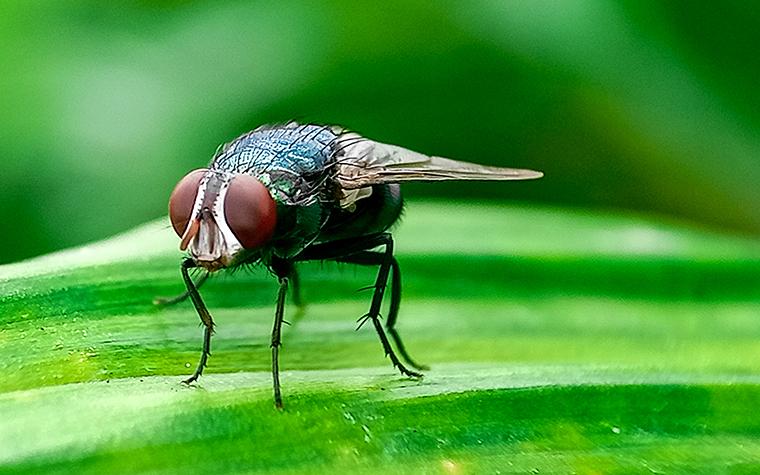 New World Screwworm fly. Adobe stock photo.
COLUMBIA, Mo. – As livestock exhibition season gets underway, University of Missouri Extension and the Missouri Department of Agriculture have released information to help producers, exhibitors and animal owners recognize and respond to the threat of New World screwworm (NWS).
A two-page printable flyer explains what New World screwworm is, how it spreads, signs of infestation and steps animal owners can take to protect livestock, pets and wildlife, says Craig Payne, DVM, extension professor of veterinary medicine at MU and a member of Missouri’s New World Screwworm Joint Working Group, which includes representatives from the U.S. Department of Agriculture, MU Extension and Missouri’s departments of Agriculture, Conservation, and Health and Senior Services.
New World screwworm is a parasitic fly whose larvae feed on living tissue in warm-blooded animals. It can affect cattle, swine, horses, sheep, goats, dogs, wildlife and other animals. The pest was eradicated from the United States in the 1960s but has recently moved north through Central America and Mexico. It was confirmed again in the southern United States in June 2026.
Animal owners are encouraged to strengthen biosecurity practices, treat and cover wounds promptly, maintain animal identification records and work closely with veterinarians. Exhibitors traveling with animals are urged to inspect animals before departure, daily during travel and after returning home.
Animal owners should watch for signs such as wounds that enlarge rapidly, bloody or light-colored drainage, maggots in wounds, unusual irritation or pain, head shaking, reduced appetite, fever and foul odors. Suspected cases should be reported immediately to a veterinarian or appropriate state agency.
Officials note that New World screwworm is not a food safety issue; meat products remain safe to eat when properly handled and cooked. Animals can often be successfully treated when infestations are detected early and managed under veterinary care.
The flyer includes QR codes for quick access to detailed information on biosecurity basics, federal premises ID registration and animal movement requirements, as well as information tailored for veterinarians.
More information
- Stop Screwworm. USDA Animal and Plant Health Inspection Service.
- New World Screwworm: Information and Resources. Missouri Department of Agriculture.