-
Image
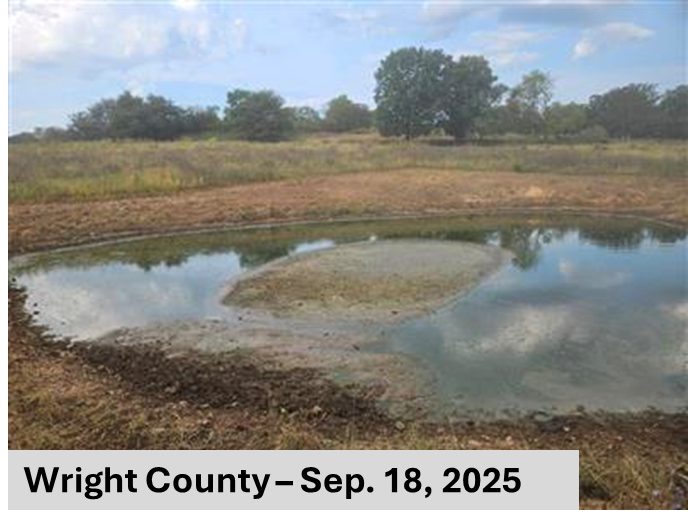
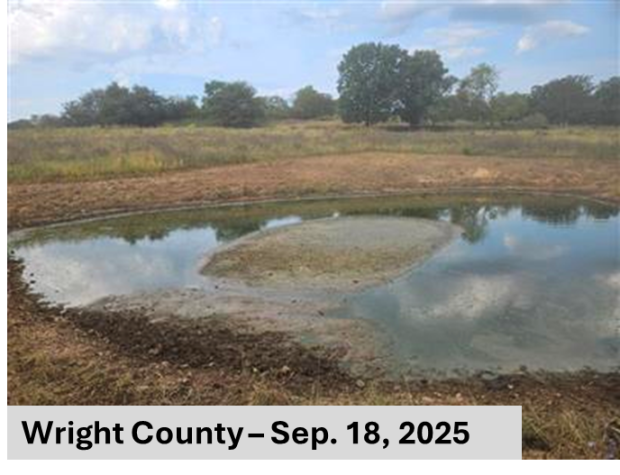 Drought in in Wright County depleted ponds and other water sources for agriculture. MU Extension state climatologist Zachary Leasor said there were widespread reports of ponds with low or dry water levels. Photo courtesy of the National Drought Mitigation Center’s Condition Monitoring Observer Reports program.
 -
Image
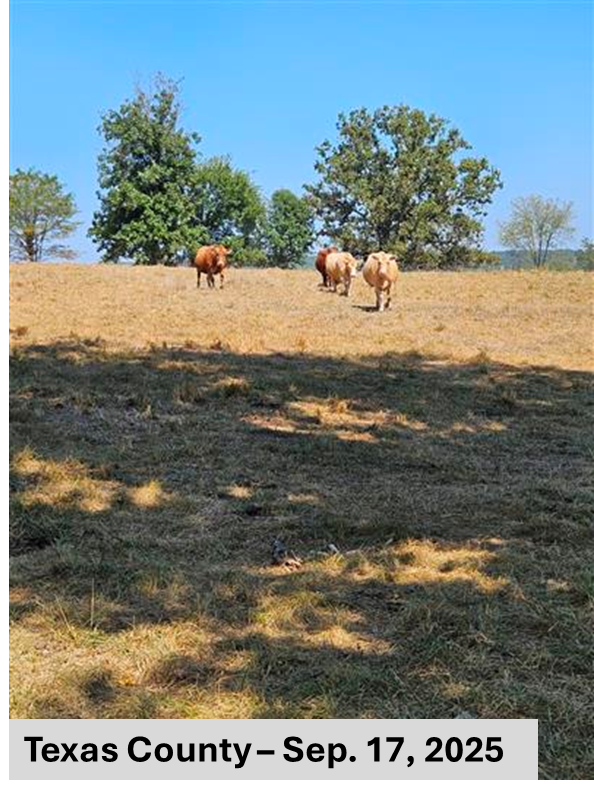
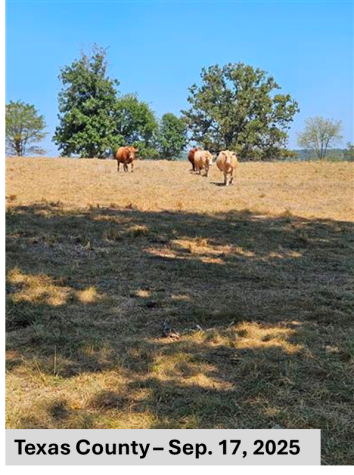 Extreme drought in September 2025 left southwestern Missouri pastures in poor condition. Photo courtesy of the National Drought Mitigation Center’s Condition Monitoring Observer Reports program.
COLUMBIA, Mo. – Missouri farmers faced another challenging weather year in 2025, says University of Missouri Extension state climatologist Zachary Leasor.
It was a year of extremes, with bitter cold temperatures, record-breaking rainfalls and flash drought during critical parts of the growing season, says Leasor.
The year opened with the coldest January in more than a decade. Preliminary data from the National Oceanic and Atmospheric Administration shows the statewide average temperature during January and February was lower than the long-term (1895 – 2025) average, marking it the state’s coldest winter since 2020-21.
Snows and lows
Nearly all of Missouri, except the northern tier of counties, received more snow than average in January and February. Many of the highest seasonal snowfall totals of 20-plus inches centered around I-70 corridor and the metro areas.
Two blasts of cold air dropped temperatures as low as minus 18 degrees Fahrenheit (Gentry County) in January and minus 22 F (Clay County) in February. Drier conditions continued into March, but temperatures flipped quickly. March was 7.5 F warmer than average and finished tied as the state’s eighth warmest March on record.
Dry to wet to dry
By April 1, the United States Drought Monitor (USDM) designated approximately 72% of the state as at least abnormally dry with 23% of state in a drought. This was short lived, however, because the state recorded the fourth wettest April on record with locations such as St. Louis (10.85 inches) and Springfield (13.29 inches) breaking the all-time April rainfall record.
The highest monthly totals were in the eastern Ozarks, with 18.02 inches in Summersville (Texas County). As the growing season began in Missouri, wetness continued, with near normal precipitation in May followed by two consecutive wetter than average months for the state during June and July.
Oppressive heat, high dew points
Temperatures throughout late spring and summer were near average, but July had some oppressive heat, owing more to record or near-record high July humidity in Missouri. According to the National Weather Service office in Paducah, Ken., the Cape Girardeau airport recorded a dew point temperature of at least 75 F for 26 consecutive days in July, setting a new record.
Fourth consecutive drought during growing season
Missouri was affected by drought in 2025, primarily during the second half of the growing season. This was the fourth consecutive growing season with drought in Missouri. While precipitation deficits from the 2024 drought were once again present at the start of the calendar year, Missouri started off the 2025 growing season with above-average rainfall during April, June and July.
The state then saw a much drier pattern beginning around mid-July and the second half of the growing season featured below-average precipitation. A flash drought, or rapid onset drought event, affected almost all of the state by the end of August.
Statewide monthly precipitation during August (1.16 inches) marked the state’s fourth driest August on record, with five consecutive drier-than-average months from August through December. While temperatures during August were slightly cooler than average, the statewide temperature September – November was 4 F above average, ranking as the fourth warmest fall on record.
These warmer temperatures helped to extend the growing season. According to the U.S. Drought Monitor, Missouri reached its peak drought severity on Oct. 14, when approximately 77% of the state was classified as in moderate drought (D1) or worse, with severe (D2) and extreme (D3) drought conditions reported, especially in southern and southwest Missouri.
“The timing of this year’s drought once again resulted in agricultural drought impacts across Missouri,” says Leasor. “Depleted soil moisture led to primarily poor pasture conditions during the late summer and fall months, especially in southwestern Missouri. Agricultural water supply was also negatively impacted, with widespread reports of ponds with low or dry water levels. Larger streams and rivers were also impacted by drought conditions.”
There were 742 community drought impact reports submitted in Missouri through the Condition Monitoring Observer Reports program from July 1 – Nov. 15, 2025. Most impact reports came from southern and southwestern Missouri. Missouri recorded the third driest December on record as drought continued into 2026. Overall, the state finished the year 1.7 F warmer than average, and also drier than average (-2.95 inches).
Photos
Texas County. Extreme drought in September 2025 left southwestern Missouri pastures in poor condition. Photo courtesy of the National Drought Mitigation Center’s Condition Monitoring Observer Reports program.
Wright County. Drought in in Wright County depleted ponds and other water sources for agriculture. MU Extension state climatologist Zachary Leasor said there were widespread reports of ponds with low or dry water levels. Photo courtesy of the National Drought Mitigation Center’s Condition Monitoring Observer Reports program.