Participants in the AI-Ready Missouri Summit advanced toward a coordinated, statewide strategy to ensure that the benefits of AI reach communities across the entire state.
-
Image
 Chris Barnett, director of MU Extension’s Center for Applied Research and Engagement Systems (CARES), delivers his lightning presentation to a full house at the AI-Ready Missouri Summit.
Leaders from across the state convened May 29 at Mizzou Engineering to shape the future of artificial intelligence (AI) across Missouri.
Participants came away with a solid understanding of the depth and breadth of expertise ready to lean into the challenges and a commitment to support the adoption of AI as a productivity tool for Missouri’s businesses, governments and nonprofits.
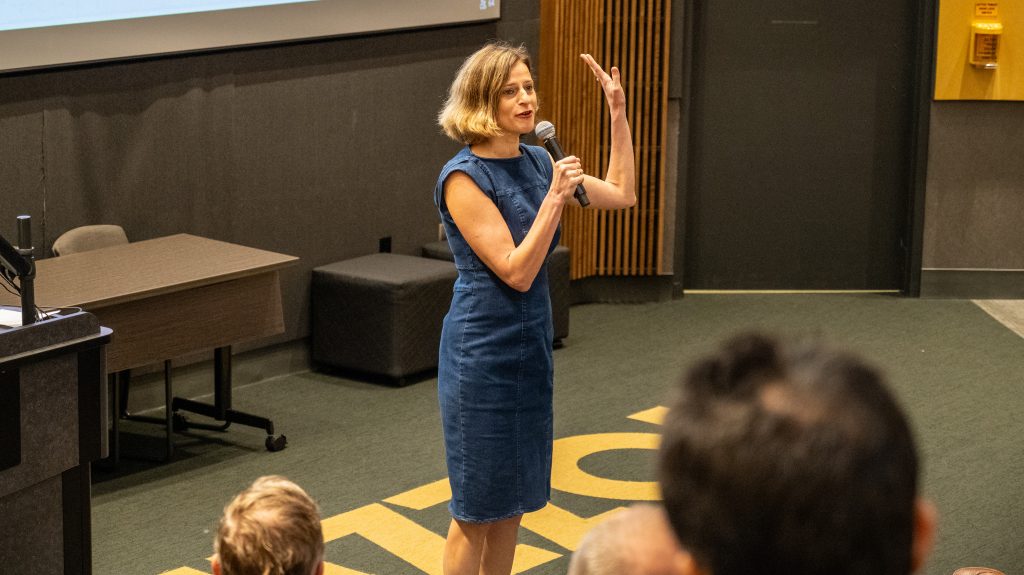
The AI-Ready Missouri Summit was a focused, high-impact gathering designed to bring together decision-makers from agriculture, healthcare, energy, public safety, higher education and manufacturing for a structured working session centered on identifying the real-world gaps, challenges and opportunities that will define Missouri’s AI future.
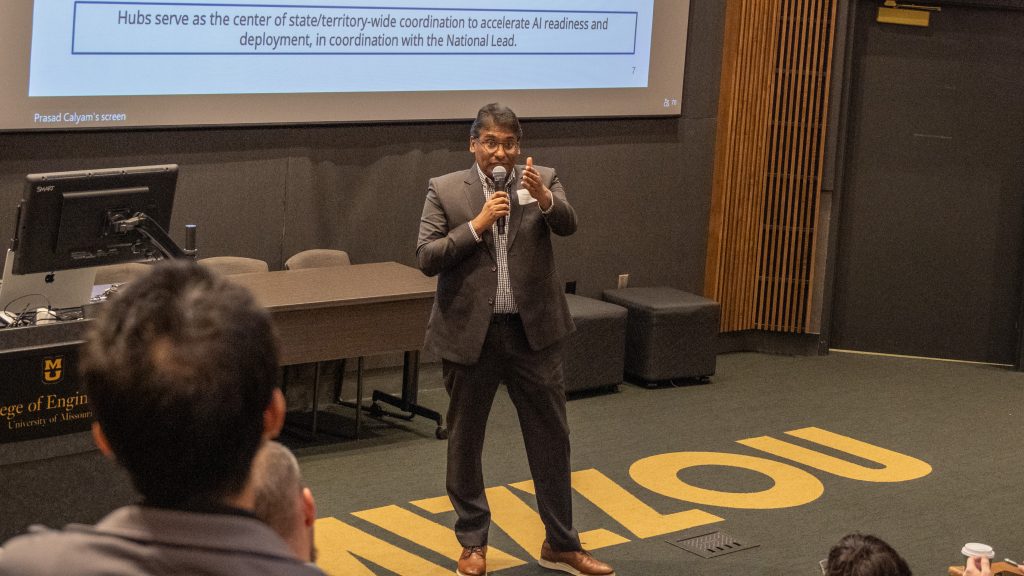
“Today’s participants have plainly given a lot of thought to the emerging needs in the workforce and how Missouri can expedite robust, responsible adoption of AI through strategic collaborations between academia, government and industry,” said Curators’ Distinguished Professor Prasad Calyam, founding executive director of the Mizzou AI Education, Research and Infrastructure Center (AERI).
“There is clear excitement about what we are doing at AERI as a ‘connected convenor’ and the possibility of a coordinated hub that works collectively to bring talents, resources to address gaps for AI adoption across the state,” Calyam said.
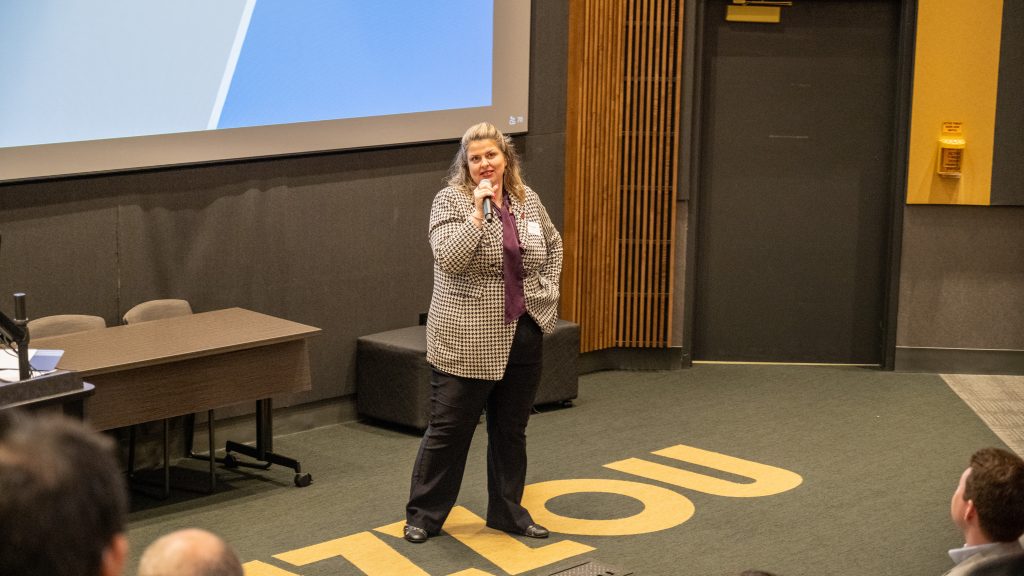
Calyam emphasized that continuing communication between academia, industry and government is critical to address the important challenges various sectors face.
The summit was jointly organized by Mizzou Engineering, the College of Arts and Science, the Division of Information Technology, and Extension. Clintin Stober, Frederick A. Middlebush Professor of Psychology from the College of Arts and Science, Matthew Keeler from Division of Information Technology, and Sarah Rielley from MU Extension were part of the team of main organizers of the event.
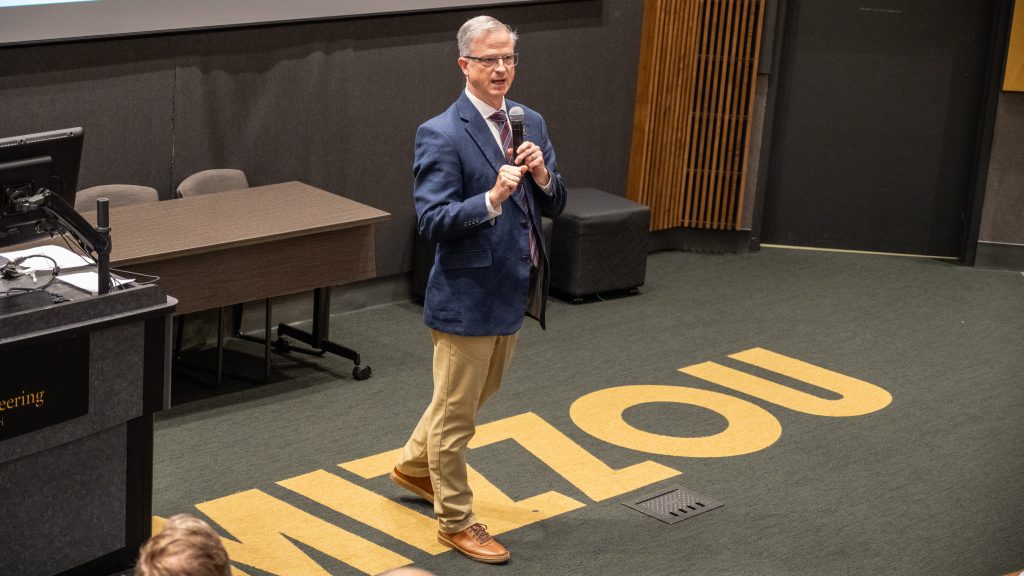
“Going forward, Mizzou will lead efforts to build a hub that can continue to convene strategic planning, connect expertise, training and resources to enable Missouri businesses and organizations to compete in an AI-driven economy,” Calyam said.