-
Image
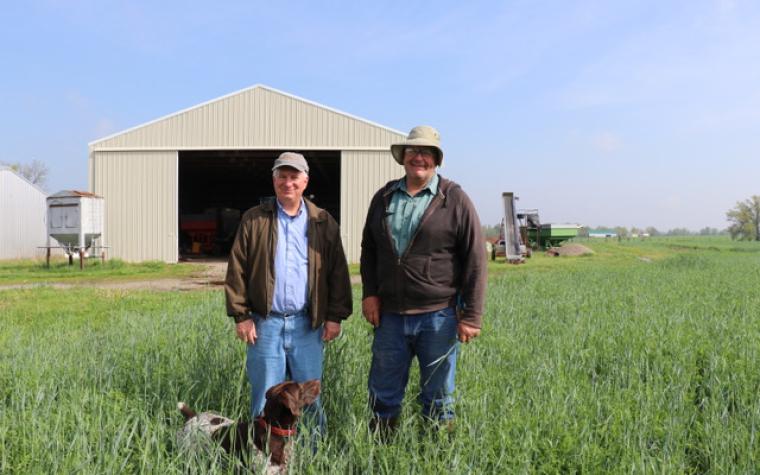 Cover crop field of hairy vetch and cereal rye. Center for Regenerative Agriculture director Rob Myers, left, and Linus Rothermich at Rothermich’s farm in Auxvasse, Mo.
 -
Image
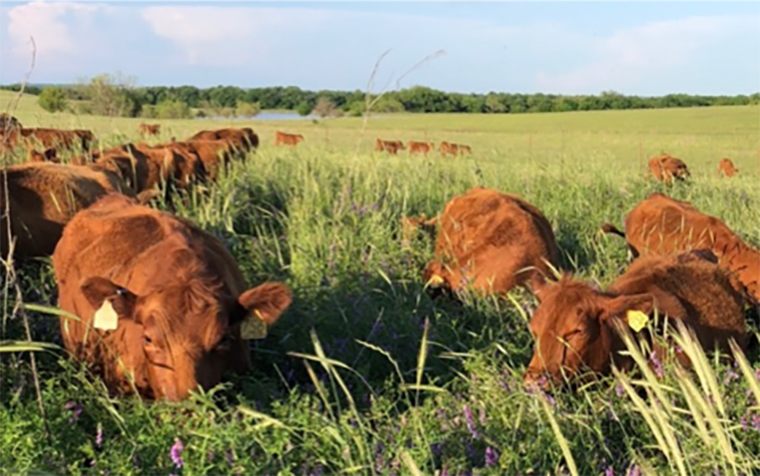
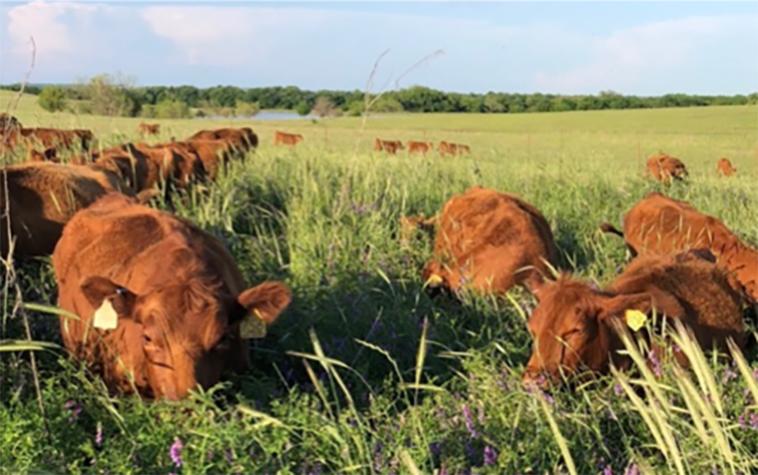 Cattle grazing cover crops. Photo by Brett Peshek.
 -
Image
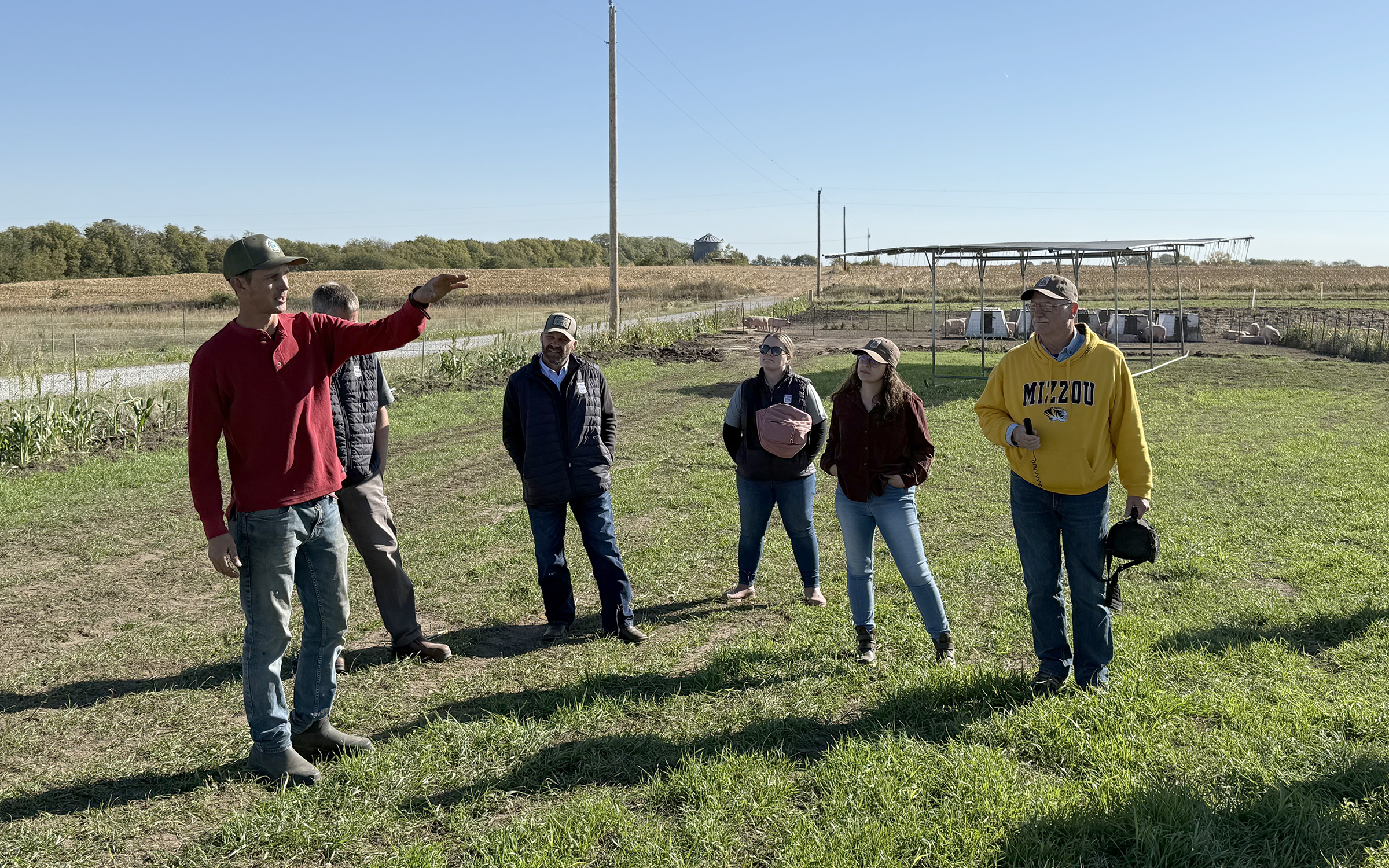
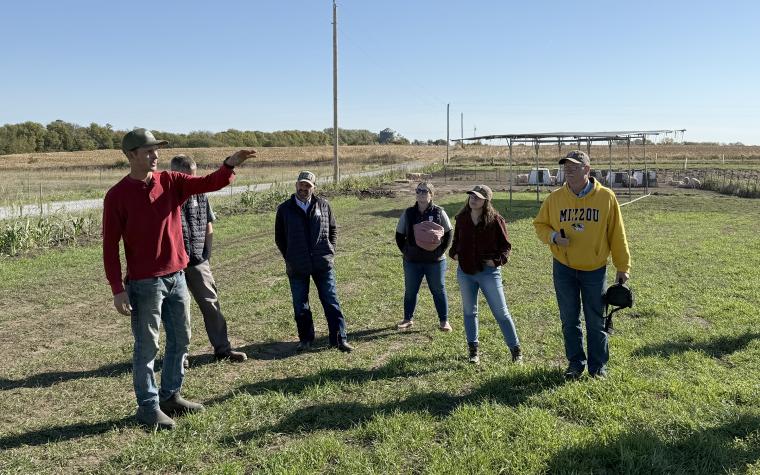 Josh Payne, left, gives a tour of his farm in Concordia, Mo., where he has adopted regenerative agriculture practices.
Guest column by Robert Myers, director, University of Missouri Center for Regenerative Agriculture; Kelly Wilson, associate director, Center for Regenerative Agriculture; Olivia Caillouet, educational program manager, Center for Regenerative Agriculture; and Robert Jones, director, Integrated Marketing Communications, University of Missouri Extension.
For Missouri farmers, success today is defined by more than yield alone. Producers are managing a tight balancing act, staying productive and profitable while protecting soil, water and other natural resources their operations depend on. While conservation has sometimes been viewed as a trade-off against productivity, that assumption is increasingly being challenged. Across Missouri, farmers are showing that smart stewardship is not a barrier to success but a pathway to long-term resilience and profitability.
The pressures facing farmers are real and growing. Soil erosion and declining soil health threaten long-term productivity, while water quality concerns and variable weather create added risk. Drought one year and excess rain the next can affect every decision. At the same time, producers are dealing with rising input costs, slim margins and limited time. Consumers, regulators and markets are also asking more questions about how food is produced and how land is managed.
These pressures leave farmers thinking not only about this year’s crop but about whether the land they farm will continue to support their families and operations in the decades ahead.
Regenerative practices gaining ground in Missouri
Regenerative agriculture has gained traction because it speaks directly to these concerns. Rather than prescribing a single practice, regenerative methods focus on outcomes such as healthy soil, resilient systems and profitable farms over the long term. In practice, regenerative methods are business- and land-friendly strategies that improve soil health while supporting production goals.
Common examples include cover crops and no-till systems that protect soil between cash crops, reduce erosion and improve water infiltration. Livestock producers are also adopting improved grazing systems, such as rotational and adaptive grazing, which allow pastures time to recover and rebuild root systems. These systems increase biodiversity, improve forage productivity and distribute nutrients more evenly across fields.
Smarter nutrient management is another key component. Using soil testing and data-driven fertilizer application helps producers reduce runoff, improve nutrient use efficiency and maintain or even increase yields while lowering input costs.
Research consistently shows that these practices improve soil structure, boost soil microbial activity and enhance water-holding capacity, leading to stronger crop performance and healthier livestock systems over time.
University of Missouri Extension’s role in supporting farmers
Adopting new practices can feel risky, which is why trusted, science-based support matters. MU Extension plays a central role in helping farmers evaluate and implement regenerative approaches through workshops, field demonstrations and one-on-one technical assistance. The Center for Regenerative Agriculture helps producers add and maintain conservation practices that create more resilient crop and livestock systems.
The Center also works to reduce the financial and logistical barriers to adoption. Through incentive programs, farmers receive payments and technical guidance to try practices like nutrient management using the 4R approach, cover cropping and regenerative grazing.
Producers across Missouri are already seeing results. In Grundy County, a farmer participating in nutrient management programs is using split nitrogen applications to improve efficiency. Near Higginsville, a producer involved in cover crop incentive programs has reduced erosion and improved weed control, setting the stage for lower herbicide use. Through the Missouri CRCL Project, MU Extension and the Center for Regenerative Agriculture are helping farmers transition by pairing financial incentives with on-the-ground support.
For some producers, regenerative practices also create opportunities to integrate crops and livestock in new ways. One Missouri farmer participating in the CRCL project is planting hundreds of native fruit and mast-bearing trees to stabilize soil, sequester carbon and support his livestock while using cover crops and reduced tillage to improve overall farm resilience.
Partnerships that amplify impact
MU Extension’s work is strengthened through partnerships with conservation agencies, soil and water districts and local organizations. These collaborations help align technical assistance, cost-share programs and shared information so solutions work across Missouri’s diverse landscapes. Together, these partners help farmers navigate the transition process and ensure conservation practices fit both the land and the operation.
Results that matter: Land and livelihoods
The benefits of regenerative practices are measurable. Improved soil health reduces erosion, increases water infiltration and supports beneficial soil biology. Financially, conservation systems can lower fuel, labor and machinery costs by reducing passes across the field. A national USDA-SARE analysis found that corn growers using cover crops saw a nearly $18 per acre increase in net profit after five years, while soybean growers gained more than $10 per acre. The Soil Health Institute reported that 85% of corn producers and 88% of soybean producers experienced net income increases after adopting soil health practices.
These gains do not always come immediately. Studies show that cover crops may result in a net cost in the first year, with returns typically emerging after several seasons. Like other long-term investments such as lime applications or equipment upgrades, regenerative practices pay dividends over time.
Caring for the land that sustains us all
Reaping these benefits requires a mindset shift, moving from a focus on short-term yield to investing in long-term land health. Missouri farmers have always adapted, and regenerative agriculture is another chapter in that tradition. By caring for the soil, managing inputs wisely and planning for resilience, producers are preserving their land for future generations while keeping agriculture strong and profitable.
Missouri agriculture’s strength lies in caring for the land that makes it possible.
Photos
Cattle grazing cover crops. Photo by Brett Peshek.
Cover crop field of hairy vetch and cereal rye. Center for Regenerative Agriculture director Rob Myers, left, and Linus Rothermich at Rothermich’s farm in Auxvasse, Mo.
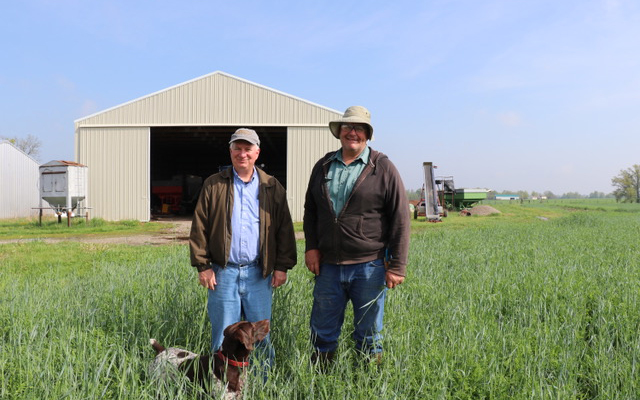
Josh Payne, left, gives a tour of his farm in Concordia, Mo., where he has adopted regenerative agriculture practices.