-
Image
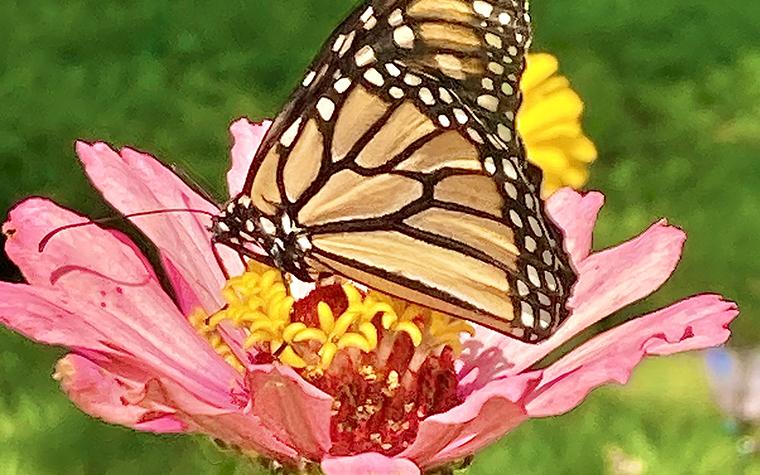 Photo by Linda Geist.
Missouri Highway 13 extends nearly the full length of the state, running from Bethany near the Iowa border to Branson at the Arkansas state line. This approximately 300‑mile highway passes through a diverse landscape, including the rugged hills of the southwestern Missouri Ozarks, farmland, rolling hills, remnants of tallgrass prairie and the fertile floodplains of the Missouri River. From north to south, Highway 13 showcases the ecological diversity that makes Missouri unique.
The Highway 13 Butterfly Trail is an integrated ecological restoration and community revitalization initiative designed to enhance pollinator habitat, support rural economic development and strengthen connections between communities and their surrounding natural systems. Mirroring the physical route of the highway, the trail will span 12 western Missouri counties: Harrison, Daviess, Caldwell, Ray, Lafayette, Johnson, Henry, St. Clair, Polk, Greene, Christian and Taney.
The concept for the Butterfly Trail originated in Hamilton, where community members identified an opportunity to repurpose approximately 10 acres of underutilized land on the edge of town. Situated along a natural migration corridor supporting more than 20 species of butterflies, the site offered both ecological potential and community value. Local stakeholders proposed the development of a butterfly park as a place‑based response to regional pollinator declines and as an asset for education and tourism.
That original idea quickly expanded. Why not connect communities all along Highway 13 through a shared vision? Many towns are seeking ways to attract and promote ecotourism while showcasing their natural beauty and local character. Butterfly parks, habitat stations and pollinator plots can create new economic opportunities for communities and businesses while advancing conservation, education and aesthetic appeal throughout the corridor. Gallatin, a town north of Hamilton, has combined art with a pollinator garden. A colorful mural on the Gallatin Square highlights butterflies and native plants. Additional projects are planned for the town and other communities along the Highway 13 trail.
Hamilton is already recognized as a destination community, Quilt Town, USA, and hosts visitors throughout the year for retail, dining and overnight stays. The addition of a butterfly park is expected to further enhance the town’s tourism profile. At the southern end of the trail lies Branson, one of the nation’s most-visited tourist destinations. Between these endpoints are numerous communities with underutilized green spaces and significant potential for the establishment of pollinator habitat and nature‑based attractions.
In response to widespread declines in pollinator populations, the Highway 13 Butterfly Trail aims to create a continuous network of native habitats supporting butterflies, bees, birds and other essential species. Habitats will be developed within approximately 13 miles on either side of the highway, resulting in a 26‑mile‑wide pollinator corridor extending along the 297‑mile roadway. This spatial scale is intended to improve habitat connectivity, support species movement and amplify ecological benefits beyond individual sites.
The project has garnered support from a diverse group of partners, including the Missouri Department of Conservation, University of Missouri Extension, The Nature Conservancy, the Missouri Prairie Foundation and the Missouri Department of Tourism, among others. MU Extension plays a central role by providing research‑based education and technical expertise in entomology, horticulture, agronomy and community economic development.
With strong partnerships and enthusiastic community support, the Highway 13 Butterfly Trail continues to grow. Plans include interpretive signage, seasonal events and a digital trail map to guide visitors and tell the story of this collaborative effort, one that blends conservation, community pride and the natural beauty of western Missouri.