Pesticide safety education saves Missouri millions while protecting workers.
-
Image
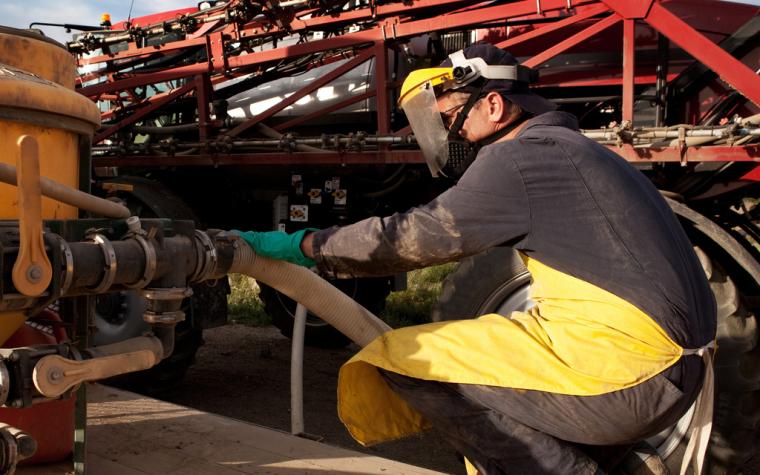 Pesticide applicator wearing personal protective equipment. Stock photo.
COLUMBIA, Mo. – February is National Pesticide Safety Education Month, a time to promote vigilance and best safety practices on the farm, said Sam Polly, coordinator of University of Missouri Extension’s Pesticide Safety Education Program, which has provided commercial pesticide recertification training to about 1,000 Missourians in the past year.
Based on Environmental Protection Agency and National Institute for Occupational Safety and Health estimates, MU Extension’s pesticide safety education program saves the state $10 million to $17 million dollars per year across the agricultural, landscape and structural fields.
The Weed Science Society of America (WSSA), the American Phytopathological Society (APS) and the Entomological Society of America (ESA) urge those people to review safety practices on the farm and other work areas during the month.
“Safe pesticide use requires caution and vigilance at all times, but February –National Pesticide Safety Education Month – is an especially appropriate time to examine current best safety practices,” said Lee Van Wychen, WSSA executive director of science policy. “Appropriate safeguards should be well in place wherever handling, transporting, storing, applying or disposing of pesticides – to protect yourself, the environment, and others in your community.”
The National Pesticide Safety Education Month webpage has resources from land-grant university pesticide safety programs to assist the public with proper pesticide use.
Topics include how to read pesticide labels, what to do after a spill, how to ensure worker protection standards, and pollination and wildlife protection. There is an online quiz on basic pesticide safety principles and pesticide safety practices at home and work. The site also includes quizzes on pesticide storage, pesticide drift and wildlife protection, among others.
“The goal is to have a safe home environment, healthy crops, successful conservation efforts, agricultural worker protection and more, all of which require safe pesticide handling and use,” said Van Wychen.