How MU Extension restored a declining Ozark hayfield.
-
Image
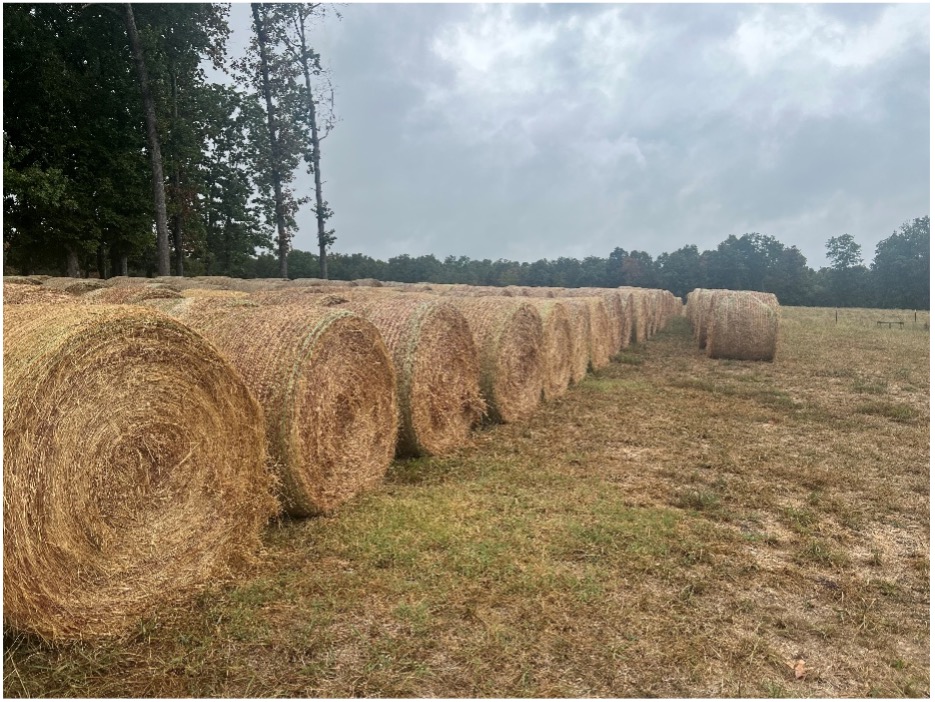
 Warm-season grass hay bales harvested in the summer of 2026.
 -
Image
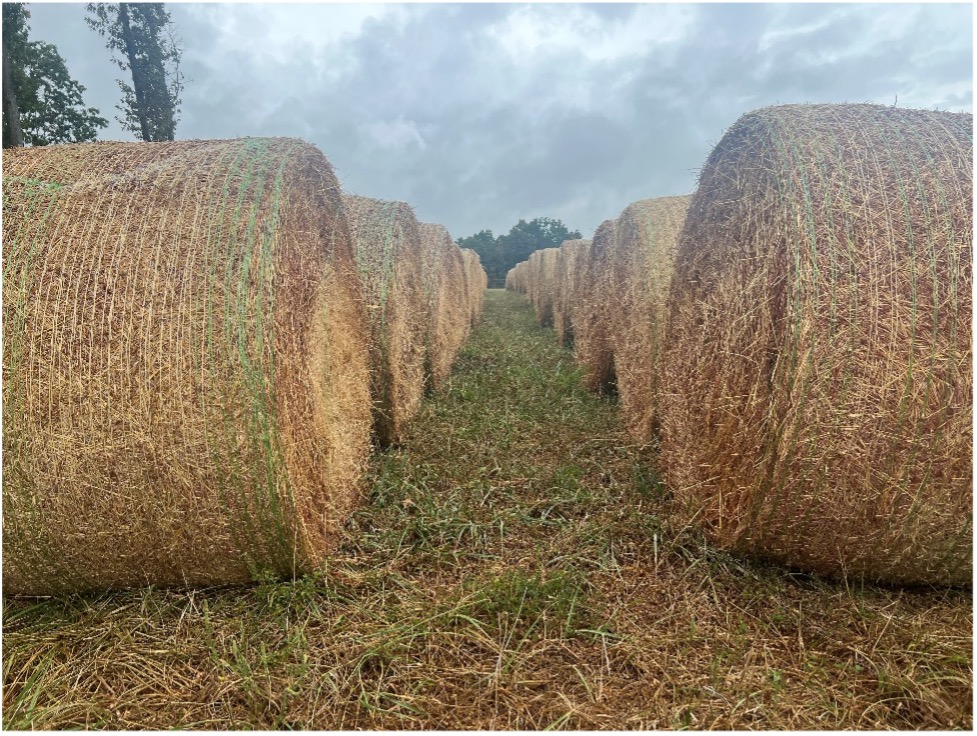
 Warm-season grass hay bales harvested in the summer of 2026.
While the Ozark region of Missouri supports a diverse agricultural economy, its rocky terrain and unique topography mean the majority of its open farmland is dedicated to pasture and hay production for livestock. However, the region’s thin topsoil and low organic matter content leave these crucial forage crops vulnerable to environmental stress.
When severe drought hit in 2023, hayfields across the region suffered heavily, including a key warm-season grass field belonging to an experienced producer in Oregon County.
Plummeting yields
Despite decades of experience in cattle and hay production, the producer watched the 16-acre field’s yields plummet to just over 100 bales. Recognizing the value of external support, the producer reached out to University of Missouri Extension agronomy field specialist Haley Schwantz, who tapped into the university's deep network of research and local assistance.
At the time, Schwantz was utilizing a Sustainable Agriculture Research and Education (SARE) grant to provide free soil and hay testing for local producers. She collected soil samples from the field, which consisted of a mixture of Caucasian Bluestem, Bermuda grass, and various weed species. Over the next two years, Schwantz used the test results to design a precise strategy. Under her guidance, the producer methodically met lime and fertility requirements while planting a warm-season cover crop to suppress aggressive weeds.
Progress requires patience
Persistent drought throughout 2023 and 2024 forced the producer to delay the ultimate plan of reseeding the Bermuda grass until late spring 2025. But because the soil’s pH and fertility had been meticulously prepped for optimal establishment, the producer had the data-backed confidence to move forward when the weather window finally opened.
Schwantz continued to provide critical support during the delicate establishment phase, continually adjusting the fertility program based on successive harvests through August 2026.
Today, the intervention has yielded undeniable results. The 16-acre field now produces more than 200 high-quality, 800-pound bales, effectively doubling the field’s productivity from its 2023 baseline.
“This success highlights MU Extension's vital role as an accessible community resource,” Schwantz said. “More broadly, it serves as a powerful reminder that when producers connect with professional agronomic expertise and the right diagnostic tools, even the most challenging soils can achieve remarkable resilience and peak production.”
Photos
Photo 1 and Photo 2. Warm-season grass hay bales harvested in the summer of 2026.