-
Image
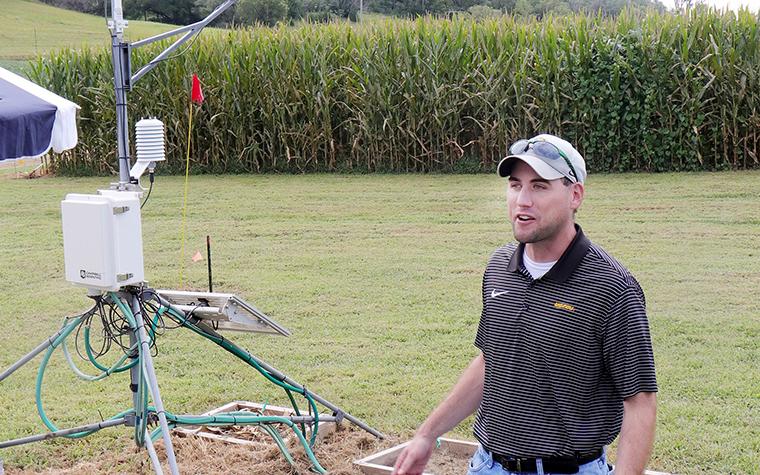 High temperatures and high humidity coincide with one of corn’s most critical growth stages, resulting in a condition many refer to as “corn sweat.” MU Extension state climatologist Zachary Leasor explains why this occurs. Photo by Linda Geist.
COLUMBIA, Mo. – High temperatures and high humidity coinciding with one of corn’s most critical growth stages results in a condition many refer to as “corn sweat.”
Corn sweat is a colloquial term for transpiration, the natural process of corn plants pulling water through their roots and releasing vapor, mostly through the stomata of their leaves, into the atmosphere, says Zachary Leasor, University of Missouri Extension state climatologist. This process helps cool the plant as moisture is released into the surrounding air. Combined with evaporation of water from the ground, the total process of evapotranspiration can make already-humid air even more humid in areas with widespread crop production.
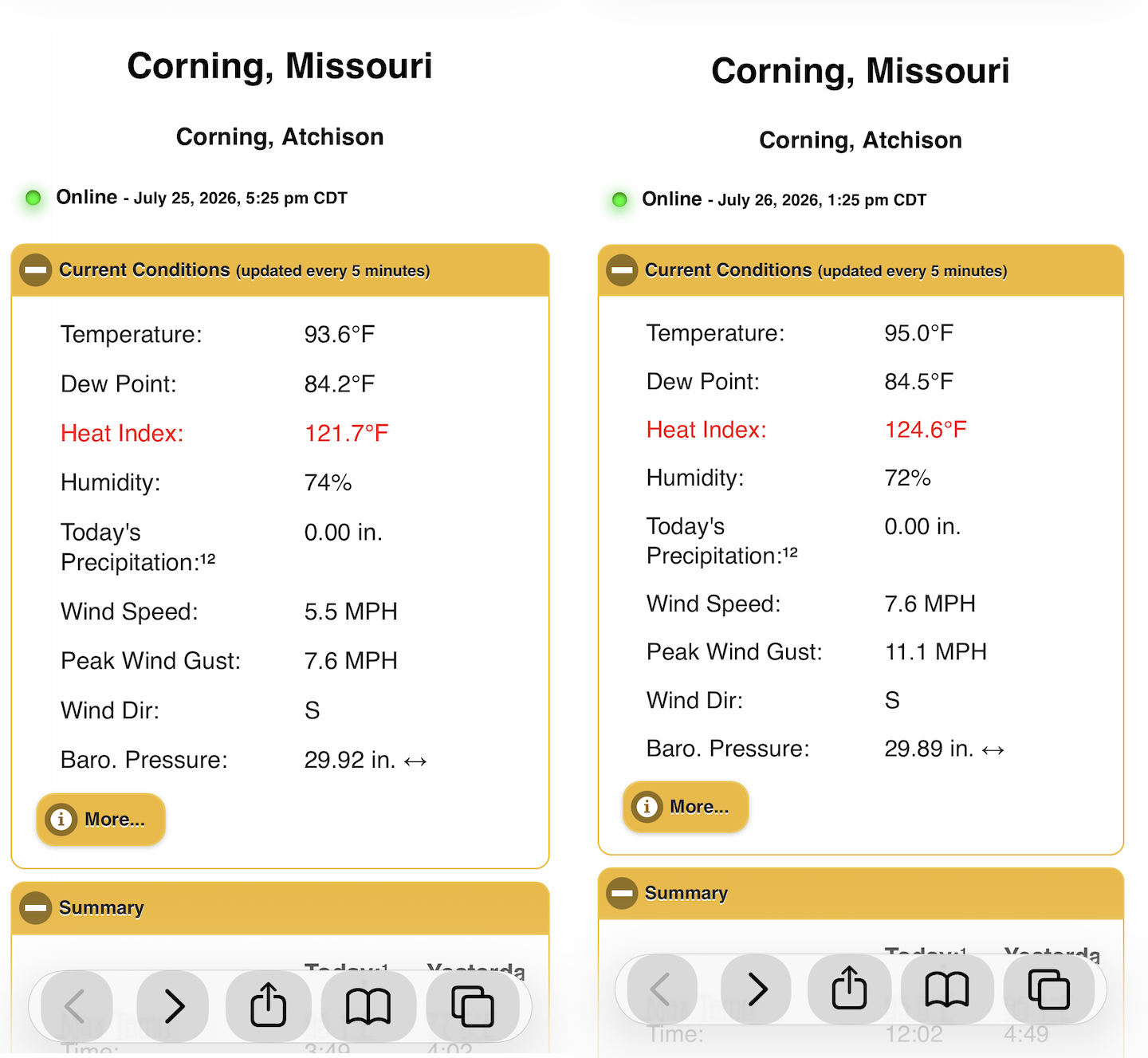
Temperatures and humidity ramped up in July, with many locations across Missouri recording their first 100-plus degree temperatures of 2026. Heat index values have regularly exceeded 110 F and resulted in many heat advisories and warnings across the state, says Leasor. Most of Missouri experienced a wetter than average growing season before the most recent heat wave, providing ample soil moisture and available water for plants to transpire this season.
Corn sweat generally happens in late July to early August when crops have reached full canopy development and are at critical growth stages, says MU Extension soybean agronomy specialist Andre Reis. “At this time, crops and other vegetation are maximizing their water use primarily to cope with the heat and cool their foliage,” Reis says.
Leasor says research has found that crop transpiration can increase surface-level humidity and influence local weather. In large agricultural areas, this additional moisture may play a role in complex atmospheric processes such as thunderstorm development.
“However, it remains difficult to accurately quantify how much of the humidity may be due to an additional contribution of the crop transpiration, and how far this humidity can move across a region or vertically in the atmosphere before being mixed with atmospheric moisture from other sources,” he says.
Corn ranks second only to soybean in Missouri agricultural commodities, with the state ranking in the nation’s Top 10 corn-producing states, according to the Missouri Department of Agriculture.
Follow real-time weather conditions in your area through the Missouri Mesonet weather station network.
Related publication: Using the Missouri Mesonet To Assess Evapotranspiration in Northern Missouri
Photo
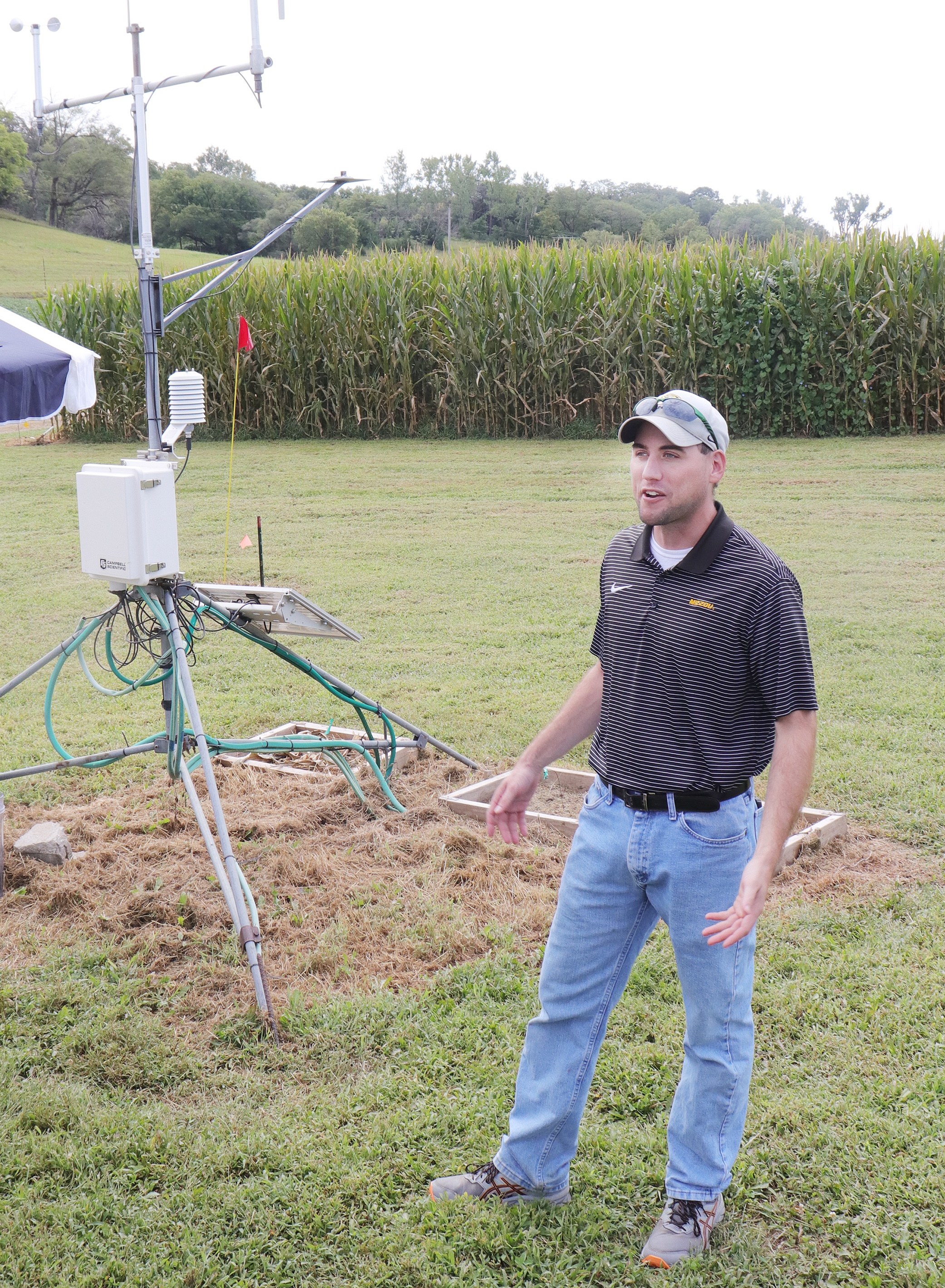
Zachary Leasor. High temperatures and high humidity coincide with one of corn’s most critical growth stages, resulting in a condition many refer to as “corn sweat.” MU Extension state climatologist Zachary Leasor explains why this occurs. Photo by Linda Geist.
These two screenshots from MU Extension specialist Jim Crawford shows recent temperature and humidity conditions that led to corn sweat conditions in northwestern Missouri. Crawford is director of the MU Graves-Chapple Extension and Education Center in Rock Port.