-
Image
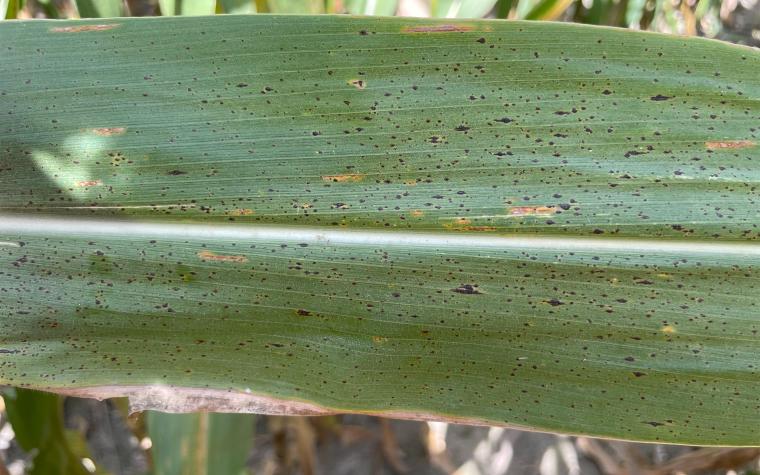 Tar spot, a yield-robbing disease of corn, can be identified by small, raised black spots across the upper and lower leaf surfaces. Photo courtesy of Mandy Bish, MU Extension plant pathologist.
 -
Image
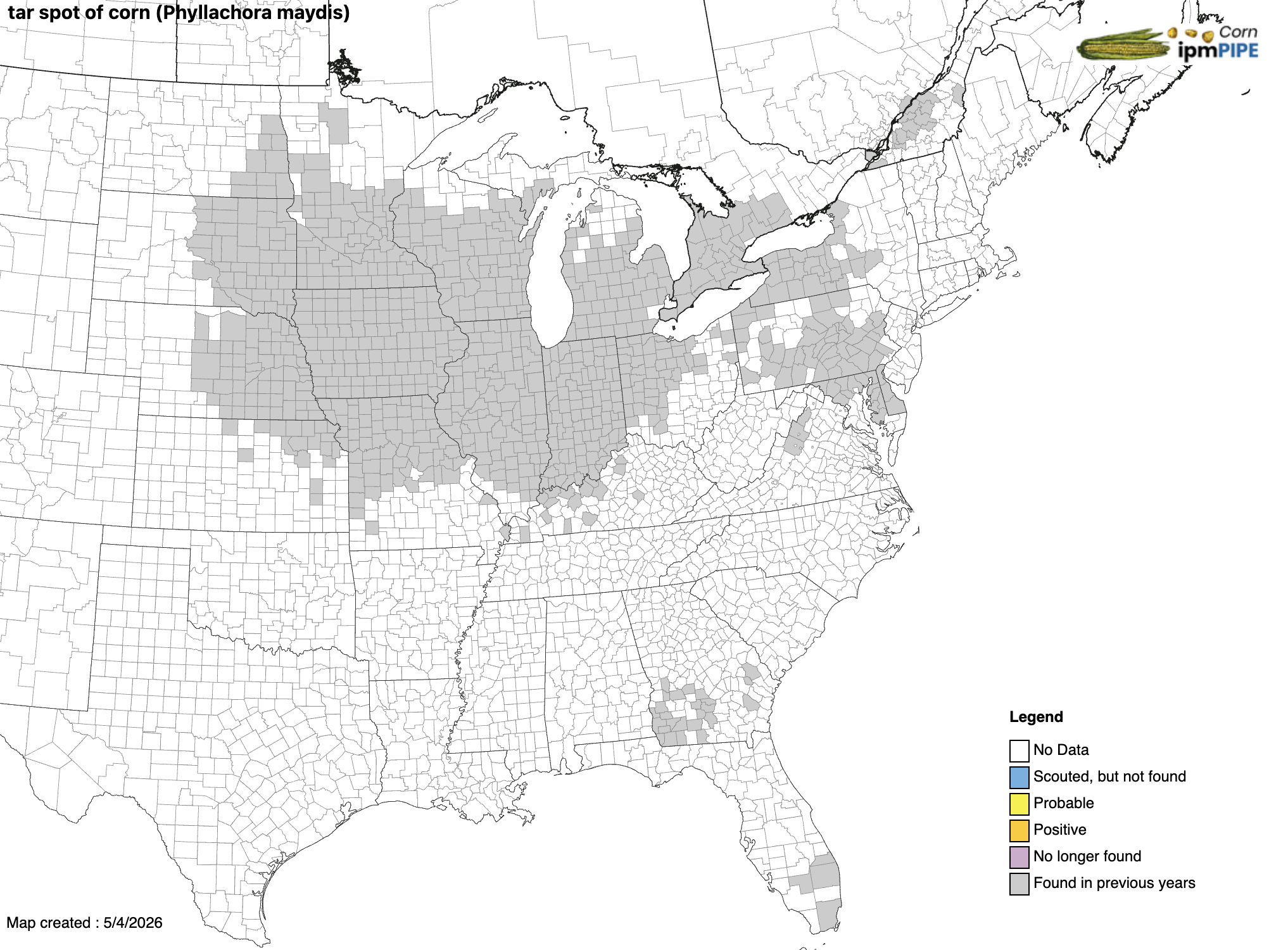
 This map shows the spread of tar spot disease in Missouri corn crops in May 2026. Illustration by IPMPipe.
COLUMBIA, Mo. – Frequent rain and unseasonably cool weather this May are creating favorable conditions for tar spot to develop in Missouri cornfields in June.
“We’ve detected tar spot in June in each of the last three years, and I anticipate the same for 2026,” says University of Missouri Extension plant pathologist Mandy Bish.
Tar spot is caused by a fungus that survives in corn residue. The disease develops most readily when temperatures stay in the mid-60s to low 70s for extended periods. Since Missouri’s first confirmed case in 2018, tar spot has been identified in multiple counties across the top two-thirds of the state, and it continues to expand its footprint.
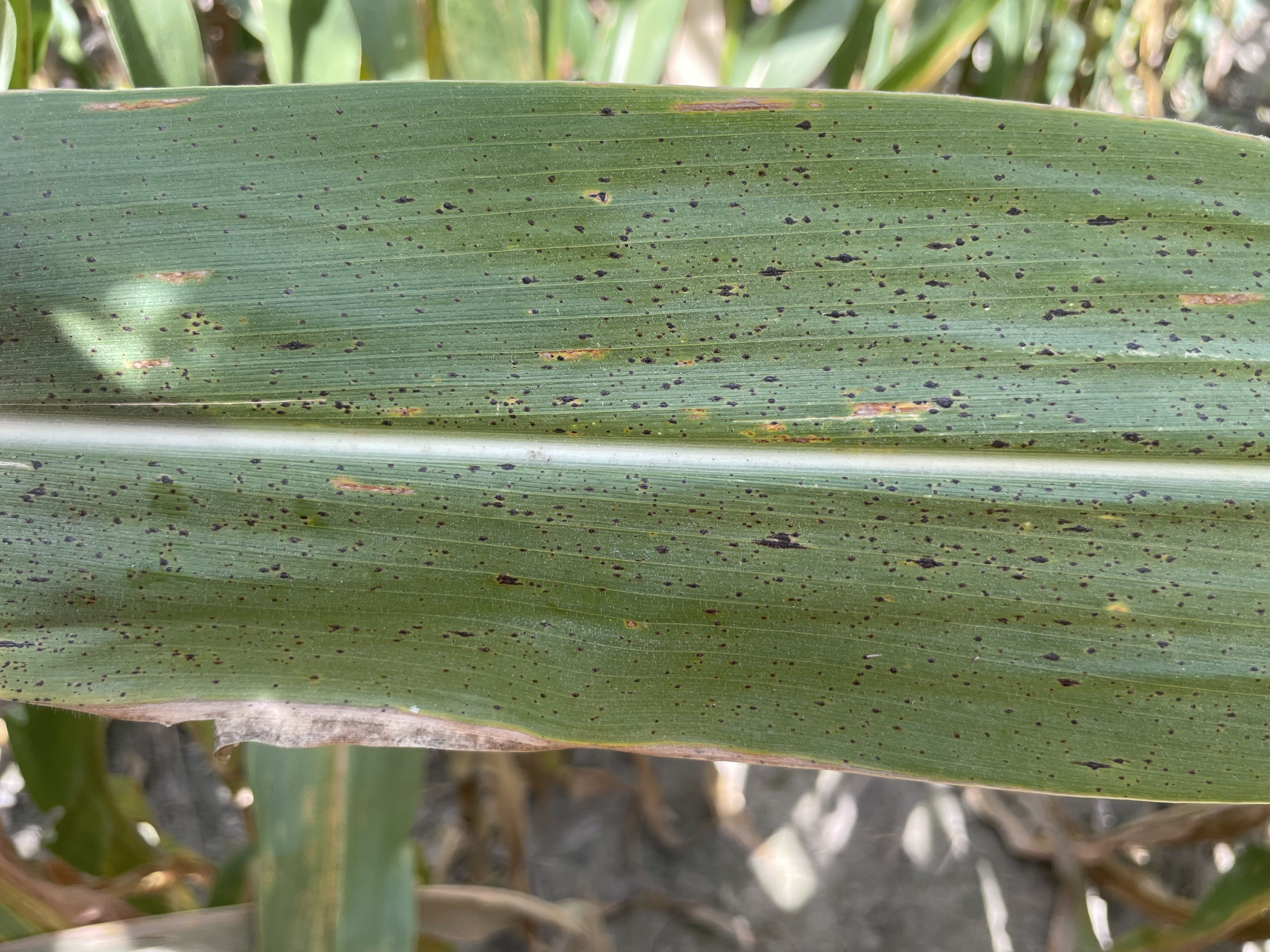
Symptoms include small, raised black lesions (stromata) scattered across both the upper and lower leaf surfaces. In severe cases, lesions may also appear on husks and leaf sheaths. Corn is the only known host for the tar spot fungus.
Given current conditions, Bish urges early and frequent scouting. “That said, we don’t want to panic if we observe tar spot in June,” she says. “When we confirm its presence, we need to monitor the disease’s progress. We want to consider disease severity, frequency, the location of the symptoms and weather forecast before making a fungicide application. For example, are symptoms confined to the lower canopy, or are they moving toward the ear leaf?”
Disease forecasting tools, such as the Crop Protection Network’s Crop Risk Assessment tool, can help guide decision-making. “Temperatures tend to rise as we approach July, and the fungus that causes this disease tends to slow its growth in warmer conditions,” Bish adds.
Research has shown that a timely fungicide application between VT and R3 growth stages is the most likely to provide a positive return on investment when conditions favor a tar spot outbreak. Conversely, applications made earlier than VT or after R4 have not demonstrated consistent economic benefits. “If we apply fungicide too early, before tar spot begins moving up the canopy, we risk losing residual activity just as southern rust may move in during July,” she warns.
Bish is a contributor to the Crop Protection Network’s 2026 Corn Foliar Fungicide Efficacy report, a multistate collaboration that annually updates fungicide efficacy charts and provides data to the Corn Fungicide ROI Calculator, which helps growers evaluate the economics of their fungicide application plans.
Tar spot can be confused with insect frass, Physoderma brown spot or the overwintering structures (teliospores) of common and southern rust. Tar spot lesions are embedded within the leaf tissue and cannot be removed. As lesions develop, they become visible on both the top and bottom sides of the leaf.
Although no corn hybrid has shown complete resistance to tar spot, some hybrids exhibit partial tolerance. Bish recommends pairing hybrid selection with crop rotation and timely scouting to determine if a fungicide application is necessary.
More information and real-time tracking of tar spot spread.
Photo
Tar spot, a yield-robbing disease of corn, can be identified by small, raised black spots across upper and lower leaf surfaces. In severe cases, lesions may also form on husks and leaf sheaths. File photo courtesy of Mandy Bish.
Map
This map shows the spread of tar spot disease in Missouri corn crops in May 2026. Illustration by IPMPipe.