-
Image
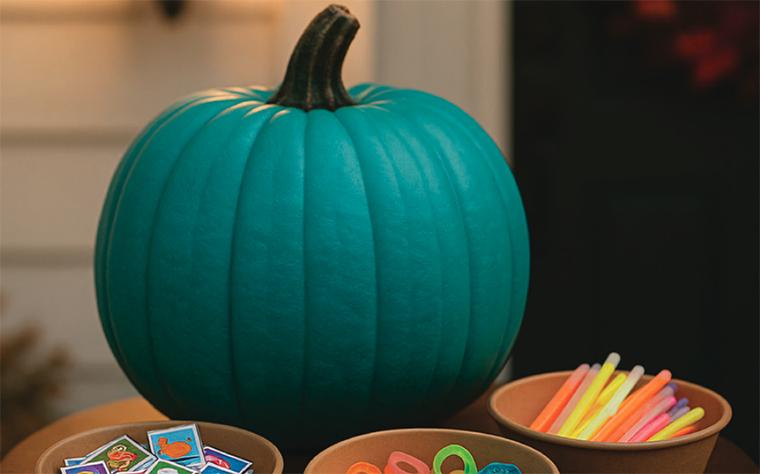 The Teal Pumpkin Project encourages families and communities to offer allergen-friendly, nonfood treats on Halloween in order to increase access for all children with allergies. Adobe stock photo.
Rachel O’Halloran is an MU Extension field specialist in nutrition and health.
ROLLA, Mo. – Halloween candy isn’t always a treat for children with alpha-gal syndrome. Including vegan or nonfood items can help make ensure that all trick-or-treaters can join the fun.
People with alpha-gal syndrome, which is caused by a bite from the lone star tick, can experience a variety of allergic reactions when they eat or are exposed to mammalian meat and byproducts. Some of these symptoms, such as anaphylaxis, can be life-threatening. Many common candies contain one or more ingredients that may pose an allergy risk. Chocolate treats often contain milk, butter or casein. Some gummy candies are made with gelatin or carrageenan, which may also need to be avoided, depending on individual sensitivities. Treats made with marshmallows might also pose an allergen risk.
Treats labeled vegan are more likely to be suitable for people with alpha-gal syndrome since they contain no animal-derived ingredients. These may include vegan or plant-based chocolate products, fruit chews, licorice, hard candies or candied fruits and nuts. Shoppers should still check ingredient labels carefully for any unexpected ingredients.
For many young trick-or-treaters, nonfood treats are a better option, especially at community events. You can help all the children in your community celebrate by offering items such as stickers, temporary tattoos, small toys, Halloween-themed school supplies and glow sticks.
Offering nonfood treats also supports the Teal Pumpkin Project. The Teal Pumpkin Project encourages families and communities to offer allergen-friendly, nonfood treats on Halloween in order to increase access for all children with allergies. Participants in the project display a teal-colored decoration, pumpkin or light to indicate that nonfood options are available.