Enrollment deadline for 2026-27 is Oct. 15.
-
Image
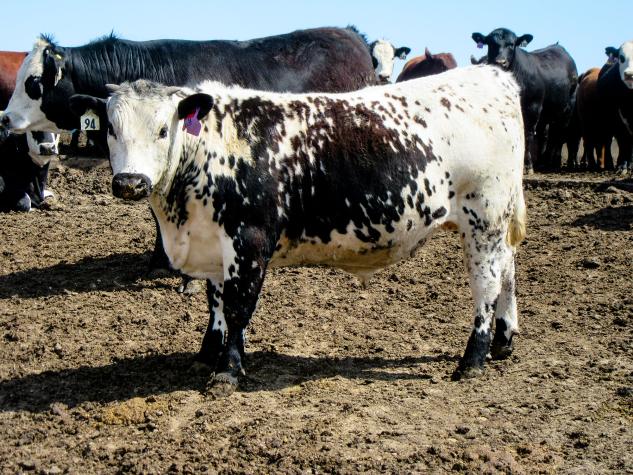 Don’t judge a steer’s worth until total performance is obtained. File photo by Eldon Cole.
STOCKTON, Mo. – “The Missouri Steer Feedout Finale showed that the most profitable steers led the group in efficiency and carcass size,” says Patrick Davis, University of Missouri Extension livestock field specialist. The Sept. 30 meeting concluded the 2025-26 Missouri Steer Feedout and presented results for 49 steers from six producers fed at the Show Me Feedlot near Newport, Mo.
Held at the Show Me Youth Ag Academy Farm near Lamar, Mo., the event was supported by MU Extension, Missouri State University, Show Me Youth Ag Academy and U.S. Premium Beef. Brian Bertelsen of U.S. Premium Beef, which purchased the steers at slaughter, also discussed the company, grid marketing and industry trends.
“The most profitable steers combined larger carcasses and efficient gains with low costs of gain,” says Davis. The top steer, owned by Ronnie Vieth of Purdy, Mo., earned $1,025.27. It ranked second in average daily gain (ADG), dry matter conversion (DMI:ADG) and cost of gain (CG), and placed among the top five in carcass weight (CW) and carcass value (CV). It also qualified for Certified Angus Beef (CAB) and prime carcass premiums. Its initial value ranked in the bottom half of the steers on feed, further supporting profitability.
The second most profitable steer, owned by Chase Daniel of Arcola, Mo., earned $964.08. It ranked first in ADG, DMI:ADG, CG and CW and second in CV. However, it was one of two steers discounted for an overweight carcass, which also made it ineligible for a CAB premium, and it did not earn a prime quality grade premium. Its initial value ranked 12th among the steers on feed. The combination of a higher initial value, the discount and the lack of premium likely kept this steer in second place.
“Poor performance and small carcass size characterized the least profitable steers,” says Davis. One of the group’s least profitable steers ranked next to last in ADG, DMI:ADG and CG and had the 10th-smallest carcass among the steers on feed. Although it ranked second in initial value, its carcass value ranked 41st. Together, these factors produced a loss on this steer of approximately $450. Three other steers also lost money and showed similar performance and financial characteristics.
“Costs, gains, feed conversion, carcass traits, premiums and initial value all affected producer profitability in the program,” says Davis. Chase Daniel of Arcola, Mo., was the most profitable producer, with his nine steers averaging $528.64 in profit per head. His group led in average CW, ribeye area, backfat and yield grade and ranked second in ADG, DMI:ADG and CG. This group’s initial value also ranked third, which, together with lower costs, boosted profitability.
Ronnie Vieth of Purdy, Mo., ranked second in producer profitability, with his six steers averaging $504.31 in profit per head. His group posted the best average ADG, DMI:ADG and CG. Vieth’s steers also earned substantial carcass premiums: 83% graded USDA Prime, and 67% qualified for a CAB premium. The group ranked fifth in average initial value and had some of the lowest feed costs because it was marketed earlier in the program, further strengthening profitability.
“This feedout program offers an excellent way to gain small-scale cattle feeding experience while evaluating how steer genetics and management affect feedlot performance and carcass characteristics,” says Davis.
To enroll steers in the 2026-27 Missouri Steer Feedout or request more information, contact Davis at 417-276-3313 or davismp@missouri.edu. The enrollment deadline is Oct. 15.