How MU Extension and the MU Center for Regenerative Agriculture support long-term success for producers.
-
Image
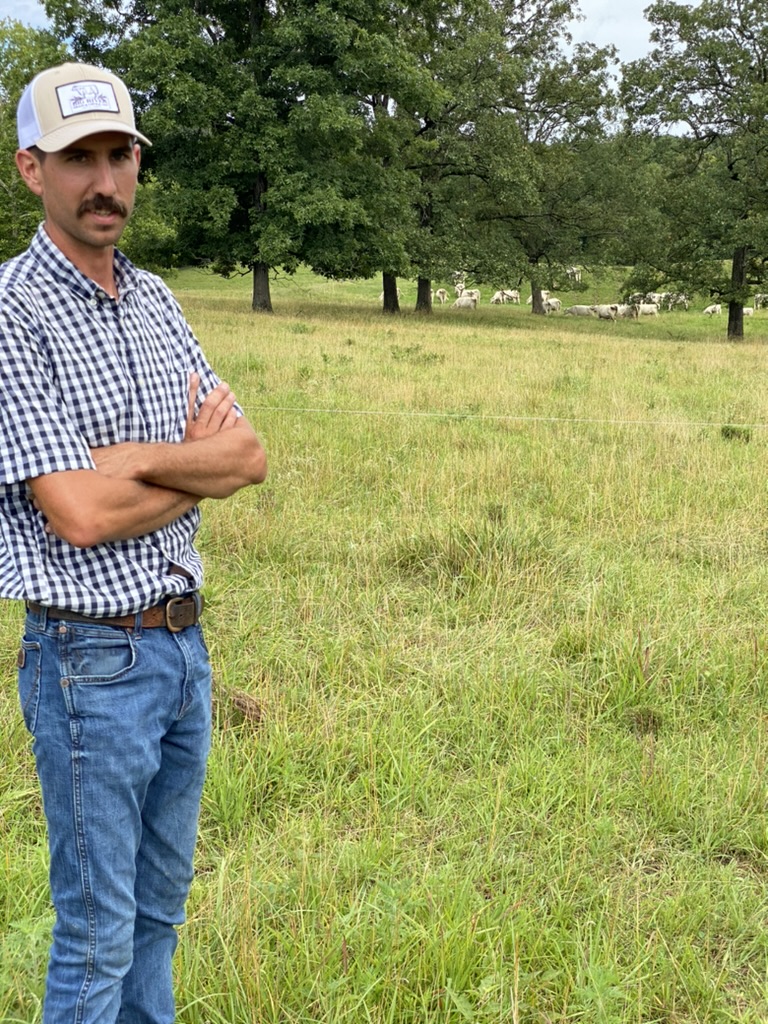
 Daniel Bonacker. Photo courtesy of Rob Myers.
 -
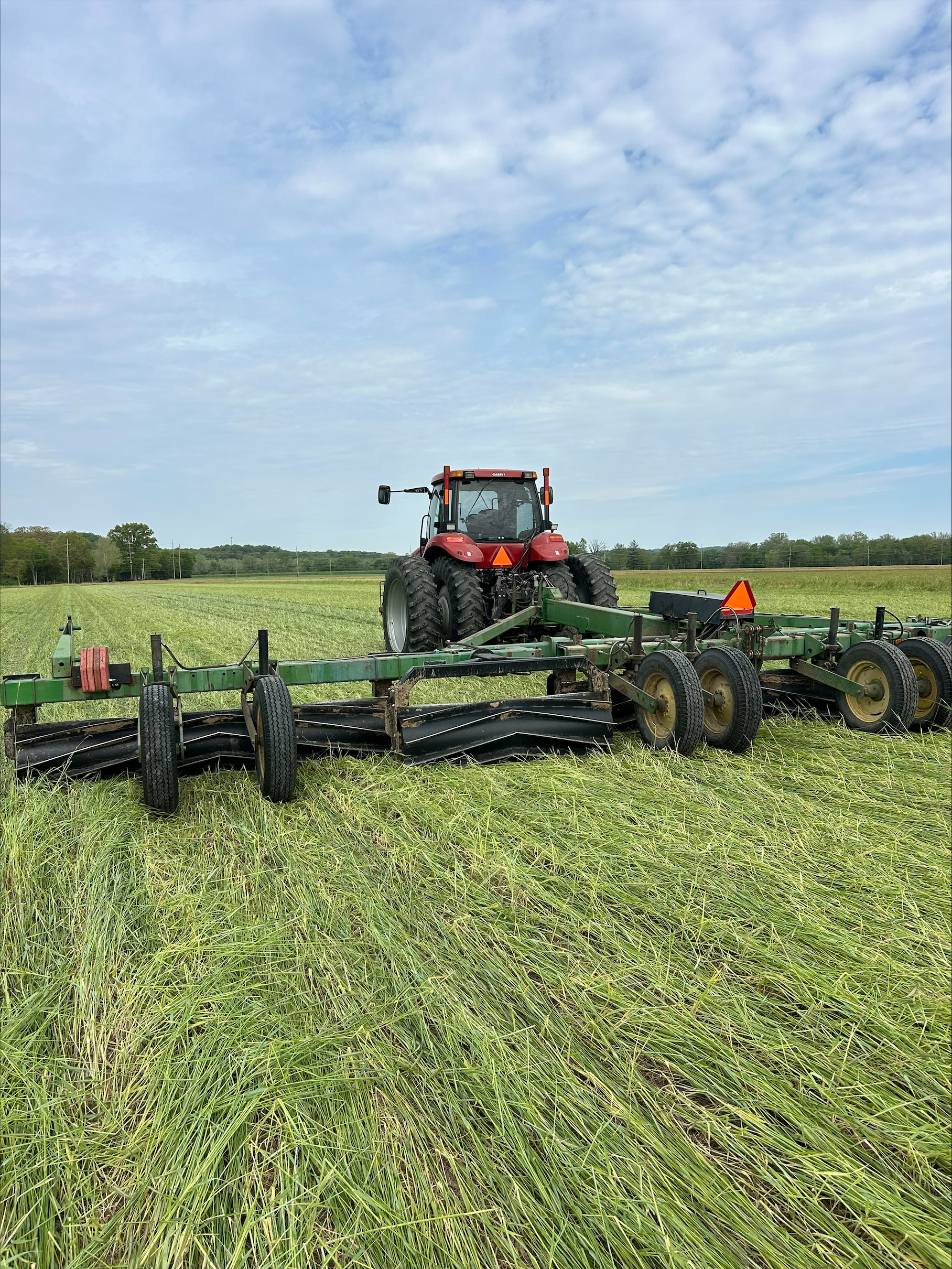
Image
 Roller crimping cover crop at Big River Grain and Cattle. Roller crimping flattens and terminates the cereal rye, creating a mulch that protects the soil and suppresses weeds. Photo courtesy of Daniel Bonacker.
 -
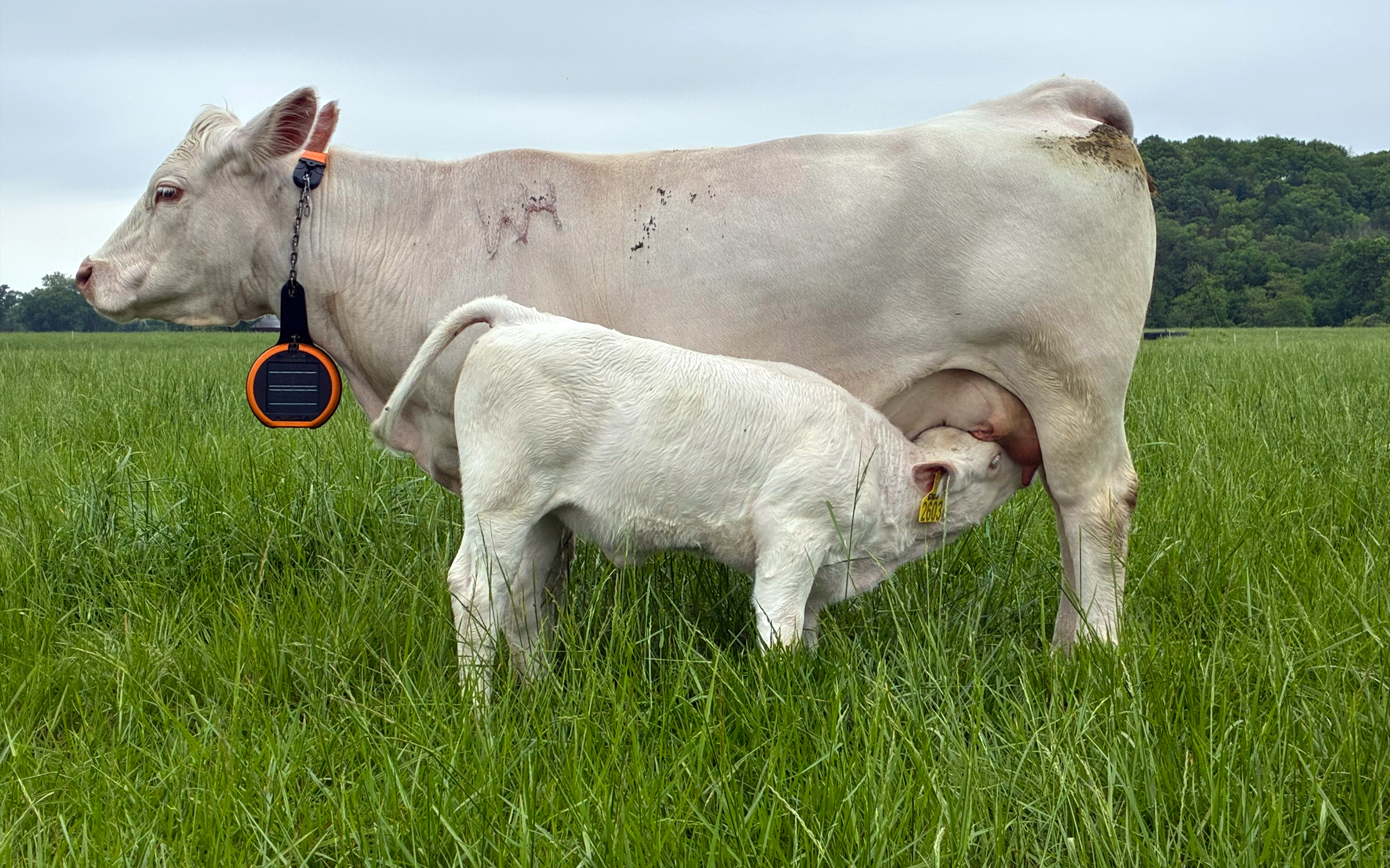
Image
 Virtual fencing collars use GPS to define invisible boundaries and guide animals back when they approach or cross those boundaries, keeping livestock contained without physical fences. Photo courtesy of Daniel Bonacker.
CEDAR HILL, Mo. – In the hills outside St. Louis, creeks swell fast after hard rains, and fields can pay the price. At Big River Grain and Cattle, Daniel Bonacker recalls, repeated flooding was carrying away topsoil. In 1983, Bonacker’s grandfather switched to no‑till farming, which minimizes disturbance of the soil. This reduces erosion by improving the soil’s ability to absorb and hold water.
In 2012, Big River Grain and Cattle faced the opposite problem: drought. Bonacker’s father decided the farm would seed a semi‑load of cereal rye as a cover crop that fall to sequester the nitrogen that the failed corn crop did not use. By improving soil structure and organic matter, cover crops can also help soil retain moisture longer.
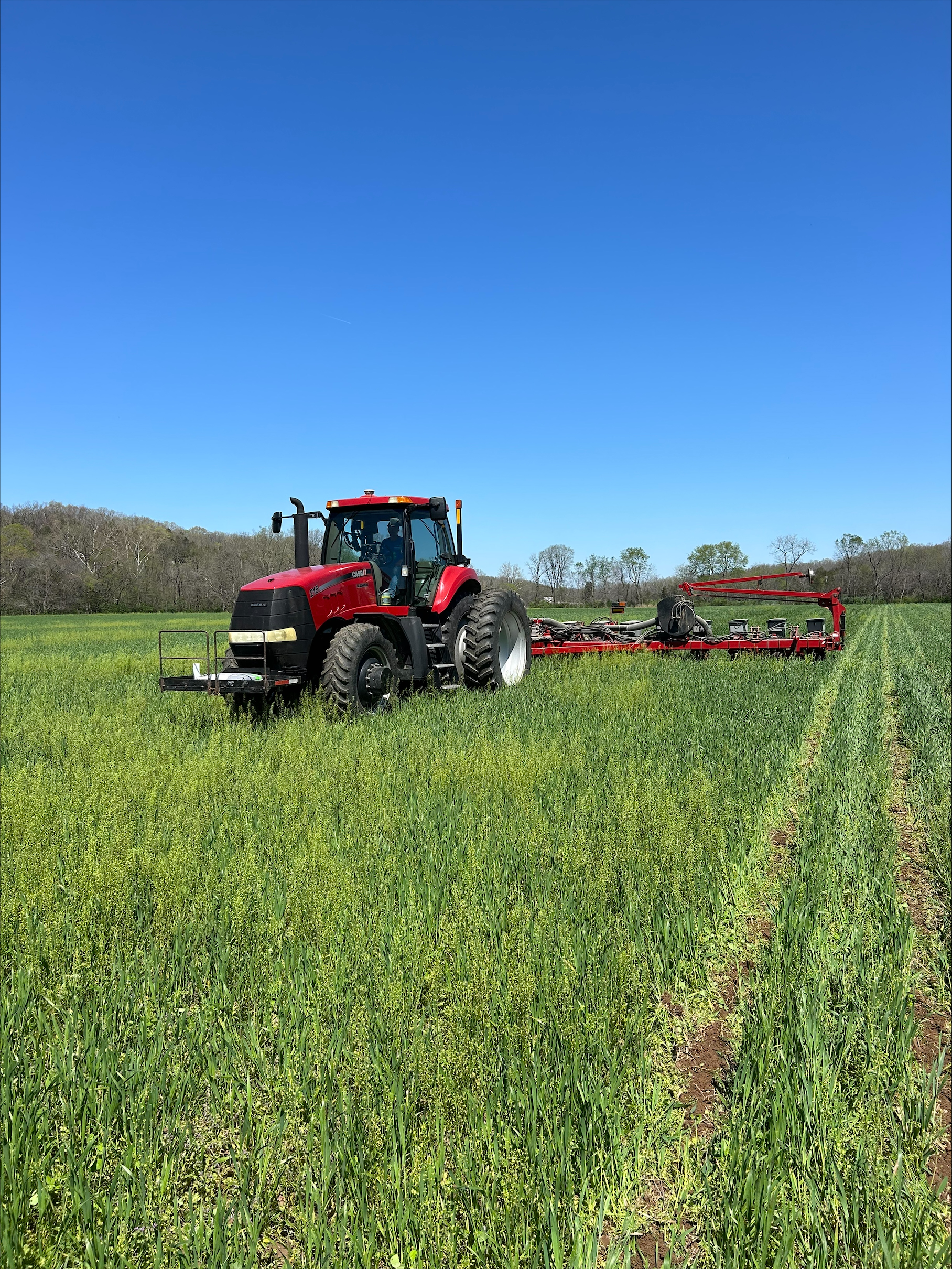
The payoff arrived the next spring: a living, green cover that protected the soil surface and jump‑started biological activity. “We never went back to leaving the soil bare,” he said. To combat weeds, Bonacker started “planting green” – seeding cash crops into actively growing rye, terminating the cover crop later in the spring. This further protects the soil and gives weeds less of an opportunity to take root. “That gives you the most bang for the buck from your cover crop,” he said.
No-till and cover crops are examples of regenerative agriculture, a farming approach focused on restoring and enhancing the health of soil ecosystems, said Rob Myers, director of the University of Missouri Center for Regenerative Agriculture. These practices aim to improve soil health, make crops more resilient, reduce input costs and protect water quality.
Bonacker notes that Big River Grain and Cattle never made overt decision to adopt regenerative agriculture, a term barely in use in the early 1980s. It was just a series of practical choices sparked by specific challenges on the farm, he says.
Translating research into on‑farm decisions
Across Missouri, farmers are navigating increasingly unpredictable weather, tight margins and rising input costs. Solutions that promise long‑term gains often come with upfront expenses—for seed, equipment, fencing, labor or new expertise—that can be difficult to justify on their own.
This is where Center for Regenerative Agriculture (CRA) plays a key role. Through field days, workshops, on‑farm demonstrations and one‑on‑one technical support, the center helps producers evaluate what makes sense for their fields, their finances and their goals.
CRA also manages cost‑share and incentive programs designed to reduce risk while producers test new practices. Those programs—including the Missouri CRCL Project, supported by a $25 million USDA grant—provide technical assistance and temporary incentive payments for practices such as cover crops, multispecies mixes, delayed termination and grazing of cover crops.
A neighbor first pointed Bonacker to CRA resources and to the Missouri CRCL Project. For him, the incentive payments weren’t the motivation so much as being able to experiment without carrying all the risk alone.
Beyond one practice, or one farm
While cover crops and reduced tillage are often entry points, CRA supports a broader set of regenerative practices that affect both farm profitability and community well-being, Myers says.
That includes helping producers improve nutrient management—adjusting how and when fertilizer is applied so crops use nutrients more efficiently and less ends up in streams and waterways. CRA also works with farmers interested in diversifying crop rotations, which can break pest cycles, spread economic risk and support healthier soil biology.
Another focus area is management‑intensive grazing systems. By matching stocking rates and recovery periods to soil conditions and weather, producers can build healthier pastures while reducing feed and fertilizer costs. CRA staff also assist farmers exploring integrated crop‑and‑livestock systems, where livestock play a role in cycling nutrients and improving soil structure.
Taken together, those practices have impacts that extend well beyond individual operations, Myers says. Healthier soils absorb more rainfall, reducing erosion and nutrient losses. More resilient farms help stabilize rural businesses and protect natural resources.
Building resilience on pasture
At Big River Grain and Cattle, management‑intensive grazing has become central to Bonacker’s approach. By rotating cattle through smaller paddocks for short periods, forage plants get time to recover and deepen their root systems. That improves water infiltration, distributes manure more evenly and boosts pasture productivity.
Frequent herd moves can demand significant labor, so Bonacker is participating in a CRA project piloting virtual fencing collars that allow him to adjust grazing areas using a phone or computer rather than installing and moving temporary fence. GPS‑linked boundaries guide cattle movement, giving him the flexibility to fine‑tune paddock size and recovery periods in response to weather and forage conditions—saving time while improving management.
Bonacker said access to trusted information through MU Extension made it easier to evaluate whether the technology fit his operation before investing.
Bonacker’s journey reflects how many Missouri producers adapt: start with a specific problem, test solutions close to home, measure results and expand what works. Throughout that process, MU Extension and the Center for Regenerative Agriculture act as partners—bringing research into the field, convening peer networks and braiding together funding and technical support.
The result is practical change: farms better equipped to handle weather extremes, protect soil and water resources and remain economically viable.
About the Center for Regenerative Agriculture
The University of Missouri’s Center for Regenerative Agriculture helps translate research into action by supporting farmers as they strengthen soil health and build resilient operations. Through MU Extension, the center provides technical assistance, education, on‑farm demonstrations and incentive programs—including the Missouri CRCL Project—that reduce the risk of adopting practices such as cover crops, diversified rotations and adaptive grazing. By pairing research‑based guidance with hands‑on support, CRA helps ensure that public investment produces measurable benefits for Missouri’s farms, businesses and communities.
Photos
Daniel Bonacker. Photo courtesy of Rob Myers.
Roller crimping cereal rye 1 and Roller crimping cereal rye 2. Roller crimping cover crop at Big River Grain and Cattle. Roller crimping flattens and terminates the cereal rye, creating a mulch that protects the soil and suppresses weeds. Photos courtesy of Daniel Bonacker.
Virtual fencing. Virtual fencing collars use GPS to define invisible boundaries and guide animals back when they approach or cross those boundaries, keeping livestock contained without physical fences. Photo courtesy of Daniel Bonacker.
Videos
Farmer Perspectives on Regenerative Agriculture (YouTube playlist)