Image
Reviewed
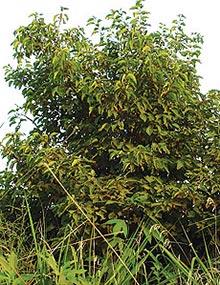
Shrub dogwoods are common in fence lines and along forest edges. Individual plants are rather short (less than 12 feet tall) and somewhat rounded.
Reviewed
This guide offers strategies to enhance deer habitat and manage populations effectively through goal setting and monitoring.
Reviewed
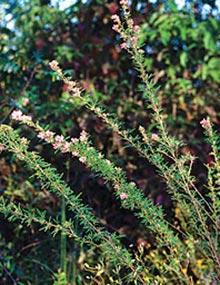
Slender lespedeza leaves are divided into three leaflets 1 to 1-1/2 inches long and less than 1/4 inch wide. Stems are upright, up to 3 feet tall. Flowers are pink to purple and occur in clusters toward the top of the plant.
Reviewed
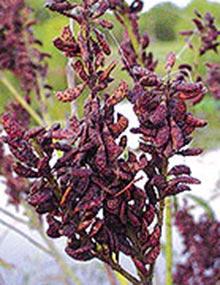
False indigo occurs in moist ground in thickets along streams, rocky banks, pond borders and open wet woods. The leaves are pinnately compound. The dense flower clusters are deep purple to blue and produce numerous fruits that mature in late summer.
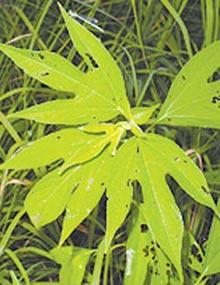
Reviewed
Giant ragweed attains a considerable height, often in excess of 7 feet. Its leaves are three-lobed (sometimes five-lobed), and its stems may be 3/4 inch or more in diameter at the plant base.
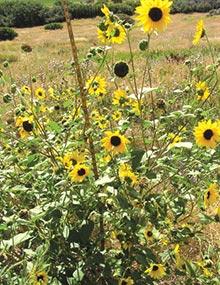
Reviewed
Sunflowers exhibit a variety of characteristics, but most of the commonly encountered species have triangular to lanceolate leaves, rough leaf surfaces and conspicuous yellow flowers.
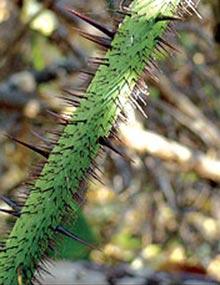
Reviewed
Greenbriers grow as stout vines, climbing with the aid of tendrils that arise in pairs at the base of leaf stalks. The flowers are small and green and grow in clusters of 5 to 26 flowers on long stalks.
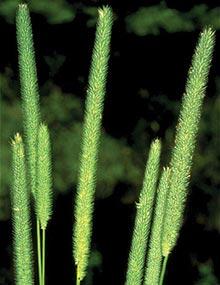
Reviewed
Timothy is a cool-season bunch grass. By late spring it can be readily identified by the blue-green, cylindrical seed head resembling a small cattail. It has an elongated ligule at the base of the leaf, with a notch on each side.
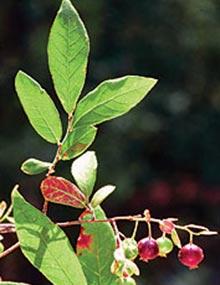
Reviewed
Huckleberries are stiffly branched leafy shrubs or small trees, often found in extensive colonies, from 6 inches to 10 feet tall. The alternate, simple leaves are 3/4 to 3 inches long and 1/2 to 1 inch wide. The fruits are blue to black berries with a faint whitish coating.
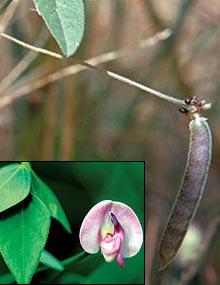
Reviewed
Three species of wild bean occur in the Midwest. Each is a somewhat small plant with twining vines and relatively small leaves composed of three leaflets. Seeds are present in hairy pods.
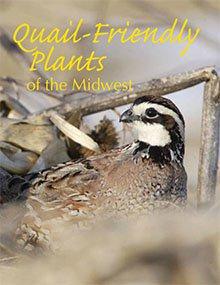
Reviewed
Learn how to identify plants important to bobwhites in the Midwest so that you can critically evaluate the food and cover components of habitat on your land.
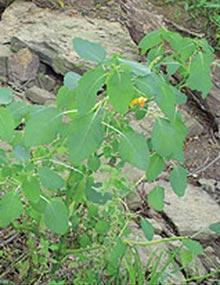
Reviewed
Jewelweed commonly reaches 18-24 inches. Leaves have scalloped edges and fleshy stems that exude a clear, watery gel-like liquid when crushed. Flowers are orange (I. capensis) or pale yellow (I. pallida).
Reviewed
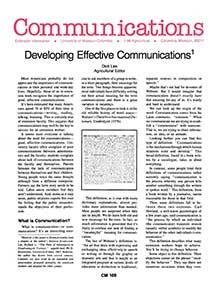
This publication explores the significance of effective communication in professional settings, detailing its processes and various definitions.
Reviewed
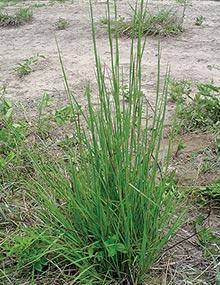
Little bluestem is a native grass that occurs in clumps with fine leaves less than 1/4 inch wide. Seed stalks are commonly 2 to 3 feet tall. Stems are hairy and flattened near the base. Seeds are light and fluffy.
Reviewed
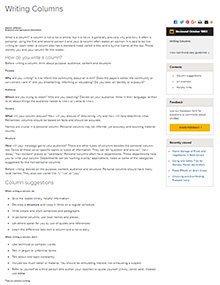
Before writing a column, think about purpose, audience, content and structure. Visit our website today to learn more about writing columns.
Reviewed
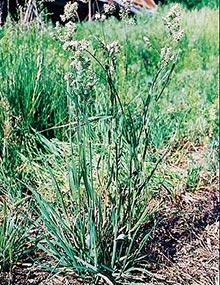
Orchard grass is a cool-season bunch grass. Its leaves have a bluish cast. Close inspection of the leaf collar reveals a flattened shape and membranous ligule. Its rather distinctive seed heads form by late May. Height at maturity averages 3 feet.
Reviewed
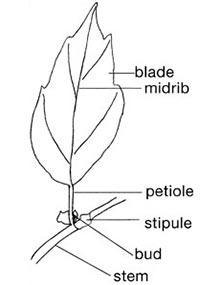
Refer to this glossary for definitions of words and phrases related to plants.
Reviewed
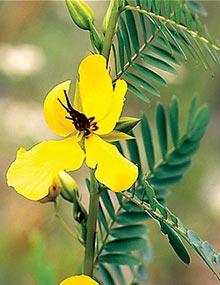
Partridge pea grows from 12 to 18 inches up to 3 feet tall. It has compound, alternate leaves. Leaflets are less than 1 inch long. Flowers are bright yellow with reddish-purple bases, about 1 inch across. Ripened seedpods are red-brown.
Reviewed
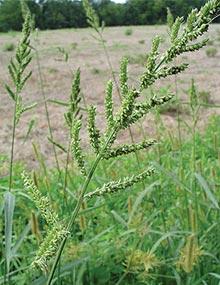
Barnyardgrass is most often found growing in moist areas. The large seeds of this grass make it an important food source for bobwhites.
Reviewed
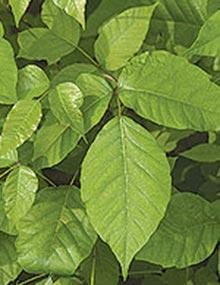
Poison ivy is a vine that can grow up to 60 feet high or a low, upright shrub. It has alternate leaves with three oval to lance-shaped leaflets with a pointed tip.The flowers are greenish white and grow in clusters 1 to 4 inches long on new growth of stems.
Reviewed
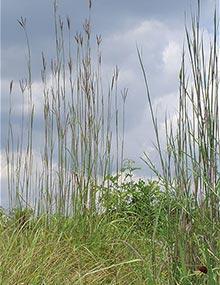
Mature seed stalks of big bluestem are copper colored and often grow more than 5 feet tall. The clumpy growth of big bluestem allows room for other plants to exist and provides excellent habitat structure for nesting and roosting

Reviewed
Common ragweed commonly grows to 18 inches. Leaves are simple, alternate, smooth and deeply lobed. Often the lobes are lobed again.
Reviewed
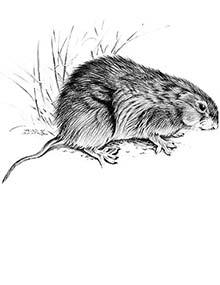
Meadow voles and prairie voles spend most of their lives above ground, living in and feeding on grasses and seeds. They may travel as far as 1/4 mile in search of food and cover. Their typical habitat includes lightly grazed pastures, old fields and grassy areas, lawns and gardens.
Reviewed
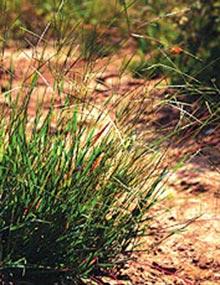
Often found in disturbed areas, crab grass tends to indicate early successional vegetation, and thus good quail habitat. However, late spring disturbance may result in a crab grass response heavy enough to displace other beneficial or desired plants.
Reviewed
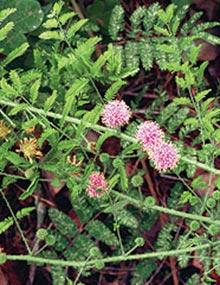
Sensitive brier has prostrate stems and seedpods covered with hooked barbs. Doubly compound, featherlike leaves close rapidly when touched or disturbed. Flower clusters are a fuchsia ball dotted with contrasting yellow stamens.