Image
Reviewed
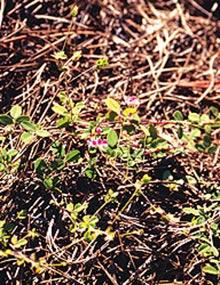
Trailing lespedezas are small, native lespedezas with trailing stems that can readily form thick mats over bare areas if left undisturbed. The small flowers range from purple to white and can produce a large quantity of seeds.

Reviewed
Illinois bundleflower can be identified in summer by the doubly compound, fernlike leaves and white spherical flower heads. By fall, the stems become tough and woody, and the seedpods are distinctive, bearing a ball-shaped cluster of pods, each containing several flat, brown seeds.
Reviewed
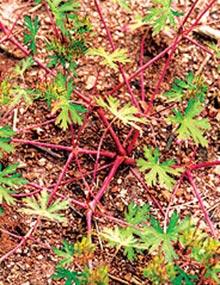
Leaves of Geranium species are deeply cleft and palmately lobed. Seeds are located within the sharply pointed “crane’s bill” formed by the tubelike style of the flower.
Reviewed
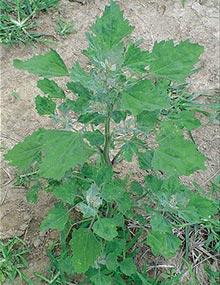
Lambsquarters is rather nondescript and typically grows 2-6 feet tall. Leaves are triangular or kite-shaped, and their surfaces often have a powdery white appearance.
Reviewed
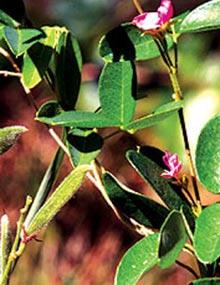
Milkpea is a herbaceous legume with a hairy surface on the top of its trilobed leaf. Stems are also hairy. Seedpods are about 2-1/2 inches long.
Reviewed
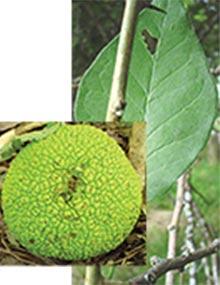
Osage orange grows as a medium-sized tree up to 50 feet tall. It has yellow-green fleshy fruits with a knobby surface that resembles a brain. Its alternate, simple leaves taper to a long, pointed tip.
Reviewed
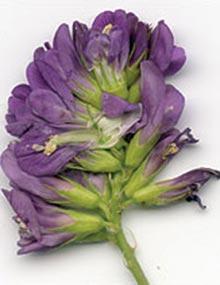
Alfalfa leaves are divided into three leaflets, with the middle leaflet on a distinct stalk. Leaflets are serrated along the outer third to half and are somewhat elongated. Flowers are usually purple, sometimes bluish, rarely white. Fruits are usually curved or twisted.
Reviewed
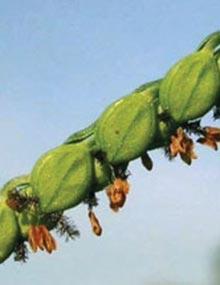
Paspalums seeds are round and flattened and are neatly lined up (but sometimes overlapping slightly) on the seed stalk in two or four rows. Some paspalum species have conspicuous silky hairs at the base of the spikelet.
Reviewed
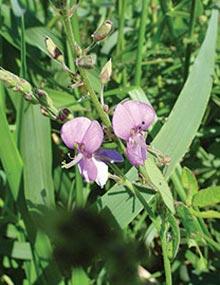
Beggar's lice has triangular seedpods covered with dense hairs that cause them to stick to clothing. During the growing season, it can be recognized by its divided leaf and pink flower.
Reviewed
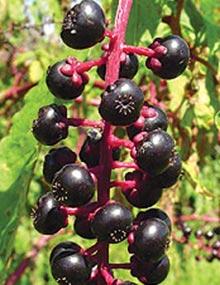
Pokeweed leaves are smooth, oblong and usually 6 to 8 inches in length, though they may grow up to 12 inches. Stems turn bright purple as the plant matures. Clusters of succulent, shiny purple berries, about 1/4 inch in diameter, occur at the tops of the plants.
Reviewed
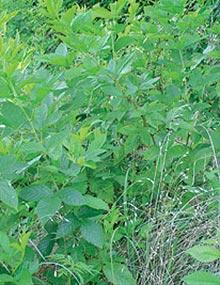
Several briar species grow tall canes that form large thickets of dense, prickly cover. The briars exhibit numerous five-petaled white flowers from April through June.
Reviewed
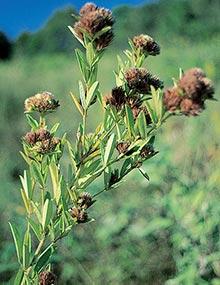
Roundhead lespedeza is a tall perennial plant with reddish-brown seed heads and large leaves. It provides crucial food for bobwhite quail, especially in winter.
Reviewed
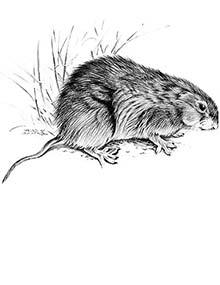
Meadow voles and prairie voles spend most of their lives above ground, living in and feeding on grasses and seeds. They may travel as far as 1/4 mile in search of food and cover. Their typical habitat includes lightly grazed pastures, old fields and grassy areas, lawns and gardens.
Reviewed
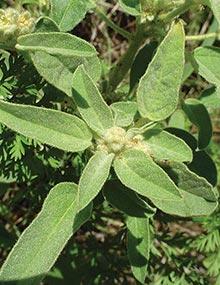
Croton produces abundant seeds and is a common summer weed in pastures and other disturbed areas. A dense covering of white hairs gives croton flowers a fuzzy white appearance.
Reviewed
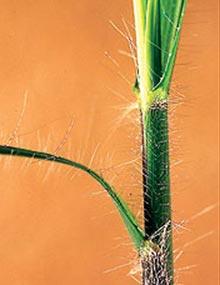
Sideoats grama has fine leaves and widely spaced fine hairs along the leaf edge, especially near the collar. Most sideoats plants are 18-24 inches tall at maturity. It has a unique, oatlike seed that droops slightly off one side of the stalk.

Reviewed
Common elderberry is a shrub that grows to 8 feet tall and forms dense colonies from root sprouts. The tops are multibranched, bearing opposite, pinnately compound leaves 4 to 12 inches long. Lance-shaped leaflets are 2 to 6 inches long, 1 to 2 inches wide and sharply toothed.

Reviewed
Land application of biosolids recycles nutrients, reduces pollution, and follows safety practices to protect soil, crops, and water.
Reviewed
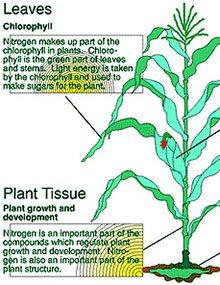
Nitrogen plays an important part in many essential functions. Visit our website to learn about Nitrogen in the Plant.
Reviewed
Biosolids are domestic wastewater sludge that meet standards for beneficial use as fertilizer. Visit our site to learn the Benefits and Risks of Biosolids.
Reviewed
Nitrification converts ammonium to nitrate, which can leach into groundwater, posing health risks, especially for infants.
Reviewed
Nitrogen is essential for plant growth, but excessive nitrate from fertilizers can contaminate groundwater, posing health risks, especially to infants.
Reviewed
Infants are most at risk from nitrate-contaminated water, which can lead to serious health issues.
Reviewed
Discover effective strategies for managing dairy manure to optimize nutrient recovery and enhance crop productivity through proper manure handling.
Revised
Learn how to access EQIP technical and financial assistance for alley cropping, multistory cropping, riparian buffer, silvopasture and windbreak practices.
Reviewed
Guidance on accurately calibrating sprayers and spreaders for effective turf pest control on athletic fields and golf courses.