Image

Reviewed
Common ragweed commonly grows to 18 inches. Leaves are simple, alternate, smooth and deeply lobed. Often the lobes are lobed again.
Reviewed
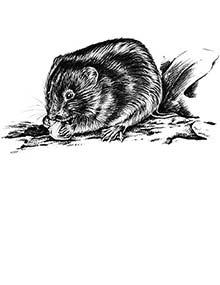
Pine voles spend most of their lives under the ground in burrow systems. They can be found in forested areas but also inhabit fields next to woodlands. They feed on plant roots, flower bulbs, and the growing tissue (cambium) of tree roots.
Reviewed
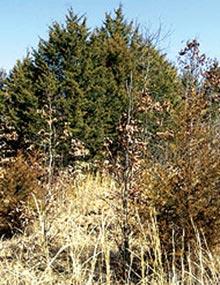
Eastern red cedar is a small to medium-sized tree up to 50 feet tall. It is an aromatic evergreen with a dense pyramid-shaped to cylindrical crown.
Reviewed
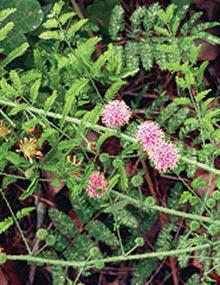
Sensitive brier has prostrate stems and seedpods covered with hooked barbs. Doubly compound, featherlike leaves close rapidly when touched or disturbed. Flower clusters are a fuchsia ball dotted with contrasting yellow stamens.
Reviewed
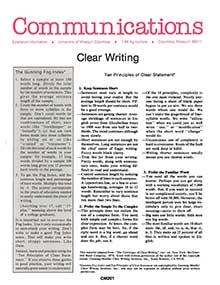
Get your point across clearly in writing with these 10 principles of clear writing. Also, learn how to test the clearness of your writing and keep it simple.
Reviewed
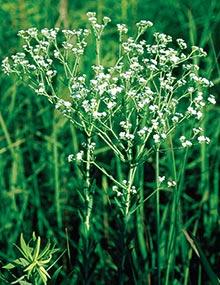
Flowering spurge may reach 3 feet tall on richer soils. Inflorescences are multibranched, with multiple flower heads per branch. Flowers have five white petals with a yellow center and average about one-third inch across.
Reviewed
This guide offers strategies to enhance deer habitat and manage populations effectively through goal setting and monitoring.
Reviewed
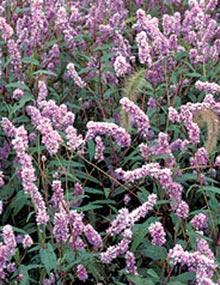
Annual smartweeds has abundant, swollen nodes where the leaf meets the stem. Leaves are simple, alternate and parallel-veined; most are lanceolate. Flower clusters are white or pink, and at maturity the plant yields large numbers of seeds.
Reviewed
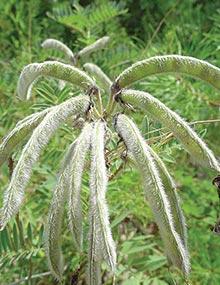
Goat’s rue, a member of the bean family, is readily identified by its striking flower, which consists of a cream-colored upper petal above two bright pink lower petals. Leaves are alternate, compound and usually hairy, with a pointed, hairlike tip.
Reviewed
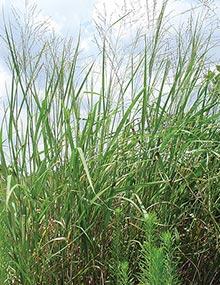
Switch grass exhibits an upright, bunchy growth form. The leaves twist in a corkscrew-like pattern from the base to the tip of the blade.
Reviewed
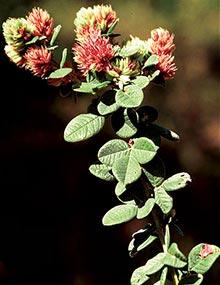
Hairy lespedeza leaflets occur in threes. This perennial plant earns its name from its stem and oblong leaflets, both of which are covered with hairs.
Reviewed
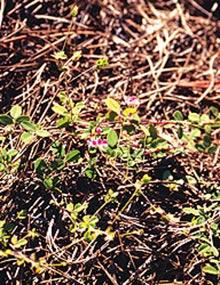
Trailing lespedezas are small, native lespedezas with trailing stems that can readily form thick mats over bare areas if left undisturbed. The small flowers range from purple to white and can produce a large quantity of seeds.
Reviewed
Infants are most at risk from nitrate-contaminated water, which can lead to serious health issues.
Reviewed
Discover effective strategies for managing dairy manure to optimize nutrient recovery and enhance crop productivity through proper manure handling.
Reviewed
Land application of biosolids recycles nutrients, reduces pollution, and follows safety practices to protect soil, crops, and water.
Reviewed
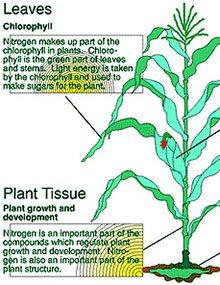
Nitrogen plays an important part in many essential functions. Visit our website to learn about Nitrogen in the Plant.
Reviewed
Biosolids are domestic wastewater sludge that meet standards for beneficial use as fertilizer. Visit our site to learn the Benefits and Risks of Biosolids.
Reviewed
Nitrification converts ammonium to nitrate, which can leach into groundwater, posing health risks, especially for infants.
Reviewed
Nitrogen is essential for plant growth, but excessive nitrate from fertilizers can contaminate groundwater, posing health risks, especially to infants.
Revised
Learn how to access EQIP technical and financial assistance for alley cropping, multistory cropping, riparian buffer, silvopasture and windbreak practices.
Reviewed
Guidance on accurately calibrating sprayers and spreaders for effective turf pest control on athletic fields and golf courses.

Reviewed
Schessler walnut average date of budbreak, flower type, bloom period, pollination date, season length, harvest date, and more.
Reviewed
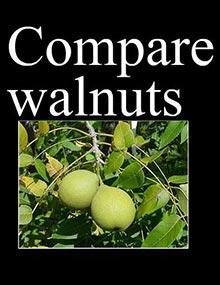
Compare the nuts of walnut cultivars side by side and learn about characteristics of selected black walnut cultivars.

Reviewed
South Fork walnut average date of budbreak, flower type, bloom period, pollination date, season length, harvest date, and more.

Reviewed
Brown Nugget walnut average date of budbreak, flower type, bloom period, pollination date, season length, harvest date, and more.