Image
Reviewed
Are you wondering why your carrot seeds won’t germinate or when to harvest your zucchini? Find answers to these and many more vegetable questions in this guide.
Reviewed
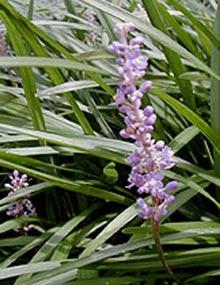
Ground covers are low-growing plants that spread quickly to form a dense cover. All the ground covers discussed in this guide are reliably cold hardy throughout Missouri.
New
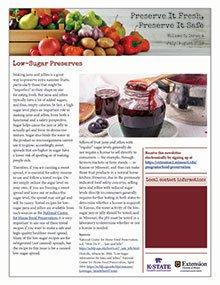
Learn safe methods for making low-sugar jams, jellies, and spreads, plus tips for preserving fruits like white peaches and pineapple.
New
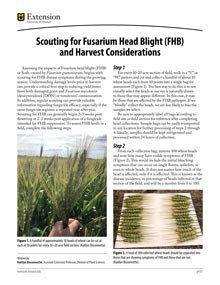
Learn how to scout for Fusarium head blight in wheat fields and assess harvest risks related to grain quality and mycotoxin contamination.
New
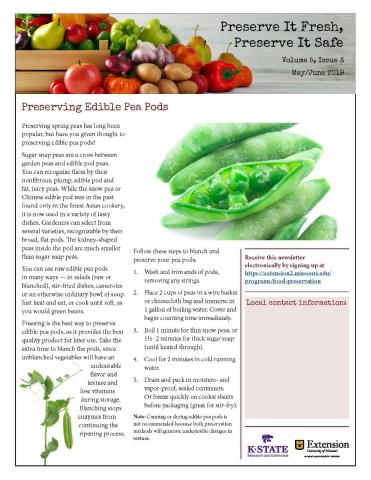
Discover safe methods for blanching and freezing sugar snap peas to preserve peak flavor, texture, and nutritional quality.
New
Editor's note
This publication is intended for digital download.

New
Editor's note
This publication is intended for digital download.
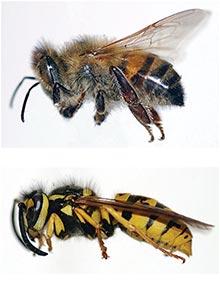
Reviewed
Learn to identify common bees and wasps in Missouri, understand their nesting habits, and get tips on managing their presence safely.
New
Learn how to choose, store, freeze, and dry strawberries to enjoy their flavor and nutrition beyond the harvest season.
New
Learn how to manage risk and protect your farm with liability insurance. Understand who is covered, what damages are covered and general liability insurance exclusions.
Revised
Editor's note
This item is available for University of Missouri Extension internal orders or download only.
For more information, contact extpubs@missouri.edu
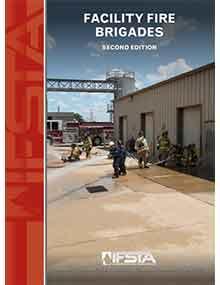
New $80.33
The manual assists management and safety professionals in commercial and industrial occupancies with compliance to applicable laws and regulations regarding training and management of fire brigades. Trainees and instructors will find benefit in using the 144 skill sheets to meet the JPRs specified by NFPA 600, Standard on Facility Fire Brigades, (2015) and OSHA regulations in Title 29 of the Code of Federal Regulations, Part 1910.
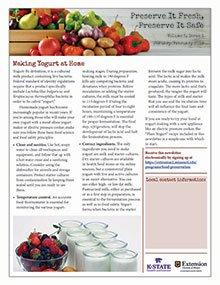
New
Step-by-step tips for homemade yogurt: sanitize tools, control temperatures, and use just milk plus starter for safe, satisfying results.
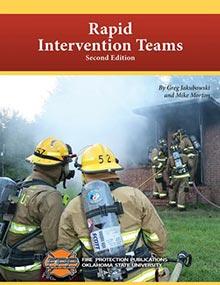
New $61.97 to $72.90
This manual presents the purpose of a rapid intervention team (RIT) program and how to implement one in an emergency response organization. It serves as a guide to the regulations and standards that apply to RIT including information from NFPA 1407 related to training and operational concepts.
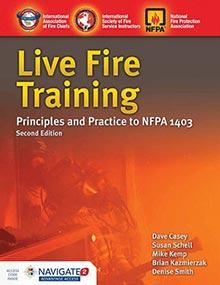
New $110
This manual provides a definitive guide on how to ensure safe and realistic live fire training for both students and instructors. It addresses all the requirements for NFPA 1403, Standard on Live Fire Training Evolutions, 2018 Edition.
New $84.15 to $99
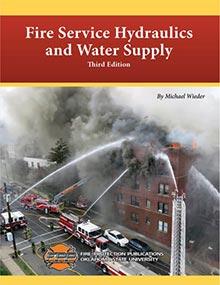
This manual covers the basics of water and water flow, theoretical and practical methods of determining water flow and pressure loss, types of pumps and fire apparatus used to move water, relay pumping operations, fire pump testing, and effectively supplying sprinkler and standpipe systems. It also discusses recent research on updating friction loss coefficients for the modern fire hose.
Revised
Use this workbook to analyze fiscal trends in Missouri counties as well as carry out studies on budget, fiscal trends, and performance to identify needed actions. Compare past performance to set standards to gauge them alongside each other as well.

Revised
Ordering information for pesticide applicator training manuals, including the core manual and various category-specific manuals.
Reviewed
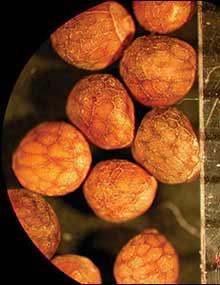
Common members of Lamiaceae (Mint family) not shown in this guide are henbit and purple deadnettle, which are two of the most prevalent winter annuals in Missouri.
Reviewed
Learn about antibiotics and additives in swine production, their benefits for growth and feed efficiency, and best practices for safe and effective use.
Reviewed
Editor's note
The following abstract describes a publication that is available only as a downloadable PDF.
Reviewed
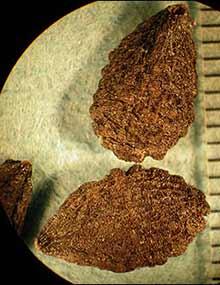
Devil’s-claw, also known as unicorn plant, is the only known species of Martyniaceae (Unicorn-plant family) to be present in Missouri.
Reviewed
The most critical period in the life cycle of a pig is from birth to weaning. Visit our website to learn about the Care of Pigs From Farrowing to Weaning.